
The declaration of kol dichfin—“Let all who are hungry come and eat”—is among the best-known passages of the Passover seder. It expresses more than generosity. It asks us to imagine a seder and home where the doors are open, and at which every person can find a place.
Sukkot carries a similar call to hospitality. For the weeklong holiday, the sukkah becomes an extension of our home; a place where we eat, gather and spend time together. We symbolically invite the ushpizin—the seven historical guests—into the it. But the value of hachnasat orchim, “welcoming guests,” cannot remain symbolic. Sukkot asks us to open our temporary homes to real people, with all their varied needs, experiences and abilities.
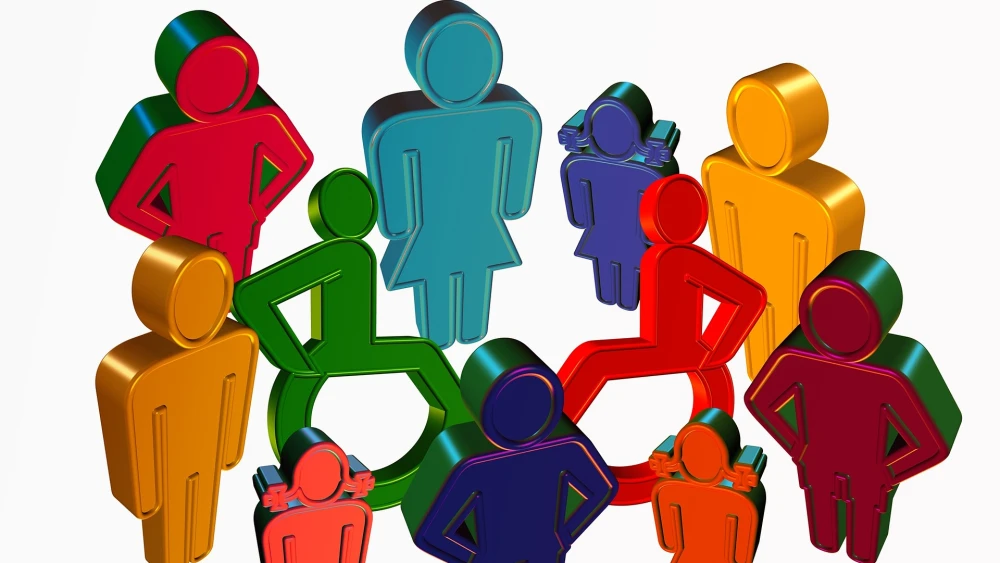
Even among the ushpizin themselves, we find this variety of needs and abilities. Isaac lost his sight, while Moses struggled with a speech impediment. These characteristics were an integral part of their lives, just as disability is part of the lives of many people in our own families and communities. If our sukkah is meant to be open to all, then “all” must include every member of our communities, including people with disabilities.
At Israel Elwyn, we have learned over many years that inclusion is not simply inviting someone to participate. It means identifying and removing the barriers that prevent full participation in community life. When a person cannot take part, we realize that the problem lies not in the person who feels excluded but in the environment. We should ask what in the environment needs to be changed.
Some barriers are physical and easy to see. The metal bar along the floor of a sukkah frame may be only a minor annoyance to many guests, but it can block the entrance for someone using a wheelchair or walker. A simple, inexpensive and securely constructed ramp may solve the problem. A doorway may be too narrow for a wheelchair, or chairs may be arranged so closely that there is not enough room to move around the table. Sometimes, a larger sukkah, a wider entrance or a more thoughtful layout is all that is needed.
Other physical barriers are harder to overcome. A sukkah in an apartment building without an accessible entrance or with no elevator may remain out of reach for some guests. This may present a great challenge to accessibility. But even then, recognizing that barrier matters. It can lead us to consider alternatives: joining an accessible communal sukkah, hosting in another location or arranging an additional gathering that everyone can attend.
Not every barrier is physical. We must also ask whether our conversations, prayers and teaching allow everyone to participate. A person with an intellectual disability, dementia or another cognitive challenge may benefit from clearer language, shorter explanations, visual cues, repetition or simply more time to respond. A guest with a hearing or visual impairment may need a different seat, better lighting, printed material in a larger typeface or help following the discussion.
These accommodations are often modest. What they require most is awareness: noticing who may be left out of the experience and taking the time to ask what would help. We should not assume that we already know.
Inclusion begins with listening. People with disabilities are part of our families and of our circles of friends and community. Rather than waiting for them to make their disability visible, we should think from the outset about the different people who will use our spaces and what will allow everyone to be fully included. Perhaps that is one of the lessons we can carry from this week in our temporary homes, and later, in our permanent ones.
The sukkah is fragile and temporary, but the welcome we create within it can be strong and lasting.
This holiday season, let us look carefully at our entrances, our tables and our conversations. Let us make room not only for the symbolic guests we invoke, but for every person who wishes to enter. That is how the call of kol dikhfin can live in our sukkahs—and our communities—throughout the year.