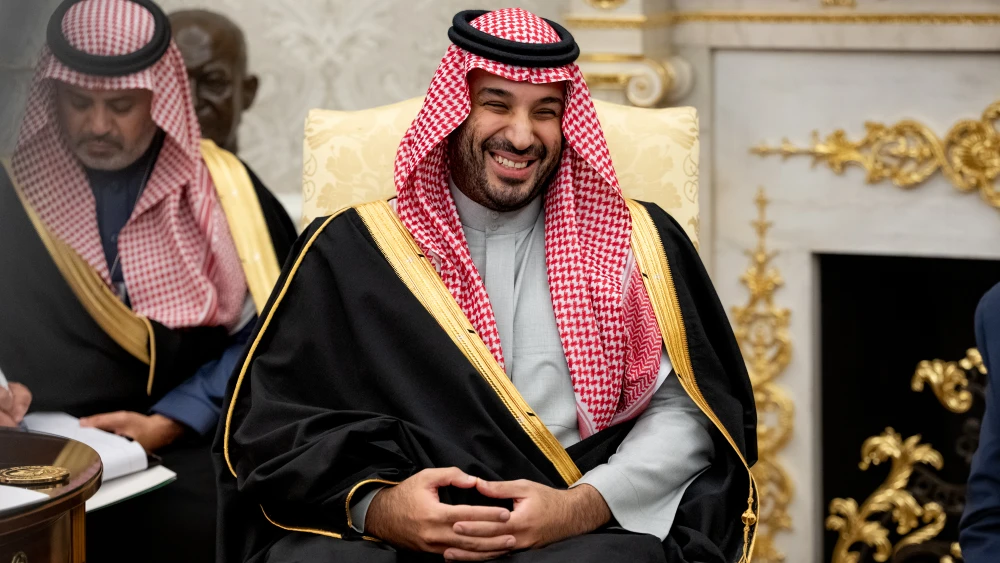

Saudi Crown Prince Mohammed bin Salman, the brilliant young leader who has fascinated many with his vision of modernizing the heart of Sunni Islam, is changing course.
Saudi Arabia is home to Mecca and Medina, the two holiest cities in Islam, and its immense oil reserves have made the kingdom one of the most powerful countries in the Arab world. Mohammed bin Salman has been courted by U.S. President Donald Trump and by Israel, which has long sought normalization with Riyadh.
The crown prince thought he could navigate the region’s wars as he pleased. But the logic of this conflict is proving inexorable.
It is impossible to remain indifferent when Iranian missiles and drones threaten your country. And now the Houthis, the brutal Yemeni proxy of an increasingly desperate Iran, have brought the danger directly to Saudi Arabia.
Mohammed bin Salman thought he could remain outside the war. Instead, he finds himself in it up to his neck.
The Houthi offensive has exposed Saudi vulnerabilities, while attacks on the kingdom and the threat to shipping around the Bab el-Mandeb Strait have demonstrated once again the reach of Iran and its proxies. Riyadh is looking for help. (Reuters)
The lesson for Mohammed bin Salman should be clear: Alliances matter most when allies are prepared to confront a common enemy.
Only last month, Saudi Arabia signed the Mecca Joint Defense Agreement with Turkey and Pakistan. The pact provides that an armed attack against one of the three countries will be considered an attack against them all.
It sounded impressive. Reality has proved more complicated.
Turkey has no desire to be drawn into a confrontation with Iran, while Pakistan has sent mixed signals about what the agreement actually requires. Islamabad initially indicated that continued Houthi aggression could activate the pact, but later said that no military response had been discussed. And Pakistan is far away.
Closer to home, Mohammed bin Salman has turned to Egypt. He traveled there this week seeking support from Egyptian President Abdel Fattah el-Sisi as the Houthi attacks intensified. Egypt has offered strong political backing, although there is little indication that Cairo is prepared to enter the war militarily.
Saudi Arabia has also sought assistance from other allies as its missile-defense resources come under pressure. The United States continues to provide intelligence cooperation while stopping short of direct military intervention.
And then there is Israel.
Israel does not disappear when circumstances become difficult. It is not going anywhere. And Saudi Arabia and Israel face the same enemies: Iran and the Houthis.
Reports now suggest that Riyadh has sought Israeli intelligence assistance through U.S. Central Command as it confronts the growing Houthi threat.
That is significant.
Mohammed bin Salman has spent years dangling the possibility of relations with Israel, always conditionally and often ambiguously. But reality is stronger than diplomatic games.
On one side are Iran and its proxies. On the other are countries with a common interest in stopping them.
The Houthis have advanced along Yemen’s Red Sea coast and threatened the Bab el-Mandeb, one of the world’s most important maritime chokepoints. Saudi Arabia said this week that it intercepted a Houthi drone near Mecca, although the Houthis denied targeting the holy city.
They have demonstrated that there are few limits to their ambitions.
Mecca and Medina are threatened. The Red Sea is threatened. International shipping is threatened. And Jerusalem has long been in the sights of Iran and its proxies.
Mohammed bin Salman is discovering something that should have been obvious all along: Geography, common interests and common enemies are ultimately more powerful than diplomatic maneuvering.
When Iran and the Houthis threaten the region, Saudi Arabia must decide whom it can actually count on.