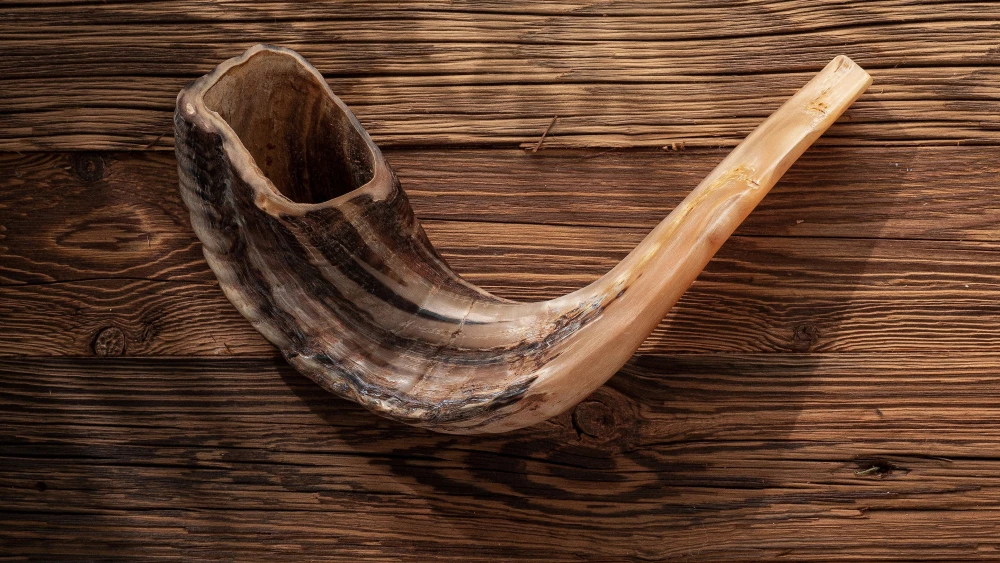

I have heard the shofar in enough rooms across two continents to know that the sound never changes, though the room around it always does.
In a suburban San Diego Reform sanctuary, it arrived as one staged moment inside a service built for comfort and still startled a room arranged not to be startled. In a Conservative congregation in New York, wrapped in more Hebrew and halachic weight, the room remained, recognizably, a gathering of individuals each working through a private accounting. In small Orthodox minyans in San Diego, davening close and unadorned, the blast felt nearer the original alarm, yet it still reached Jews scattered through American cities where being Jewish was, for most in the room, one identity among several.
Last Sunday in Tel Aviv, the shofar sounded in a room where none of that held.
My shul is unapologetically Zionist: secular and religious, Ashkenazi and Mizrahi, reservists seated beside grandparents and teenagers. It’s a congregation that doesn’t sort itself by denomination because in Israel, Jewish identity is rarely a private lifestyle choice.
Here, the blast lands closer to a roll call, summoning not just individuals to introspection but Am Yisrael—the Jewish people—to attention because everyone in that room understands themselves as part of one nation before the horn sounded.
Modern American synagogue culture has largely reduced the instrument to a seasonal cue, an audible calendar reminder that the High Holidays have arrived. It was never that.
For 3,000 years, the shofar served as Israel’s all-purpose siren, summoning armies to the field, announcing coronations, marking the new moon, warning cities of approaching enemies. Long before anyone reserved it for synagogue, it was a national instrument for a nation on watch.
Teruah, the Hebrew name for one of its core sounds, means both alarm and acclamation in a single breath, and the other blasts back this up: tekiah, the long unbroken note, signals sovereignty, a people whole; shevarim, three broken notes, signals a people shattered, in exile or under siege.
Run the sequence together, and Jewish history plays out in four notes: wholeness, brokenness, alarm, wholeness restored. A people capable of celebration first must be a people capable of surviving.
That dual function deserves attention as Yom Kippur approaches because much of what the day originally meant has been stripped away, and most of us were never taught to notice the gap.
In much of the Diaspora, Yom Kippur is experienced mainly as an individual spiritual exercise, even though the traditional liturgy still carries unmistakably collective themes. You examine your conscience, fast, and in the days between Rosh Hashanah and Yom Kippur, ask forgiveness of those you have wronged and then hope to be written into the proverbial Book of Life for a good year.
That framing isn’t false. It’s incomplete—a wound left by exile rather than an accident of history.
During the Temple periods, Yom Kippur functioned as a national act carried out by a national office, on the nation’s own land. Once a year, the Kohen Gadol entered the Kodesh Kodashim on behalf of the entire people of Israel, securing atonement for the collective rather than individuals settling private accounts.
The Mishnah devotes an entire tractate, Yoma, to the day, most of it focused on the Temple service and the High Priest’s role for the nation. It was the nation standing before God, represented by a High Priest whose authority existed only because Israel was sovereign on its own soil. When the Temple fell and Jewish political independence ended, that office went silent. Not abolished, but suspended.
Our sages preserved what they could. They gave us the Avodah service, recited today as an elegy for a ritual we can no longer perform, because after Rome destroyed the Second Temple we had no Temple, no Kohen Gadol and no state.
Yom Kippur itself survived. Its national dimension went dormant, waiting on conditions that, in the Torah’s own framework, exist only in the Land of Israel. What remained in the meantime was teshuvah without territory, atonement stripped of the sovereignty that once carried it.
A people capable of celebration first must be a people capable of surviving.
One detail in the text gets skipped almost every year, and it undoes the Diaspora-only reading of the day entirely. In Leviticus 25, the shofar isn’t a Yom Kippur instrument by mere association. It is written directly into the law of the Yovel, the Jubilee year: “Then you shall sound the shofar loudly, in the seventh month, on the tenth day of the month, on the Day of Atonement, you shall have the shofar sounded throughout your land.”
Under Torah law, land in Israel could never be sold outright, only leased until the next Jubilee.
Every 50th year, on Yom Kippur, the shofar announced that every family’s ancestral plot reverted automatically to its original owners and the tribal map of the nation reset. The holiest day on the calendar was, by design, also the day fixed for national land restoration. Personal atonement and territorial return sounded from the same horn on the same day because they were never meant to be separated.
Call it the Zionism of Yom Kippur: not a modern gloss but the day’s original architecture, buried by two millennia of exile and recoverable now because Jewish sovereignty exists again. The State of Israel does not simply give Diaspora Jews a country to feel sentimental about each September. It restores the physical precondition the day’s national half requires. You can fast in Los Angeles or in Ramat Gan. You cannot restore a Jubilee—a people redistributing its own land under its own sovereignty—anywhere but in a country that is yours.
It is also the half of the day a certain kind of Jewish commentator prefers to leave buried. The same voices who write movingly about teshuvah and Jewish ethics this month go conspicuously quiet on the piece that requires Jewish sovereignty and self-determination. They want the atonement without the return, the humility without the homeland, a Yom Kippur trimmed to a universalist message that makes no one uncomfortable. That isn’t piety. It is Yom Kippur with most of its teeth pulled, repentance repackaged as a mitzvah performed without ever having to defend the nation it was built for.
The shofar carries no such omission. It sounds the alarm and the acclamation together, because the sages who explained Yom Kippur to a people understood that a people cannot repent its way into safety while surrendering the land that makes repentance national as well as personal.
Every year, the shofar sounds the same claim, in shul and in the Torah’s Yovel law alike: Jewish return and Jewish atonement were never separate projects. Any reading of Yom Kippur that ignores the holiday’s national and land-centered dimensions leaves out a significant part of what the Torah describes.
I heard that horn this past Sunday. I will hear it again on Yom Kippur. And each time, it will make the same claim it has made for 3,000 years. It doesn’t only ask you to feel something. It tells you where to stand as a proud Jew, as a Zionist.