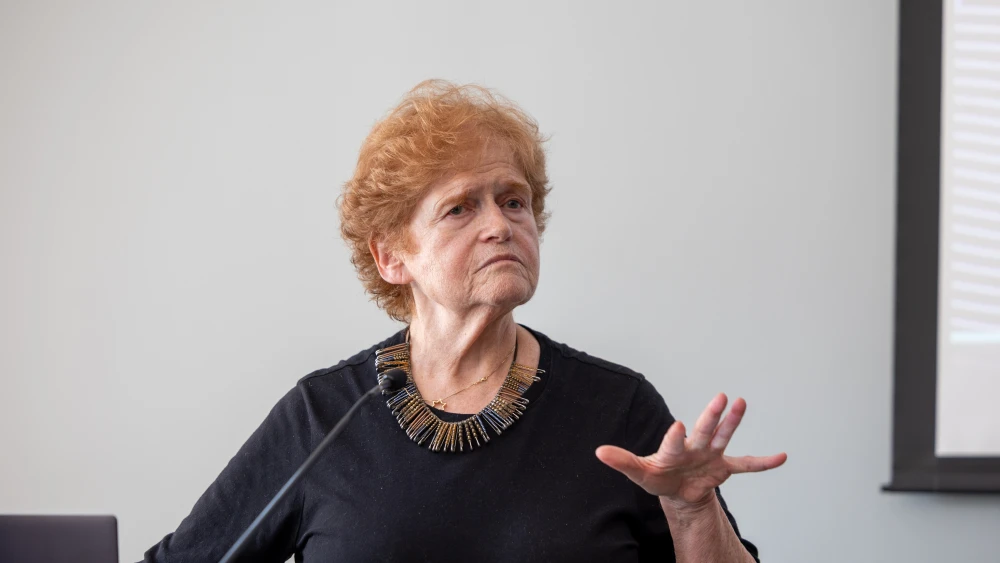
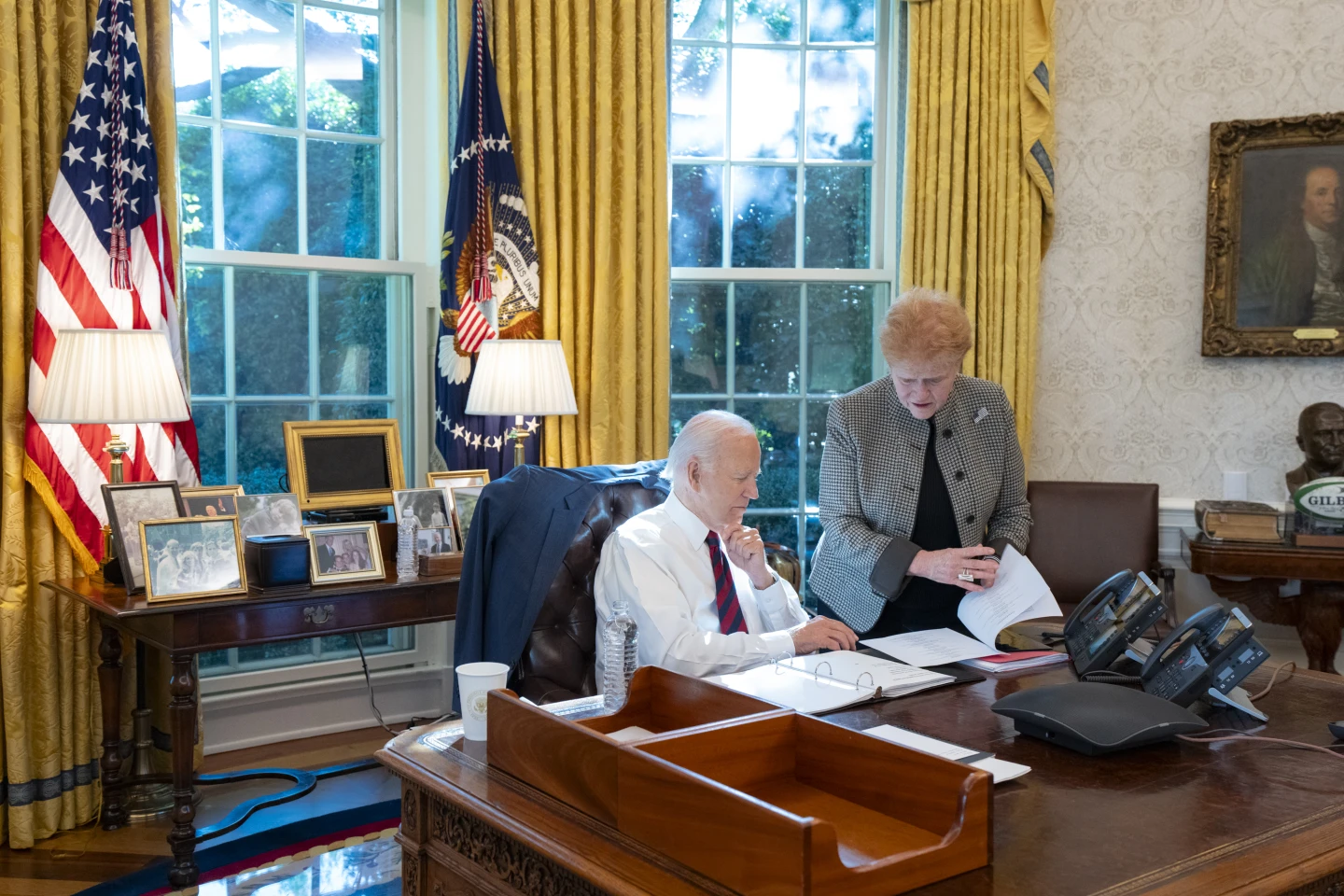
Antisemitism not only threatens Jews but also democratic institutions and national security, Deborah Lipstadt, former U.S. special envoy to monitor and combat antisemitism, told JNS shortly after the noted historian launched a new institute at Emory University, where she has taught for more than 30 years.
The Emory Policy Institute on Countering Antisemitism is intended to turn research into practical policy, and the word “countering” was used deliberately instead of “combating.”
“Combat suggests a winner,” Lipstadt told JNS. “This is a long-term thing. This is constant.”
The institute will focus on the “multi-tiered threat of antisemitism,” Lipstadt said.
“We’re all going to be in shul on Monday, and there isn’t going to be a shul in the world, no matter how small the minyan or how large the minyan, that doesn’t have somebody at the door guarding people, checking who comes in,” Lipstadt told JNS, ahead of Yom Kippur.
The danger threatens democracy when both antisemites and their targets lose trust in public institutions. Earlier this week, Lipstadt spoke at the University of Toronto, where she observed that Canadian Jews felt abandoned after shots were fired at synagogues.
“They lost faith in the government,” she told JNS.
Unlike the University of Toronto, which has been “playing this game with two hands” and trying “to please everyone,” Emory has been taking Jew-hatred seriously, according to Lipdstadt.
“Each university is an organism unto itself,” she said.
Federal crackdowns can curb Jew-hatred on campus temporarily. “This is not a battle that’s going to be won and it’s all solved and we can go off and just be happy,” she said.
‘All of society problem’
There is also a third danger level, according to Lipstadt.
Hostile foreign actors, like China, use Jew-hatred to inflame divisions. “This is utilitarian antisemitism,” she told JNS. “It’s to stir up the pot, to make you feel like your society is fraying.”
The institute will pursue that challenge through a student fellowship program open to Emory juniors and seniors from any background or academic discipline. Beginning in January 2027, fellows will prepare for eight-week summer internships in Washington, D.C., at congressional offices, think thanks and other organizations.
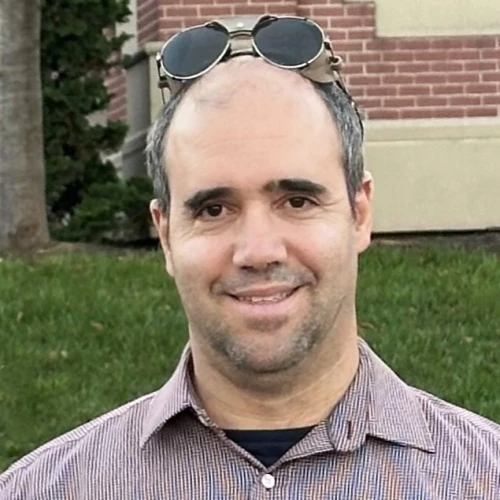
Lipstadt told JNS that she and Aaron Keyak, who was her deputy at the State Department and who is directing the new institute, are “very proud” that the program is bipartisan and that they have close relationships with lawmakers and leaders on both sides of the aisle.
The program is fully funded, including travel and living costs, to avoid excluding students who need paid summer work, according to Lipstadt. Fellows will develop projects on how government, nonprofit or corporate policy can counter antisemitism.
“Unfortunately, Jew-hatred is an all of society problem,” Keyak told JNS. “Whatever background these students have, they’ll bring their unique perspective from their studies at Emory and from their personal experiences to the research on antisemitism.”
The institute will also track if governments that endorsed the Global Guidelines for Countering Antisemitism, which Lipstadt introduced in 2024, are putting them into practice. It will organize research, publications and policy forums aimed at government officials, institutional leaders, corporations and other decision makers.

Keyak said that countries might name national Jew-hatred envoys but fail to bestow authority or resources.
“Of course it’s good to appoint a special envoy, but you have to listen to them, you have to empower them, to give them the proper channels to impact government policy,” he told JNS.
Effective policies also differ by country given the wide variety of legal protections. “The same policy that might work in a particular country might not work for a country in Europe,” Keyak said. “That’s what we’ll be looking at.”
“Through our Emory students, we’re going to be taking an academically rigorous approach to researching what are effective policies on a country by country and policy by policy basis,” he told JNS.
Lipstadt said that “there’s not one policy, not one size fits all.”
“Everyone has to make Shabbos for themselves to some extent,” she told JNS.