
Three years after the Hamas-led massacre in southern Israel on Oct. 7, 2023, a war continues to rage far beyond the physical battlefield. It is a battle over words, truth and the language that underpins international law, human rights and the principles upon which democratic societies are built.
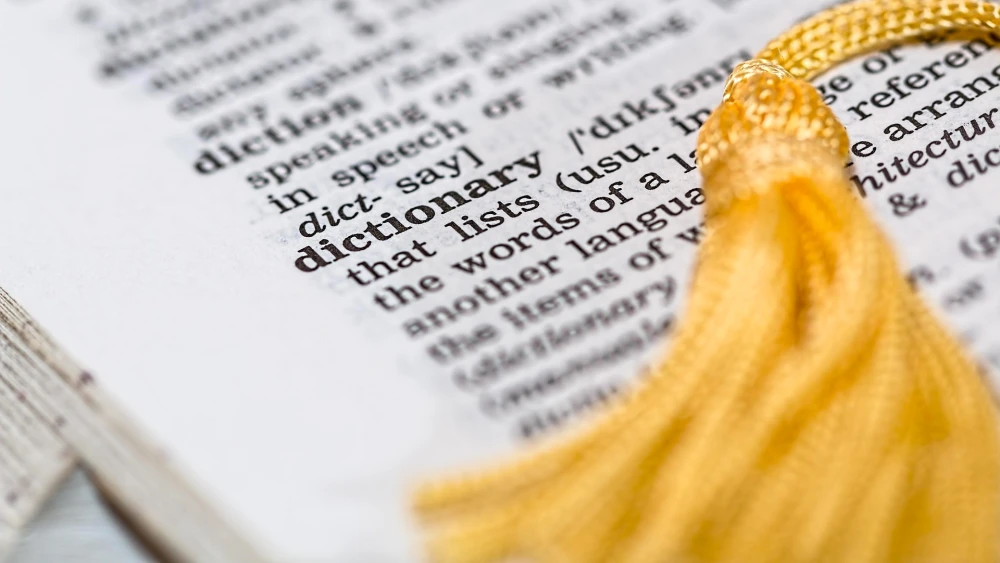
On Oct. 7, 2026, a day that commemorates the worst attack on Jews since the Holocaust, the International Legal Forum (ILF) launched the Dictionary of Terms, an online resource dedicated to remembering, reclaiming and renewing foundational legal concepts that have increasingly been distorted, inverted and weaponized in public discourse.
The initiative emerges from a growing recognition that the erosion of language is not merely a semantic concern. When terms such as “genocide,” “apartheid,” “war crimes” and “crimes against humanity” are detached from their legal definitions and repurposed as political weapons, the consequences extend far beyond the courtroom. The integrity of law itself is placed at risk.
These terms were developed through painstaking legal processes in the aftermath of humanity’s darkest chapters. They were intended to provide clear and universal standards by which atrocities could be identified, condemned and prevented. Their power stems from precision, and their legitimacy rests on equal and consistent application.
Yet, in recent years and with great intensity since Oct. 7, many of these concepts have been detached from their legal moorings. They have been redefined, inverted, selectively applied, politically manipulated and wielded as weapons in a broader battle for public opinion.
The result is not only confusion but the corrosion and ultimate collapse of the universal principles these legal concepts were created to protect.
The Dictionary of Terms seeks to confront this challenge directly. Developed through research, expert consultation and legal analysis, the Dictionary provides readers with the established legal definitions of key terms, explains their proper context and application, and examines how they have been misappropriated and weaponized in contemporary discourse.
Its intended audience extends far beyond legal professionals. Policymakers, educators, journalists, students and members of the public are all invited into a vital conversation that has too often been monopolized by slogans rather than substance.
At the core of this conversation is a fundamental proposition: words matter.
Language shapes understanding; understanding shapes judgment; judgment shapes policy; and policy shapes reality.
When legal concepts lose their meaning, society loses its capacity to distinguish between victim and aggressor, law and lawfare, accountability and accusation. The consequences are felt not only by those directly affected by conflict, but by every institution that depends upon objective standards and the rule of law.
The Dictionary, which cites the origins of these terms, reclaims their original meaning and renews a shared pledge to uphold and protect them equally and consistently, is vital to fighting and winning a raging war that threatens humanity and freedom. It addresses the broader concern increasingly voiced by legal scholars and human rights experts: The selective application of international law undermines the credibility of the very system meant to protect humanity from its worst instincts.
The launch of the Dictionary is accompanied by a global social media campaign featuring international experts who have joined the effort to reinforce a common commitment to factual accuracy, legal integrity and principled equality and consistency.
The initiative is also an expression of the International Legal Forum’s broader mission to expose and confront the systematic demonization, delegitimization and double standards that fuel antisemitism, embolden extremism and weaken the foundations of democratic societies.
Ultimately, the Dictionary is not merely about definitions. It is about responsibility, safeguarding the distinction between law and propaganda and ensuring that the language created to defend human dignity is not turned against it.
It reaffirms a timeless principle: Legal standards retain their legitimacy only when they are applied equally, consistently and without exception.
Three years after Oct. 7, the struggle for security continues. So, too, does the struggle for truth. The launch of the Dictionary of Terms is a reminder that defending civilization requires more than military strength. It requires the courage to defend the meaning of the words upon which civilization itself depends.