
Every Friday, I turn off my phone for Sabbath. Every Saturday night, I turn it on with a pit in my stomach. What bad news will cross my screen? Which synagogue was attacked? Most recently, these attacks were in Canada and Europe, but over the past year, we saw anti-Jewish assaults in Michigan, Mississippi and Florida.
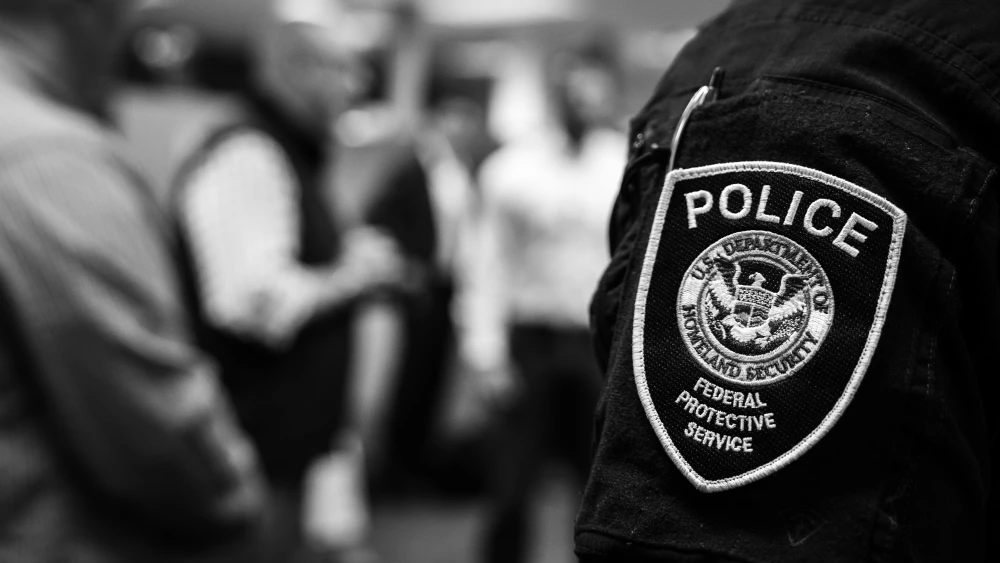
Religious communities are facing a security crisis. As antisemitic threats and other hate crimes rise, local police lack the resources to keep synagogues, churches and other faith-based entities safe. The good news is that the federal government has a program to tackle this crisis. The bad news is the program is woefully underfunded.
Twenty-two years ago, I worked with congressional allies to create the Nonprofit Security Grant Program (NSGP). Housed in the U.S. Department of Homeland Security, the program gives funds to help nonprofits harden their physical security—think cameras, barriers, bulletproof windows and off-duty officers standing guard during services.
Over two decades, the program has grown from $10 million in annual funding to $300 million in 2026. But the increase in NSGP funding has not kept pace with the demand.
In 2024, 43% of applicants received grant funding. According to new data from Jewish Insider, that number shrank to 20% for funds just released in 2025. Only 1,600 of more than 8,000 nonprofit applications received the security funding they desperately need, or $266 million out of $1.3 billion worth of asks.
The need for security funding is not theoretical. When a terrorist rammed his car into Temple Israel in Michigan this past March, he was stopped by physical barriers and a security guard, who took him out. This was not a lucky coincidence. Temple Israel had invested heavily in security guards, physical barriers and security systems, and put personnel through training programs with local law enforcement. With 140 nursery-school children there, this investment prevented the attack from becoming a full-blown tragedy.
These security measures, however, don’t come cheaply.
American Jewish communities are paying a steep “antisemitism tax” to provide essential, life-saving protection. Jewish communities alone pay more than $750 million of their own money to send their children to Jewish schools, attend synagogue and hold communal events safely.
Jewish communities invest this money because the alternative is unacceptable. We will not endanger congregants’ lives, and we will not shrink from public religious life. But it’s not the job of a congregation to protect itself by itself. That is the most important job of government. And government is failing. This is why a coalition of Jewish and other faith groups recently urged Congress to budget $1 billion for NSGP in 2027.
With the High Holidays around the corner, millions of American Jews will attend synagogue with a sense of trepidation—not because Rosh Hashanah is the Jewish Day of Judgment, but because sitting in synagogues for hours at a time makes us think about the attacks that have occurred.
This is not a uniquely Jewish problem, although we certainly face the brunt of recent threats. Incidents in Minneapolis, San Diego, South Carolina and Staten Island, N.Y., have churches and mosques on edge. They, too, are investing in enhanced security measures.
This security crisis strikes at the heart of the First Amendment. American society cannot function without flourishing religious life. And there is no true freedom of religion without freedom from fear.
NSGP was created because the government has a responsibility to protect its citizens and to safeguard the constitutional right to worship freely and safely. That responsibility has not changed. What has changed is the urgency and growing scale of the demand.
Government must do more to meet the urgency of the times we live in.