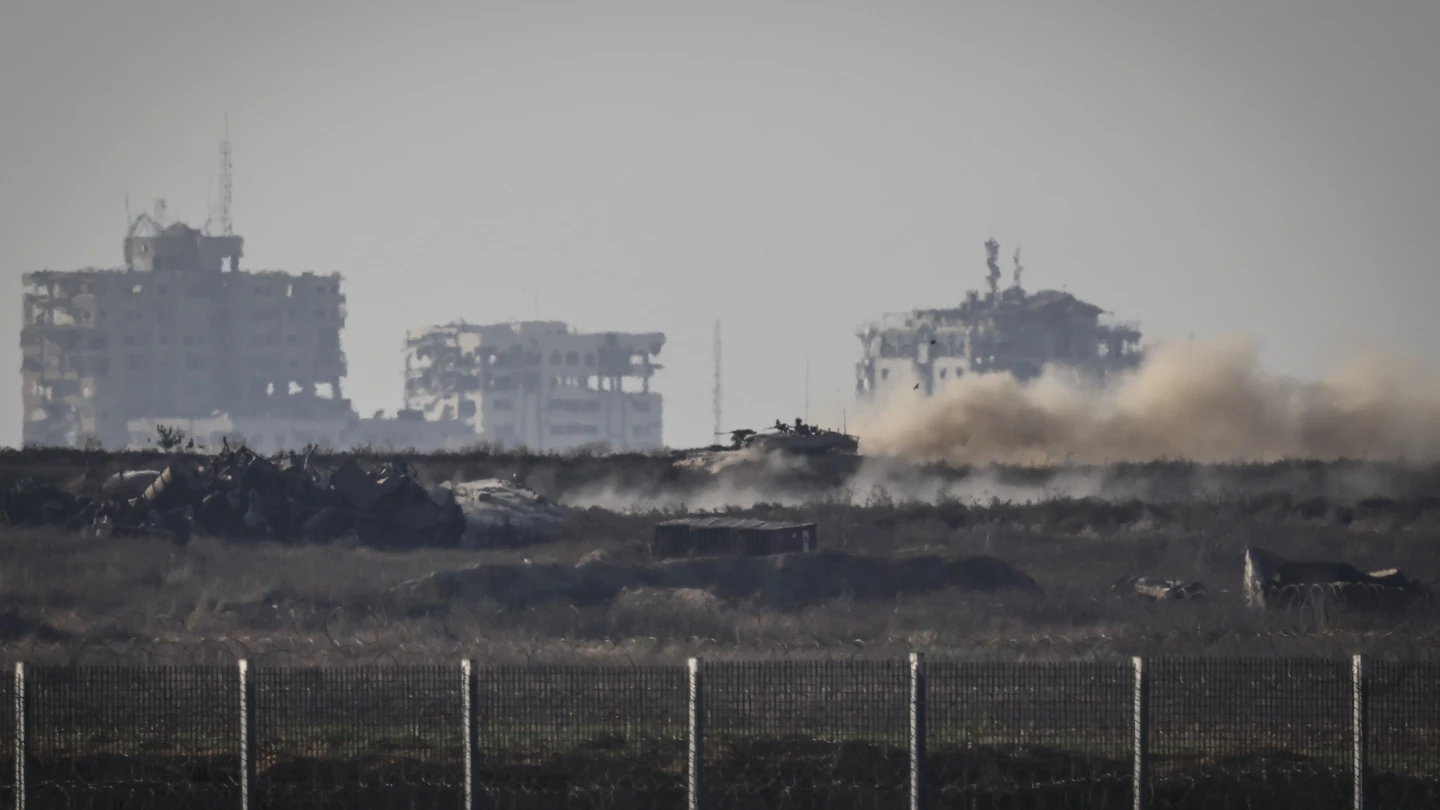

As the Israeli government contemplates going into Gaza City to root out Hamas, some rays of hope remain on the horizon.
Three European nations—France, Germany and the United Kingdom, nicknamed the E3—have decided to snap back sanctions on Iran. This mechanism is set within the framework of the 2015 Iranian nuclear deal, the Joint Comprehensive Plan of Action (JCPOA). Under the plan, any nation that signed the JCPOA can impose sanctions on Iran in the event of serious nuclear violations.
The E3 notified the Security Council of their plans on Aug. 28. The move means that U.N. Security Council Resolution 2231 could be invoked, resulting in a reimposition of sanctions on Iran. The group noted that Iran has accumulated a large stockpile of highly enriched uranium—one significantly beyond the 3% required for energy consumption, including uranium enriched to 60 and perilously close to 90% uranium, which would be considered weapons-grade. Iran has also closed off many sensitive sites to International Atomic Energy Agency inspectors.
There is a 30-day period for the U.N. Security Council to either negotiate a new agreement or reimpose the sanctions. Iran, of course, wants to conceal its inequities behind the cover of extended diplomacy.
Iran has only admitted IAEA inspectors to the Bushehr nuclear plant. During the Israeli and U.S. military operations, “Rising Lion” and “Midnight Hammer,” in mid-June, nuclear facilities in Natanz, Fordow and Isfahan sustained severe damage, and IAEA inspectors have been blocked from seeing the sites.
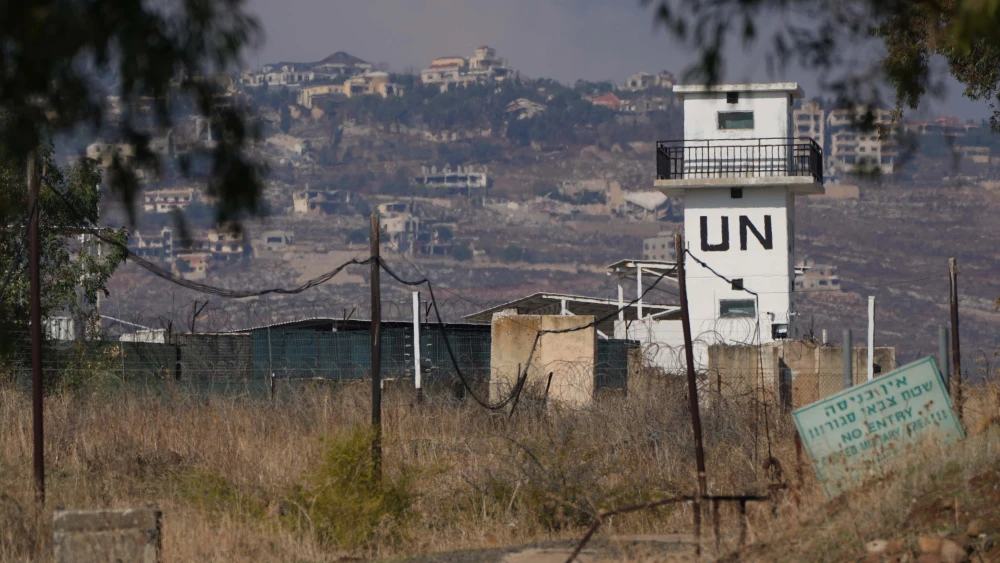
Another piece of good news is that the U.N. Security Council has voted to dismantle the United Nations Interim Force in Southern Lebanon (UNIFIL), the unnecessary peacekeeping force that has been in place for nearly five decades. UNIFIL was created when Israeli forces withdrew from the area in 1978. However, it has served as a “tripwire” ever since, preventing Israeli forces from protecting their own sovereignty in the north, while at times serving to conceal the activities of Hezbollah, embedded in Lebanon.
Still, UNIFIL is not scheduled to withdraw for another two years.
Joseph Aoun, the relatively new president of Lebanon, has vowed to have only one militia in Lebanon—the Lebanese Armed Forces—and has vowed to “place all weapons in Lebanon under state control.” He began this initiative with the Fatah faction at the Burj al-Barajneh refugee camp in southern Beirut. However, the main goal is to reduce Hezbollah’s influence within Lebanon. This may be challenging, as a significant portion of the Shi’ite population expresses stronger loyalty to Hezbollah than to the Lebanese government and views Hezbollah as operating in parallel to the state.
Despite Israel’s “pager and beeper operation” on Hezbollah operatives in Lebanon last September, and the assassination of Hezbollah senior leader Hassan Nasrallah later that month, the terror group remains a major political, economic and military force inside Lebanon.
Regional dynamics are further complicated by the delicate balance of power between state institutions and fealty to nonstate actors. The upcoming withdrawal of UNIFIL, though gradual, will mark a pivotal shift that could redefine security arrangements and political alliances along Lebanon’s southern border. As international actors recalibrate their involvement, Israeli and Lebanese leaders will face the arduous task of bolstering national security while navigating entrenched loyalties and longstanding rivalries.
Amid ongoing uncertainty, diplomatic channels remain active, yet the risk of escalation persists. The specter of renewed conflict hovers over the region, fueled by persistent arms smuggling, porous borders and the ambiguous status of militant groups. International mediators, including the E3 and the United Nations, need to encourage de-escalation, even as local realities threaten to undermine these efforts.
Looking ahead, the fate of Lebanon’s fragile sovereignty hinges on a complex interplay of internal reforms and external pressures. The promise of consolidating state control over all armed factions will require not only legislative resolve but a sustained campaign to win the trust of diverse communities.
As security guarantees shift and diplomatic efforts intensify, the region stands at a crossroads. Its future will be shaped by the weight of history and the resolve of its leaders to chart a more stable course.