
Just when we thought, foolishly, that it was safe to go outside—our lives slowly restored to normal, masks discarded, arms boosted, Broadway lights ablaze, children back in classrooms—the COVID-19 virus humbled us once again. There will be no V-Day against this virus—at least not yet, and possibly never.
COVID-19 has already spread into 2022, bringing with it another wave of grim tidings. Joe Biden declared the first year of his presidency a success. It is a boast not widely shared.
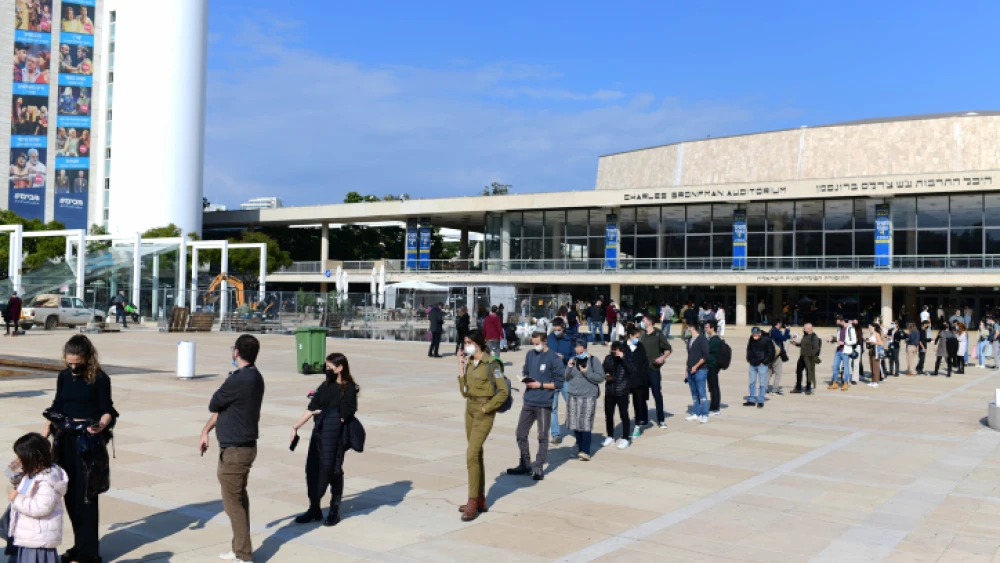
America’s lack of preparedness for the Omicron variant alone was a colossal failure. Home-testing kits are either unavailable or unaffordable. In New York City it can take a full week to receive the results from mobile testing sites. The operative word being “mobile.” Finding the vans is a scavenger hunt all its own, causing respiratory failure unrelated to the virus.
What started in Wuhan strayed from Wuhan and, in time, germinated into a dizzying array of variants. Alpha. Delta. Omicron. Are there enough letters in the Greek alphabet to account for these overlapping organisms? Soon, when we run out of names, we’ll dust off Sanskrit.
Surging infection rates are everywhere. Over the past month, nearly 6 million Americans tested positive for the virus, a massive spike from a year ago, with over 400,000 new cases reported daily. Hospitals are overwhelmed, and children are no longer regarded as low-risk. Globally, over the past month, 24 million people have been infected, with the overall death toll now up to 5.5 million. The monstrous predictions we heard at the outset of this pandemic might one day become a reality. Epidemiologists are now projecting January to be the worst month so far.
Some of the presumptions about the COVID-19 vaccines are plummeting, in tandem with Dr. Fauci’s approval rating. Omicron is making a fool of pharmaceutical companies; many of those hospitalized are fully vaccinated. The vaccine is proving about as difficult to penetrate as our southern border. Once more we find ourselves desperate to “flatten the curve,” a turn of phrase we believed we had retired. Omicron, tragically, pitched us a new curve.
There is solace in knowing that Omicron apparently causes fewer cases of severe sickness. Of course, that too comes with a catch: With such high transmissibility, just leaving your home is a risky venture. Social distancing is yesterday’s prophylactic. Vitamin D3 and N95 masks are no longer impenetrable shields. Pfizer’s new COVID-19 treatment pill, along with fourth vaccine shots and second boosters, might prove useless against Omicron’s feistiness or the coronavirus’s next looming surprise.
And so, we survived another year of living cautiously. Another New Year under siege, helpless in the face of confusing advisories, conflicting regulations and the mismanagement of a public health crisis. Vaccine mandates are now being challenged under the law. The Supreme Court, over 100 years ago, deemed mandatory vaccinations the province of states. That was with smallpox. With COVID, it’s the states, mostly the red ones, fighting to protect their citizens from the vaccine.
COVID-19 might literally take your breath away, but it’s far more likely to drive you crazy first.
The politics of the virus has not abated either, neither has it inspired much confidence in our leaders. The upcoming midterm elections are bound to feature COVID-19 campaign platforms. America’s obsession with personal autonomy is behind all this national infighting over masks, booster shots, vaccine passports, school closings and lockdowns. It’s a game of political football where the goal posts keep moving while the players shelter at home.
Next up: COVID-19, the video game.
It’s beginning to sink in that this menace might never leave us. A pandemic purloined our lives, rendering us uncertain about our future and even questioning the meaning of existence. Without face-to-face social engagement, along with theaters, restaurants and museums, why live in New York or Los Angeles—why live anywhere?
The true fever of this pandemic is one of fear, the collective anxiety that we will never be able to return to the life we once knew. Back in early 2020, many believed it would be just a matter of months before normality resumed. But the new normal—with its viral mutations, social isolation and self-sacrifice—has proven too abnormal.
No longer do these life changes seem temporary. The adjustment period is over and entirely new ways of living, working and loving have been revealed to us. We’ve adapted to the virtual offices, home gyms, Zoom meetings and Amazon delivery trucks. They’re all now part of the scenery, the green screen that has totally re-landscaped our lives.
But the costs have been immeasurable—the disconnection from friends and families; the paralyzing loneliness, the risk assessments associated with every encounter; the mind boggling misinformation.
One doesn’t have to be a believer to have the uneasy feeling that something biblical is going on. We keep waiting for the seas to part, with a virus-free Eden awaiting us. A pandemic for the ages has given birth to a new age, one with its own rituals, verities, even vocabulary. Our best laid plans thwarted, the last two years lost. Will this all ever come to an end?
Thane Rosenbaum is a novelist, essayist, law professor and Distinguished University Professor at Touro College, where he directs the Forum on Life, Culture & Society. He can be reached via his website.
This article was first published by the Jewish Journal.