


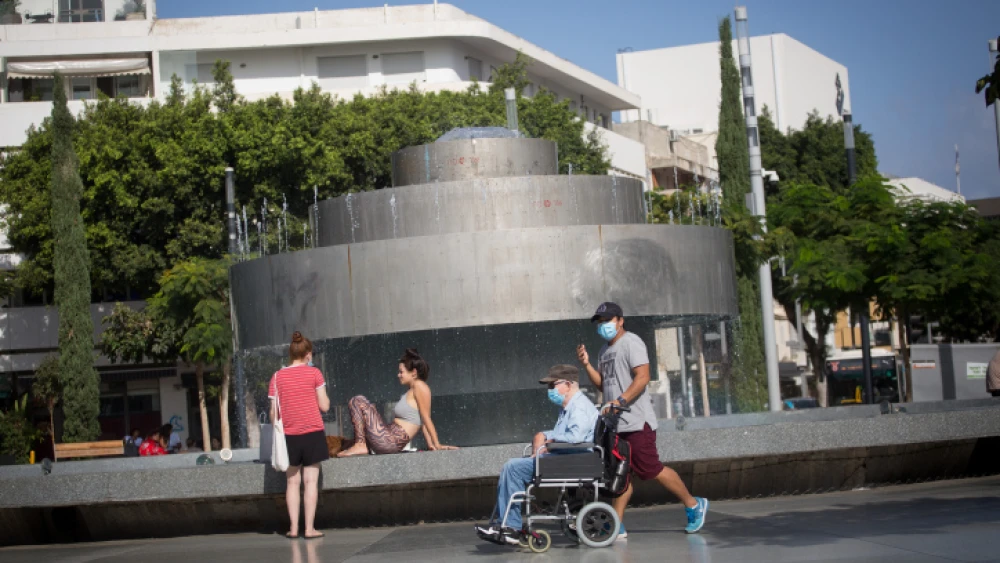
One of the often-overlooked aspects of the COVID-19 pandemic—at least by those it does not affect directly—is its impact on people with disabilities.
The coronavirus has in many ways significantly expanded this community; a significant percentage of the population have complex medical histories that place them at high risk and who are thus in a very real sense “disabled.” Not necessarily in the conventional sense of the term, but disabled by the disease. They cannot travel as they would like and are often robbed of the ability to spend time with others.
But for many of those with more conventional disabilities, the pandemic has imposed additional difficulties.
In certain public spaces such as stores, for example, access is limited, which can be restrictive for people with reduced mobility. The widespread use of face masks poses a challenge for the deaf and hearing-impaired as well, as it makes lip-reading impossible. While many synagogues and houses of worship have thankfully improved to accommodate the disabled, when services are relocated to outside areas we need to be sure the needs of the disabled are kept in mind.
There have however been some positive outcomes with regard to how the issue is perceived. Beyond simply ensuring there are ramps and elevators in relevant spaces, we are all more cognizant today of people’s limitations that can put them at disadvantages in certain settings.
As the world marks Accessibility Awareness Day, we are being afforded an opportunity to reassess how we relate as a society to these challenges.
As developments surrounding COVID-19 vaccines and therapeutics advance daily, we know that the most difficult aspects of the pandemic will not be with us forever. But perhaps this is an opportunity to ensure that this new recognition does not disappear when most of us are able to return to lives of relative normalcy. Let us pledge to take this moment in human history and use it to encourage greater understanding and action on behalf of the disabled community.
Rabbi Yuval Cherlow is the director of the Tzohar Center for Jewish Ethics and a Founder of the Tzohar Rabbinical Organization in Israel.




