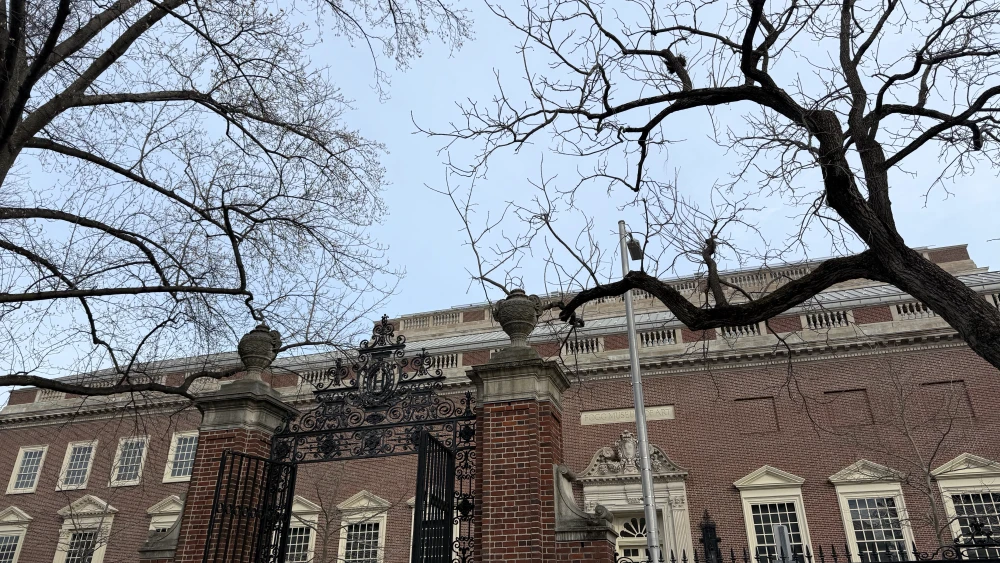
The Trump administration announced on Monday that it would carry out a “comprehensive review” of $9 billion in federal grants and contracts at Harvard University over the school’s failure to protect Jewish students.
As part of the joint task force to combat antisemitism, the Departments of Education and Health and Human Services, and the U.S. General Services Administration, said they would audit “more than $255.6 million in contracts between Harvard University, its affiliates and the federal government,” as well as “more than $8.7 billion in multi-year grant commitments.”
“Harvard has served as a symbol of the American dream for generations—the pinnacle aspiration for students all over the world to work hard and earn admission to the storied institution,” said U.S. Secretary of Education Linda McMahon. “Harvard’s failure to protect students on campus from antisemitic discrimination—all while promoting divisive ideologies over free inquiry—has put its reputation in serious jeopardy.”
“Harvard can right these wrongs and restore itself to a campus dedicated to academic excellence and truth-seeking, where all students feel safe on its campus,” she added.
The announcement notes that a similar review at Columbia University prompted that school to agree to a list of nine Trump administration demands, including a ban on masked protests.
Columbia’s interim president resigned on Friday amid the controversy over that agreement.
The U.S. agencies said on Monday that they could potentially issue stop-work orders on Harvard contracts and that if the university is found to be noncompliant with federal regulations, they could terminate the contracts entirely.
“This administration has proven that we will take swift action to hold institutions accountable if they allow antisemitism to fester,” stated Josh Gruenbaum, the commissioner of the Federal Acquisition Service. “We will not hesitate to act if Harvard fails to do so.”