The U.S. State Department imposed sanctions on Wednesday on four officials at the International Criminal Court in The Hague over its support of investigations of U.S. conduct in Afghanistan, as well as arrest warrants for Israeli Prime Minister Benjamin Netanyahu and his former defense minister, Yoav Gallant.
The move against two ICC judges and two ICC deputy prosecutors follows U.S. President Trump’s executive order from February that imposed sanctions on the court’s chief prosecutor and further sanctions on four ICC judges in June.
“The International Criminal Court continues to disregard national sovereignty and facilitate lawfare through efforts to investigate, arrest, detain and prosecute American and Israeli nationals,” U.S. Secretary of State Marco Rubio wrote. “We will continue to hold accountable those responsible for the ICC’s morally bankrupt and legally baseless actions against Americans and Israelis.”
Under Trump’s executive order, the president threatened sanctions against any ICC official who supports investigations of the United States or any of its allies who are not party to the Rome Statute that created the court, including Israel.
The United States and Israel argue that the ICC, a Netherlands-based court independent from the United Nations, has no jurisdiction over them because they are not signatories to the 2002 treaty establishing the court.
Despite those arguments, the court issued arrest warrants for Netanyahu and Gallant in November over their role in leading Israel’s war against Hamas and Gaza, and the court has periodically investigated alleged U.S. human-rights abuses in Afghanistan.
Wednesday’s order slaps U.S. sanctions on Kimberly Prost, a Canadian judge; Nicolas Yann Guillou, a French judge; Nazhat Shameem Khan, a Fijian deputy prosecutor; and Mame Mandiaye Niang, a Senegalese deputy prosecutor.
As a result of U.S. sanctions, the ICC’s chief prosecutor, Karim Khan, a British national, reportedly lost access to his work email and personal bank accounts. As such, the work of the court has largely been stymied.
Similar sanctions have also been imposed on Francesca Albanese, the U.N. special rapporteur on Palestinian territories, which immediately preceded the resignation of the U.N.’s three-person Commission of Inquiry on the Occupied Palestinian Territory.
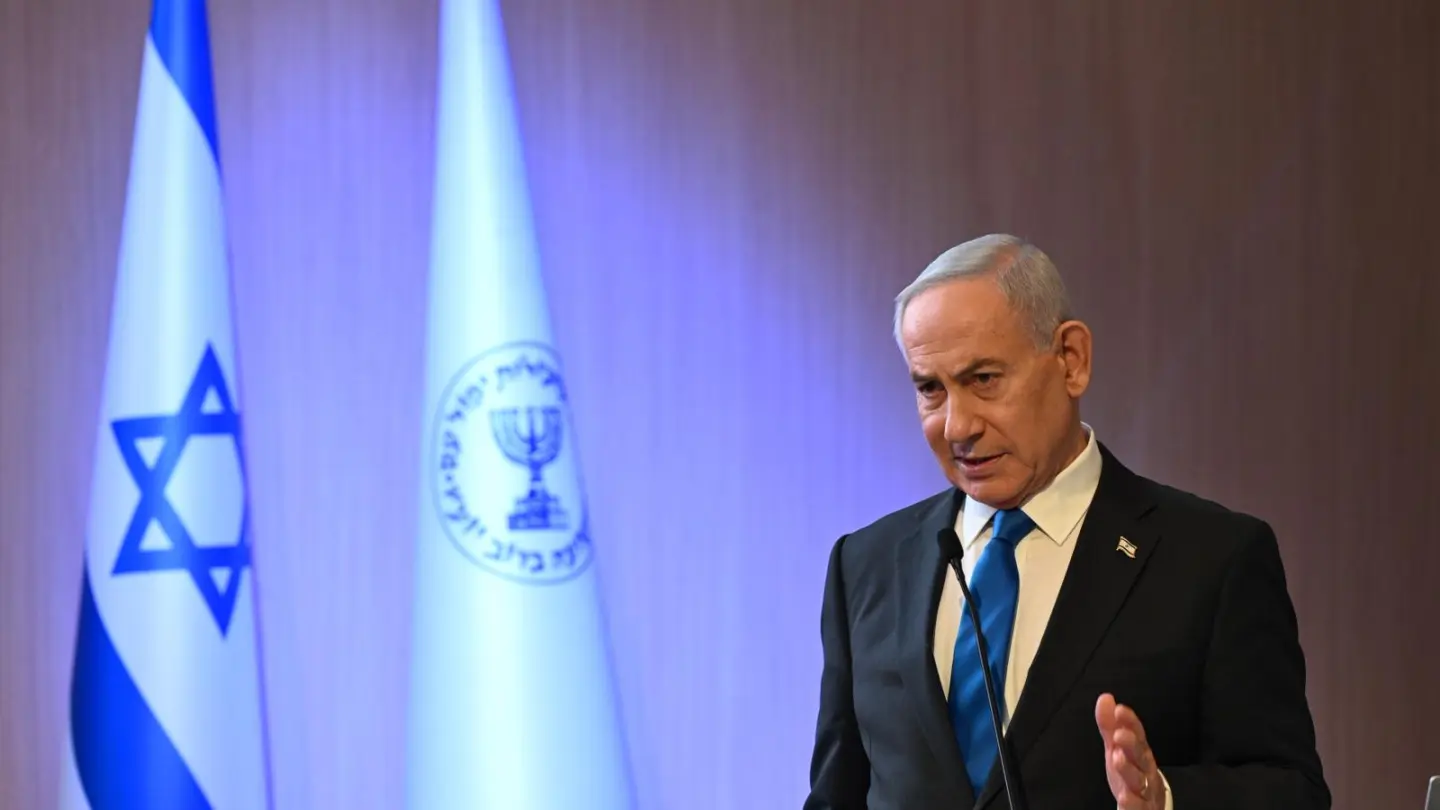
Netanyahu welcomed the new sanctions, saying on Wednesday: “I congratulate US Secretary of State Marco Rubio for deciding to impose sanctions on the judges of the International Court in The Hague,” Netanyahu said. “This is a firm measure against the mendacious smear campaign against the State of Israel and the Israel Defense Forces, and for truth and justice.”
Likewise, AIPAC said that it supports the sanctions against the ICC.
“The ICC outrageously issued arrest orders against Israeli officials who are conducting a just and moral fight against Iranian terrorist proxies,” the pro-Israel group wrote. “The Trump administration is right to stand up to unjust persecution against the U.S. and our ally Israel by international bodies.”