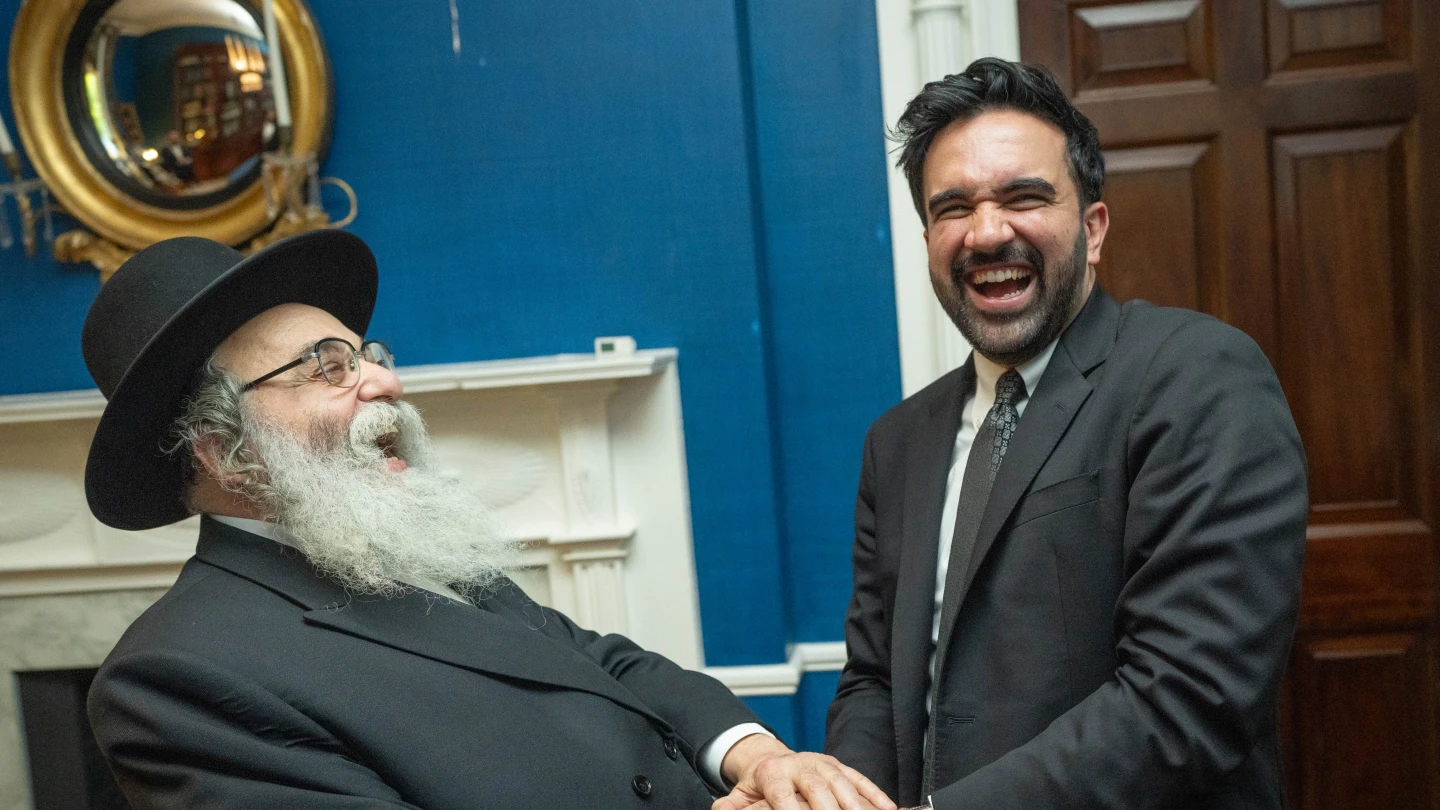
For three decades, OU Kosher rabbinic coordinators (RCs) and rabbinic field representatives (RFRs) have convened for OU Kosher’s Annual Kashrus Conference to explore advancements in kosher certification, share best practices and strengthen global professional relationships. This year’s 31st conference marked a historic first as rabbis from other international kashrut agencies, including the Kof-K, Star-K and KF Kosher, served as presenters and panelists.
OU Kosher CEO Rabbi Menachem Genack was a close talmid, “student,” of Rabbi Joseph B. Soloveitchik, known as the Rav, and notes that the Rav encouraged collaboration with other kashrut agencies to enrich the broader landscape.
“The Rav underscored that competition is good for the Jewish community,” says Genack. “His perspective created an industry vision, and it’s been very helpful for our efficiency and growth. We have a close working relationship with a number of other kashrut agencies.”
OU Kosher invited fellow kashrut certifiers last year to join the second day of the conference.
“Having them return this year, not only as participants but as presenters, was a win-win situation all around,” says OU Kosher director of kashrut education Rabbi Eli Eleff. “The benchmark methods and current trends that we explored are of value to everyone in the industry, regardless of which agency they represent. Each kashrut professional has wisdom to share, which we can all apply in our day-to-day operations.”
As the world’s largest and most recognized international kosher certification agency, OU Kosher certifies more than a million products produced in more than 14,000 plants across 110 countries, including two-thirds of all kosher food in the United States. Organized by OU Kosher director of field operations Rabbi Michael Morris and his team, the two-day conference at the Hilton Parsippany in New Jersey provided a forum to learn from esteemed rabbinic authorities and industry experts about halachic developments, food technology and emerging trends.
According to OU Kosher COO Rabbi Moshe Elefant, of the OU’s 850 RFRs, 100 serve full-time. Guided by rabbinic coordinators at the Orthodox Union headquarters in New York, RFRs conduct inspections at thousands of food plants and oversee more than a million ingredients worldwide.
“Our RFRs don’t get many chances to connect with OU Kosher colleagues face to face,” says Elefant. “Gathering in a shared setting strengthens the bonds between us, which in turn benefits everyone who values kashrut.”
OU Kosher senior rabbinic coordinator Rabbi Nahum Rabinowitz of Brooklyn, N.Y., has worked at OU Kosher since 1991. He manages its European and Israeli certifications, as well as wine and alcohol hechsherim, and has attended every kashrut conference since its inception.
“The event offers a unique opportunity for headquarters staff to connect with their colleagues in the field,” he says. “Meeting in person is always a highlight.”
After greetings from Genack, Elefant, OU President Mitchel Aeder and OU Kosher commission vice chairman Rabbi Yossi Heber, participants attended sessions on topics such as the rabbinic coordinator-field representative collaboration, potential kashrut issues with coatings on fresh produce, and the OU’s partnership with Tomchei Shabbos, which provides food, especially for Shabbat and Jewish holidays, to those in need.
“Our RFRs and RCs have a good rapport with the many companies we certify,” says Morris. “We encourage our OU Kosher rabbanim to ask manufacturers to donate any unexpired surplus food they no longer need to Tomchei Shabbos, where it can benefit countless recipients.”
Workshops also addressed developments in OU Kosher’s ingredients department, such as replacing banned dyes deemed carcinogenic in the United States with nonkosher alternatives and the implications of remote hashgachah “certification.”
“The session on remote hashgachah explored questions such as whether a computer camera could replace a mashgiach temidi (full-time kosher supervisor),” Morris explains. “Or, if a mashgiach watches a livestream of cows being milked, could the milk be considered chalav Yisrael? Additionally, in catering, sometimes more than one mashgiach is required because the reception hall is located on a different floor from the kitchen. Could one supervise the wait staff transporting the food remotely via camera?”
A particularly fascinating session addressed increasing scrutiny of shechitah, “kosher slaughter,” worldwide. While some European Union countries have banned the practice and others, including Canada, have criticized it, presenters offered compelling evidence supporting kosher slaughter.
The session, “Current Challenges in Shechita in North America,” featured a recorded conversation between Genack; Dr. Joe Regenstein, professor emeritus of Food Science at Cornell University; and Dr. Temple Grandin, a world-renowned expert in livestock handling who has revolutionized the industry by developing more humane systems for slaughterhouses. Her center-track restrainer is used in nearly half of all cattle processing facilities in North America, and her curved chute designs are implemented worldwide. In 2010, Time magazine named Grandin one of the 100 most influential people in the world.
“One of the major challenges we’re currently facing regarding shechitah is in Canada,” says Genack. “The government is proposing changes to slaughter regulations which would threaten the viability of commercial shechitah. While these are still under review, Temple Grandin has been, and continues to be, incredibly helpful as a powerful advocate for shechitah.”
Dr. Jacob Hascalovici, director of pain management at Hackensack University Medical Center in Bergen County, N.J., presented eye-opening research concluding that kosher slaughter is less painful and traumatic than other methods.
As in previous years, the conference included lectures by eminent rabbis. Speakers this year included Star-K rabbinic administrator Rabbi Moshe Heinemann, one of the foremost poskim (religious authorities) in kashrut, and the Rabbi Isaac Elchanan Theological Seminary (RIETS) rosh yeshivah (head of school) and OU posek Rabb Hershel Schachter.
Rabbi Michael Schwartz of Jackson, N.J., who recently joined OU Kosher and oversees its baking and transportation industries, especially appreciated Schachter’s shiur.
Each year, the conference celebrates OU professionals who reach 25 years of dedicated service. Rabbinic field representative Rabbi Yossi Levy was honored for his service in Ohio, Kentucky and Indiana. Stolt Tankers, operator of the world’s largest chemical parcel tanker fleet, was also recognized as a model OU Kosher certified company.
Other highlights included Daf Yomi, additional Jewish learning classes, and words of Torah by leading rabbis, including OU executive vice president and COO Rabbi Josh Joseph, and a learning/networking session with OU and OU Kosher lay leaders, senior administrators and colleagues.
“The opportunity to connect with so many OU Kosher professionals from around the world is tremendous,” says Kof-K kashrut administrator Rabbi Moshe Reich, of Monsey, N.Y. Speaking of the phrase in Psalms that says Hinei Matov Umanaim Sheves Achim Gam Yachad, “How good and pleasant it is when brothers dwell together,“ Reich says, the gathering was like reuniting with family “and working together to raise one another’s industry knowledge. I have tremendous hakaras hatov [appreciation] to Rabbi Genack and Rabbi Elefant for giving the opportunity to other kashrus agencies to participate in this meaningful conference.”
Elefant takes pride in the shared commitment to a common goal, regardless of agency affiliation.
“At the end of the day, we’re all here to improve kashrut around the world,” he says. “This collaboration and knowledge-exchange is for the benefit of Klal Yisrael [nation of Israel]. At the OU, we view that as part of our role, to ensure that all supervision is being maintained and strengthened. Each member of our team compliments and helps one another, enabling us to do our very best for the benefit of kashrut.”
CONTACT: Phyllis Koegel, marketing director, OU Kosher, koegelp@ou.org.