Several Gulf States issued new condemnations on Tuesday of Iran’s targeting of U.S. facilities in their territory, though none announced any retaliatory measures.
Saudi Arabia, Kuwait and Jordan condemned Iran’s reported attack on the U.S. embassy in Riyadh, which resulted in no injuries.
Separately, Kuwait condemned an earlier attack on the U.S. embassy in its territory. Jordan condemned both embassy attacks in its statement. Qatar, which joined several other countries on Monday in condemning Iranian attacks in the region generally, issued a statement on Tuesday offering condolences to Kuwait for the death of two of its servicemen in an Iranian attack.
These are the latest regional reactions to attacks launched by Iran on U.S. forces in their territory, among other targets, since the joint U.S.-Israeli “Operation Epic Fury” began on Feb. 28. In Israel, the military operation is codenamed “Roaring Lion.”
Some analysts view the conflict’s spillover to Persian Gulf countries as a calculated attempt by Tehran to broaden its cross-hairs in the hope of leveraging international pressure that would rein in America and Israel.
Israeli Rear Adm. (res.) Eli Marom, a former commander of the Israeli Navy, sees it as an irrational sign of desperation by a decapitated and “disintegrating regime” in its final throes, as he described it in an interview on Tuesday with the Galey Yisrael radio station.
In addition to launching hundreds of missiles and drones into Israel, Iran has targeted Saudi Arabia, the United Arab Emirates, Qatar, Iraq, Jordan, Bahrain, Kuwait and Oman, killing six U.S. service members, two Kuwaiti Navy soldiers, another person in Bahrain, another in Oman and another in the United Arab Emirates.
In Israel, Iranian missiles have killed at least 10 people since Tuesday: One in Tel Aviv and another nine in Beit Shemesh. Iranian drones also struck a U.K. military base in Cyprus this week, British Prime Minister Keir Starmer said Monday.
The United States has announced the closure of two of its embassies in the region, in Saudi Arabia and Kuwait, following attacks on them.
“Jordan strongly condemns in the strongest terms the two Iranian attacks that targeted the buildings of the United States Embassies in the sister Arab Kingdom of Saudi Arabia and in the sister State of Kuwait; a flagrant violation of international law,” read a statement from the Jordanian foreign ministry on Tuesday.
In its own statement, the Saudi foreign ministry wrote that the kingdom “expresses its rejection and condemnation in the strongest terms of the flagrant Iranian attack that targeted the U.S. Embassy building in Riyadh.”
The “repetition of this flagrant Iranian behavior, which comes despite the Iranian authorities’ knowledge that the Kingdom has affirmed it will not allow its airspace or territory to be used to target Iran, will push the region toward further escalation,” the Saudis warned.
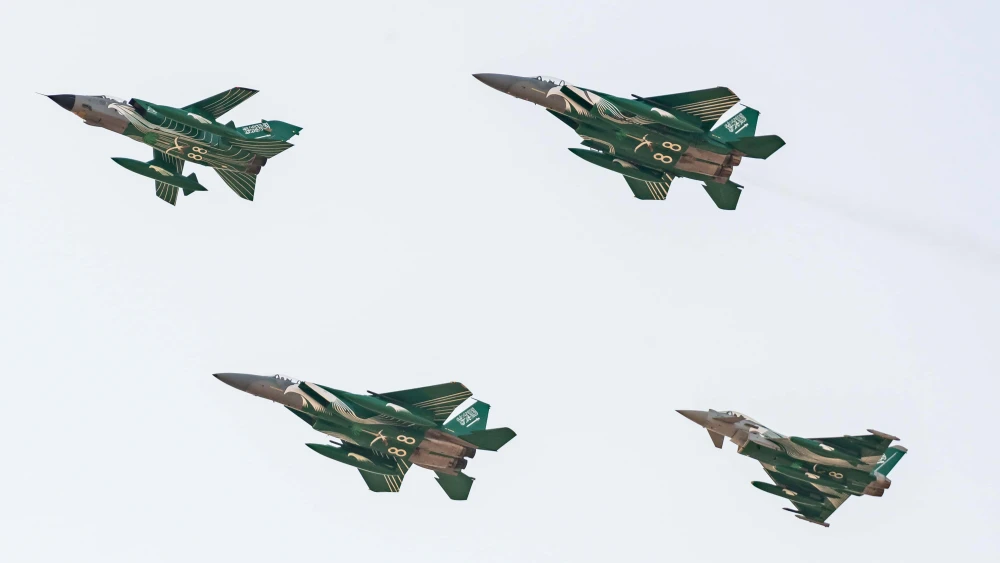
“The kingdom reaffirms its full right to take all necessary measures to protect its security, territorial integrity, citizens, residents and vital interests, including the option of responding to the aggression,” it said.
So far, none of the targeted Persian Gulf countries has joined the United States and Israel in carrying out attacks on Iran.
Britain has yet to decide whether to send a warship to defend its Royal Air Force Akrotiri base in Cyprus, which was struck this week by Iran, a source told Reuters. France has deployed Rafale fighter jets in the United Arab Emirates to protect its naval and air bases there, French Foreign Minister Jean-Noël Barrot said on Tuesday.