


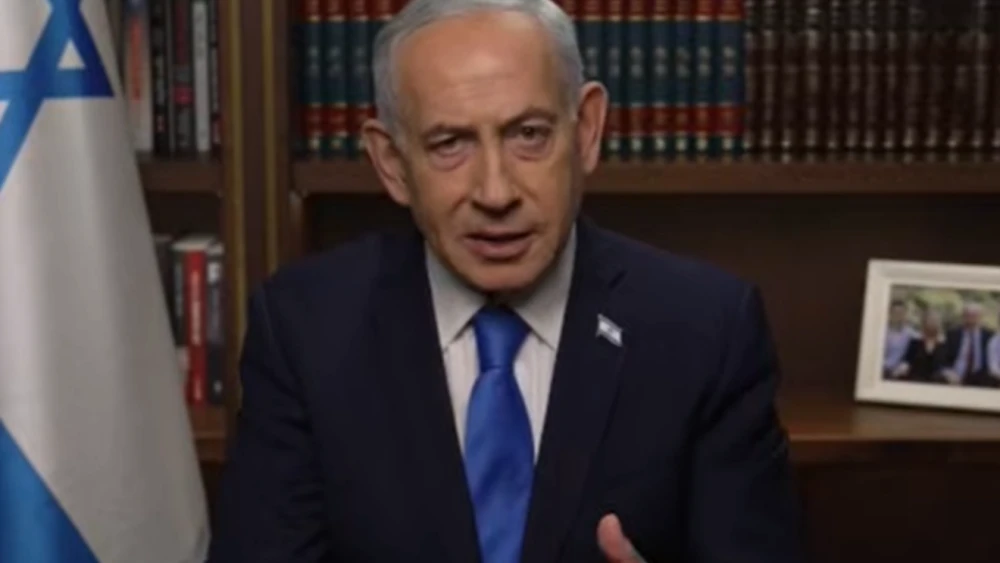
In an interview with Fox News’ Sean Hannity on Monday, Israeli Prime Minister Benjamin Netanyahu expanded on the reasons military action taken by the United States and Israel against Iran was essential, and pushed back on those forecasting that U.S. President Donald Trump was dragging America into another “endless war.”
“This is not an endless war. This is, in fact, something that will usher in an era of peace that we haven’t even dreamed of,” Netanyahu said.
Assuring that the war will be “quick and decisive,” Netanyahu argued that the military operation, by removing Iran’s dictatorship, the main source of conflict and terror in the Middle East, would transform the region, leading to many peace treaties between Israel and Arab and Muslim countries. “I think it changes the world,” he said.
NEW: Israeli Prime Minister Benjamin Netanyahu tells @seanhannity that Iran's "ballistic missile program and atomic bomb program" would have soon been "immune" to attack without Operation Epic Fury: "Action had to be taken, and you needed the resolute President like Donald J.… pic.twitter.com/YGJysdeFl1
— Fox News (@FoxNews) March 3, 2026
“Now, it’s up to the people of Iran, in the final count, to change the government, but we are creating, America and Israel together are creating, the conditions for them to do so,” he said.
Netanyahu characterized the Islamic Republic as fanatical, noting it had already murdered thousands of Americans in Iraq and Afghanistan with roadside bombs. It has been chanting ‘Death to America’ throughout the 47 years of its existence, twice attempted to assassinate Trump, and, most recently, massacred thousands of its own people, he reminded.
“This is a regime committed to destroying the United States of America. It’s the only country on the planet that says so openly and works tirelessly to achieve that goal,” Netanyahu said.
Echoing Trump’s statements that the United States needed to act against an “imminent threat,” the Israeli prime minister said that action had to be taken now because even after the June operation, in which Israel, with U.S. assistance, hit Iran’s nuclear and ballistic sites, the ayatollahs didn’t change direction.
“They didn’t learn the lesson,” he said. They started building new sites, including underground bunkers to house their missile and nuclear programs.”
He added, “If no action was taken now, no action could be taken in the future. And then they could target America. They could blackmail America. They could threaten us and threaten everyone in between.”
Asked by Hannity about an accusation that he had dragged Trump into war, the prime minister said this was “ridiculous.”
Describing Trump as “the strongest leader in the world,” he said the president makes up his own mind and puts America first. “He does what he thinks is right for America. He also does what he thinks is right for future generations.”


