Iran’s breakout time to a nuclear weapon is now “just a few weeks or less,” White House Press Secretary Jen Psaki told reporters on Tuesday.
Tehran had greatly accelerated its nuclear program after the United States unilaterally withdrew from the 2015 Joint Comprehensive Plan of Action in 2018 under President Donald Trump, Psaki said during a press briefing.
The rapid progress Iran had made since “definitely worries us,” she said.
Psaki reiterated an assessment shared earlier on Tuesday by U.S. National Security Advisor Jake Sullivan, who said Iran’s progress “is a direct impact of pulling out of the nuclear deal, making us less safe, giving us less visibility. And it’s one of the reasons we pursued a diplomatic path, again, when the president took office.”
Psaki added that the White House briefs Israel “regularly” on the negotiations around a possible return to the deal.
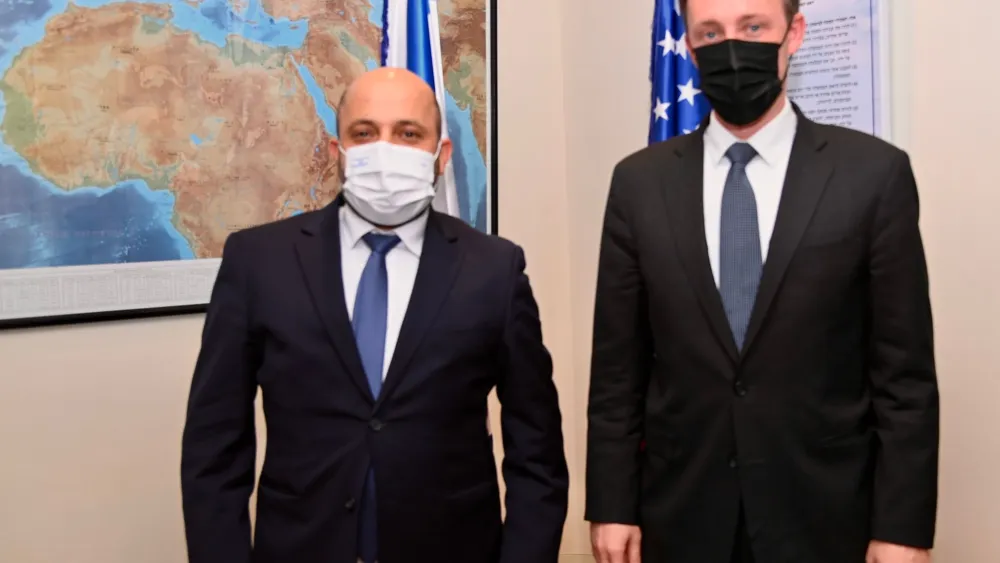
On Monday, Sullivan met in Washington, D.C., with his Israeli counterpart, Eyal Hulata. The two discussed “a range of regional and global security issues,” according to a White House statement.
“Mr. Sullivan emphasized that the United States is attuned to Israel’s concerns about threats to its security, including first and foremost from Iran and Iranian-backed proxies. They agreed to further enhance the ongoing coordination through the U.S.-Israel Strategic Consultative Group and strengthen security and diplomatic cooperation wherever possible with other regional partners,” the statement said.
The two also discussed the war in Ukraine and the need to continue supporting America’s Ukrainian partners, according to the White House.
“They committed to continue their close coordination on the range of security issues of importance to both the United States and Israel, and they look forward to President Biden’s visit to Israel in the coming months,” the statement continued.