


The boycott Israel movement evidently is what it eats.
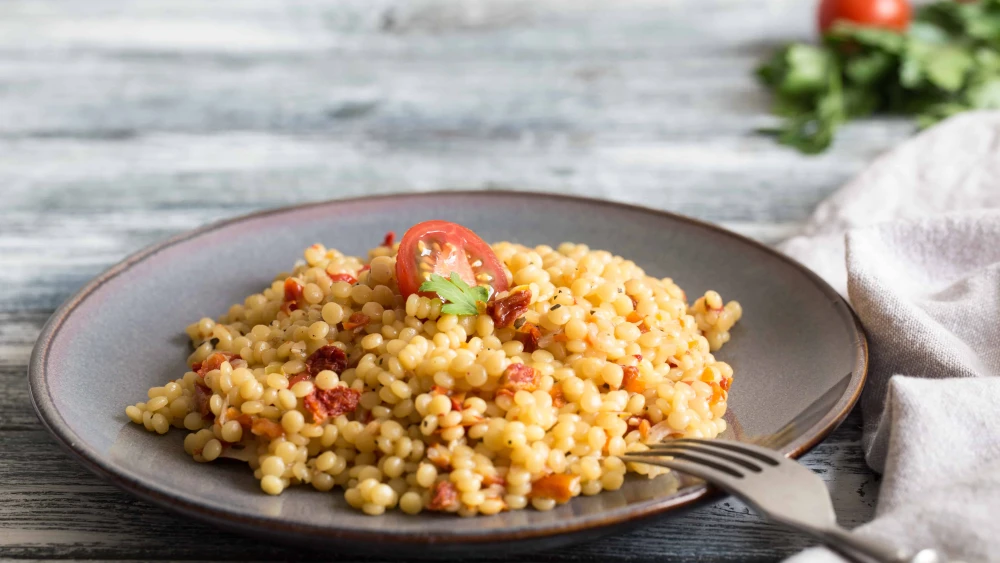
Citing “authenticity” concerns, the Yale University dining hall dropped the Jewish state from its “Israeli couscous salad with spinach and tomatoes,” dubbing the dish just “Couscous salad with spinach and tomatoes.”
Then, the Ivy League school in New Haven, Conn.—whose arms contain the Hebrew for Urim and Thummim, and the Latin for “light and truth"—reversed course and added Israel back into the menu item name.
“You have raised a point that merits further consideration,” a Yale spokesman told Adam Kredo of The Washington Free Beacon. “In this case, Israeli Couscous is indeed an actual ingredient and is explicitly listed on the ingredient list. Considering it is the main ingredient, it is appropriate to remain in the title, and we will correct this oversight.”
“Authenticity of the food and naming of the recipes have been a concern brought to us by students in the past,” a Yale spokesperson added. “There were times that they felt our food did not ‘authentically’ represent the country or ethnicity referenced in the name.”
SCOOP: This week @Yale changed the name of a popular food item in their dining halls which has been on the menu for years. It’s called “Israeli Couscous Salad” and they removed the word “Israeli.” Why would they do that?
— Libs of TikTok (@libsoftiktok) December 12, 2023
Here’s the before and after: pic.twitter.com/PNhz3zB17k
Israel Nitzan, the former acting Israeli consul general in New York, wrote that “couscous” and “Israeli couscous” are not the same thing.
“Couscous is steamed granules of rolled semolina,” the diplomat said. “Israeli Couscous is toasted pasta. Decolonize ignorance!”
A “cowgirl chopped salad,” served with salmon or chicken, listed in a catering menu on the Yale website comes with “Israeli couscous.” The latter item also is mentioned in a Sept. 17, 2014 article in the Yale Daily News, a student publication.


