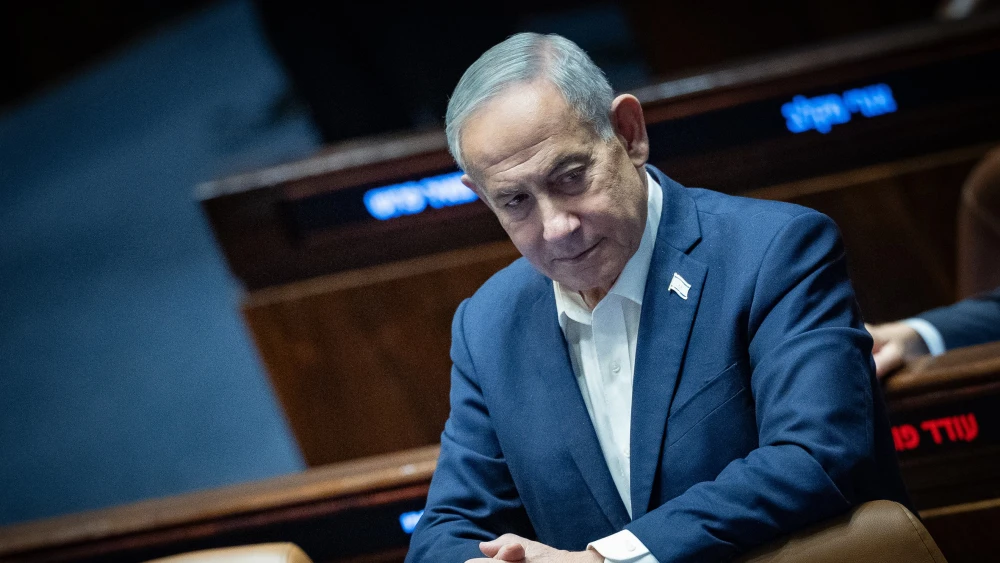

Israeli Prime Minister Benjamin Netanyahu is worried. New right-wing parties running in the Oct. 27 election will “burn” coalition votes, he warns in a video posted to his Instagram account on Monday. By “burn,” he means that votes going to parties that don’t pass the 3.25% electoral threshold will be lost to his coalition.
Netanyahu painted a potential repeat of 1992, when the right-wing fragmented into multiple parties, many of which failed to pass the threshold, then 1.5%. Some 100,000 votes were lost, most on the right. The collapse led to the rise of a left-wing government headed by Yitzhak Rabin, which brought about the Oslo Accords and the rise of a Palestinian entity ruling over the Gaza Strip and parts of Judea and Samaria.
The mistake cost Israel thousands of lives, Netanyahu said. He cautioned that a government led by his current challenger, Gadi Eisenkot, would bring about the final stage of the process Rabin’s government had begun—a Palestinian state.
“The only way to prevent this is first of all to say no to voting for these small parties,” Netanyahu said.
New parties are a recurring feature of Israeli elections, Liron Lavi, a member of the Department of Political Studies at Bar-Ilan University in Ramat Gan, explained to JNS. In the last, Nov. 1, 2022, election, 39 parties ran, of which 10 passed the electoral threshold. The number this time is considerably less, only about 18. The final count won’t be known until Sept. 8, the deadline for parties to submit their candidate lists.
In the upcoming election, the right is more at risk from failing splinter parties than the left, which has partly learned from past mistakes, Lavi said. Among the right are disaffected voters, mainly “moderate” or “liberal right-wing,” who struggle to find a home among the current constellation of parties, she said.
Some have gravitated to Naftali Bennett’s B’Yachad (“Together”) Party and Eisenkot’s Yashar! (“Honest!”) Party, both in the opposition, Lavi said. Zionist Home - The Reservists, founded in July, and which is described as center-right, is also targeting those voters. Its leaders have ruled out joining a Netanyahu coalition.
Two new parties, HaAchdut (“Unity”), founded by former Likud Party figure Gilad Erdan, and Amcha Yisrael, (“People of Israel”), a new party announced on Tuesday by IDF Brig. Gen. (res.) Ofer Winter will also attempt to win over those voters, Lavi said.
According to most polls, neither HaAchdut norAmcha Yisrael will pass the electoral threshold. It is of this possibility that Netanyahu warns, though Lavi said she isn’t convinced Netanyahu is really worried. “It’s certainly better for him if those voters go for Erdan’s or Winter’s party, which will eventually join his coalition, than if they vote for Eisenkot or Bennett or [Avigdor] Lieberman,” she said.
A more realistic worry for Netanyahu is that Winter’s party will drag down Religious Zionism, an important member of the governing coalition. The two parties share the same voting bloc. Splitting them could “send one or even both under the threshold,” Lavi said.
Netanyahu may have yet another fear. Winter and Erdan have not committed to joining his coalition. Winter’s refusal has particularly riled Netanyahu, Ynet reported on Tuesday. The prime minister won’t rule out the possibility that Winter will link up with an opposition party, such as Lieberman’s Israel Beiteinu, in which case, Netanyahu’s concern is less that Winter won’t pass the threshold than he will march right-wing votes to the other side of the political aisle.
Gadi Taub, a political commentator and public intellectual, who hosts “Shomer Saf,” a popular Hebrew-language podcast, told JNS that Netanyahu’s fears are justified.
In an X post on Monday, Taub said that polls show the Religious Zionism Party “teetering” on the electoral threshold. Nothing kept Winter, himself a religious Zionist, from joining that party, Taub said. Instead, he risked splitting the vote. “A person who thinks about the good of the bloc wouldn’t risk such an important party within it—and with it, the entire bloc,” Taub said.
Taub also noted that Winter has refused to meet with Netanyahu. “Netanyahu is still the head of the bloc. What does refusing to meet with him mean?” Taub asked.
Taub posits that there are two interconnected elements at work with Winter. First, by most accounts, he has a massive ego. Second, he is angry at Netanyahu for not defending him when he was released from the army in 2024, having been passed over twice for promotion to major general. The episode sparked anger among right-wing politicians at the time, who said Winter was not promoted for political reasons.
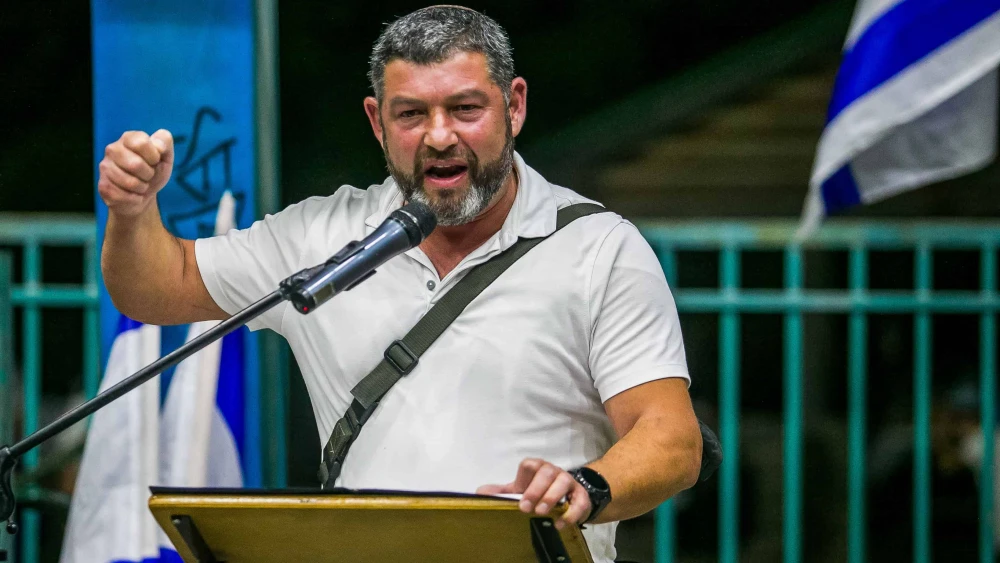
Winter’s ego was wounded when Netanyahu didn’t defend him, Taub told JNS. “He is not willing to forgive Netanyahu and may want to take him down.” Winter also may calculate that a right -wing bloc minus Netanyahu opens the way for him to grasp the Ministry of Defense portfolio, he said.
Egotism definitely plays a role in explaining why figures such as Winter repeatedly start new parties, even though it may hurt the chances of the side they’re purporting to help, Lavi said.
“Each and every one of them thinks that they are the answer the Israelis have been looking for,” she said. A prime example is Blue and White Party chairman Benny Gantz, she said. “It’s been obvious for a while now that he won’t pass the threshold. Yet, he’s still running.”