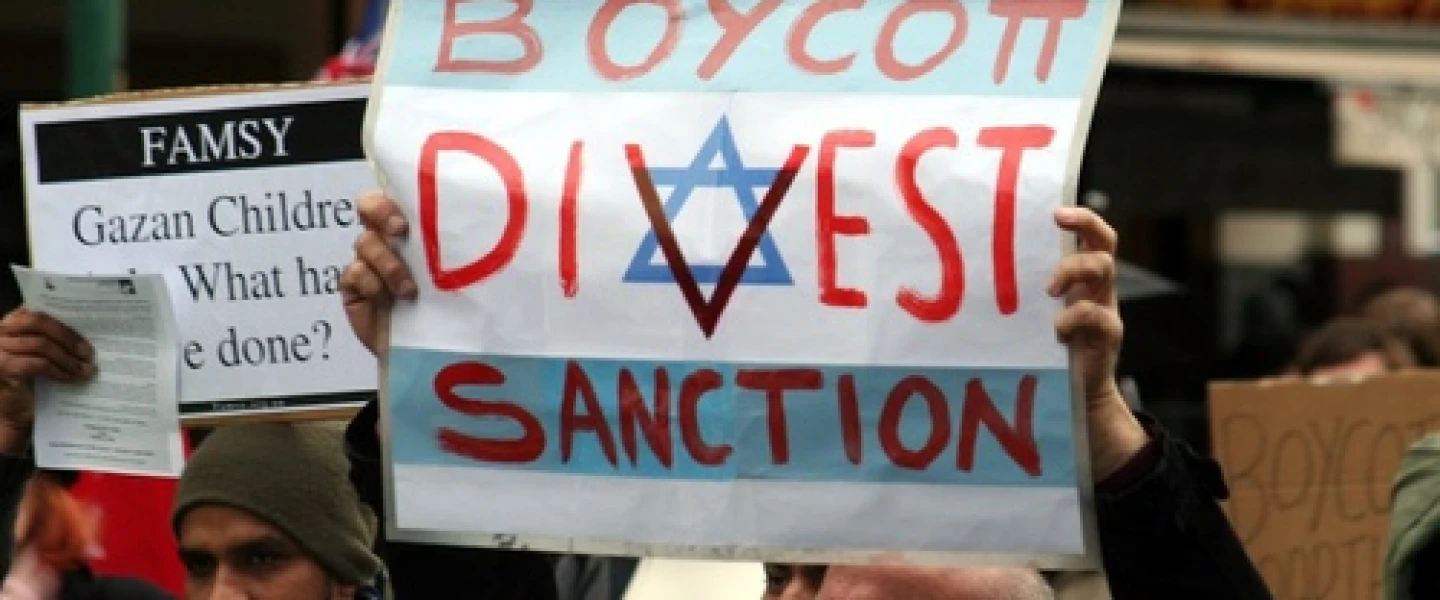
Anti-Israel activists have targeted Holocaust and genocide centers in Johannesburg, Durban and Cape Town, holding protests outside the institutions and sending threatening letters in what Jewish community leaders are calling “a campaign of intimidation.”
Two protests were held outside the Johannesburg Holocaust & Genocide Center (JHGC) in the past week, coinciding with an International Association of Genocide Scholars (IAGS) conference it hosted from October 20 to 24.
Ahead of the conference, 14 anti-Israel organizations—including the South African BDS Coalition, South African Jews for a Free Palestine and Queers for Palestine—sent a “declaration of intent” to the JHGC, accusing it of “silence and complicity at a time when a genocide is unfolding before the eyes of the world.”
The letter demanded that the center publicly label Israel’s military campaign in Gaza as “genocide,” denounce “Israeli apartheid and settler colonialism,” support the closure of the Israeli Embassy and endorse the global BDS movement.
According to JHGC director Tali Nates, the center’s leadership met with representatives of the signatory groups “in good faith” earlier in October. “Following the informal meeting, they came out with a declaration against the JHGC, completely rejecting in writing any further dialogue or formal meetings,” Nates said.
“Our engagement with their representatives stands in stark contrast to the Genocide Scholars’ Biannual Conference, where open—and often differing—views were expressed and debated rather than pressure tactics in place of engagement,” he added.
Nates emphasized that the center’s mission is “to be a place of memory, education and dialogue, drawing lessons for humanity from past atrocities.”
The protests outside the JHGC have drawn strong criticism. Cape Town-based public relations specialist Tim Flack said, “When people gather outside a Holocaust center to accuse Jews of genocide, it tells you everything about the moral collapse of our time. The Holocaust was the industrial annihilation of a people; to invoke it against the descendants of its victims is not ignorance; it is malice disguised as virtue.”
The JHGC, which opened in 2019, examines the Nazi Holocaust and the 1994 genocide against the Tutsi in Rwanda and serves as a hub for education and dialogue on genocide prevention and human rights.