Newsletter
Newsletter Support JNS

Florida man defaces Miami Holocaust memorial with own blood

Christopher Green, 44, was charged with one count of criminal mischief on a place of worship and is being held on a $5,000 bond.

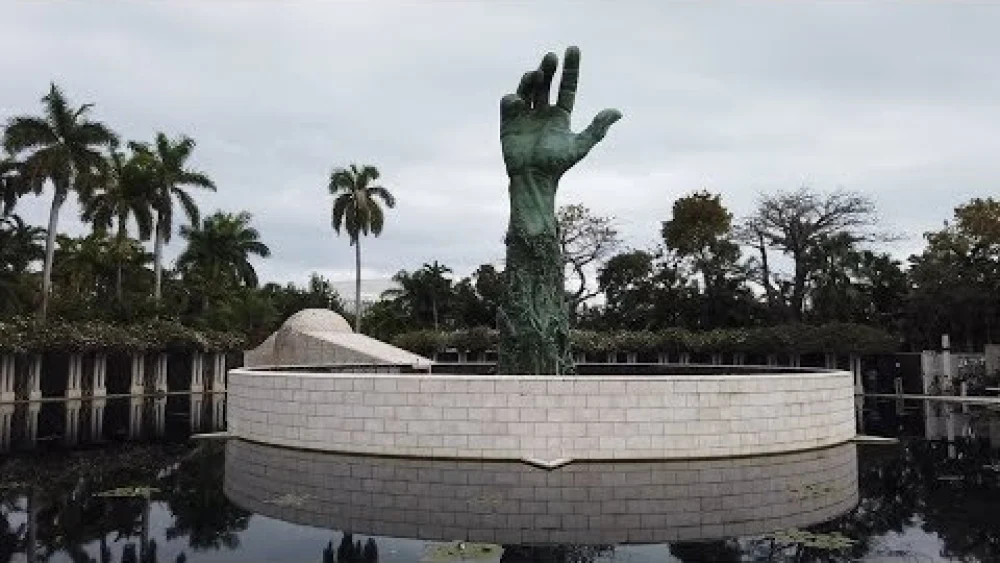
The Holocaust Memorial of the Greater Miami Jewish Federation. Source: Screenshot.

Police have arrested a man in Florida who cut his arm open and used his blood to deface the Holocaust Memorial of the Greater Miami Jewish Federation.

Witnesses saw Christopher Green, 44, dig into his left forearm to make it bleed and then wipe his blood all over the wall of the memorial on April 12, according to a police report cited by Florida’s Local10.

Police said Green, who is homeless, “wrote numerous letters of the alphabet in his blood. The letters he wrote did not spell anything readable.”

He left the scene of the crime but was arrested by police two days later on April 14.

Green appeared in court on Friday and was ordered to stay away from the memorial and its surrounding area. He was charged with one count of criminal mischief on a place of worship and is being held on a $5,000 bond.

Shafik Al Jawhari, 32, faces multiple charges, including uttering death threats and assault with a weapon, as Toronto police investigate the incident as a suspected hate crime.
A Navy F/A-18 Super Hornet fired a precision munition into the Palau-flagged vessel after its crew failed to comply with U.S. military directives, according to U.S. Central Command.
“They think it was intentional murder by the country of Israel,” the Kentucky congressman said of the 1967 attack.
Toronto police arrested five individuals on charges including assaulting and obstructing officers, while another person was arrested for operating a drone in the area.
A USAID inspector general investigation recommended blacklisting 101 current and former agency staffers, including school teachers and medical professionals, from U.S. foreign-aid programs.
“It used to be that most of the people who called us were in their 50s, 60s and 70s,” David Greenfield told JNS. “We’re getting calls from people in their 20s now who can’t find jobs, who need help.”