Several dozen Hezbollah terrorists remain trapped inside a tunnel complex in the area of Southern Lebanon’s Ali al-Taher Ridge, with supplies expected to run out within days, Channel 12 News reported on Monday.
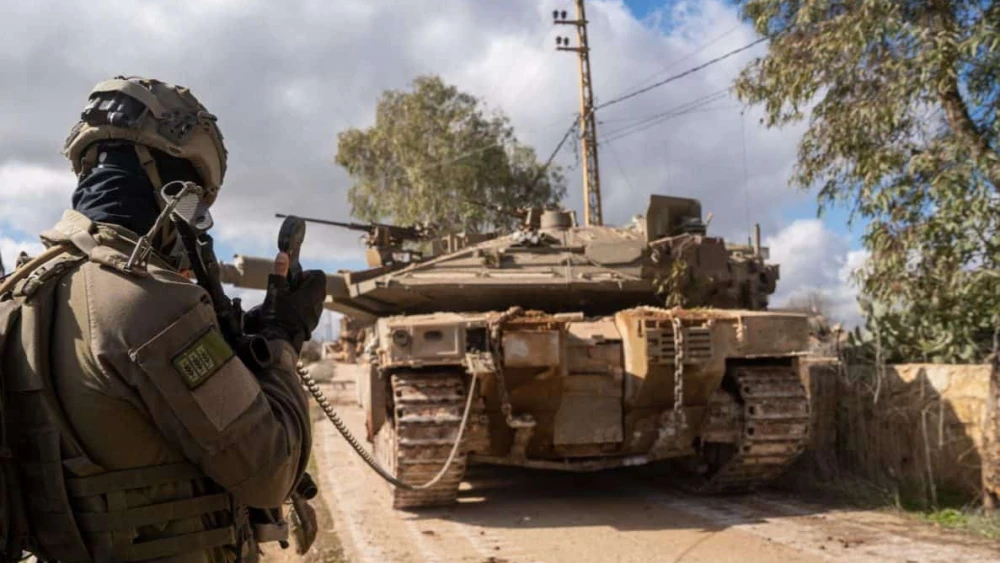
Israel Defense Forces soldiers are positioned at the tunnel exits, preventing the estimated 40 Hezbollah operatives from leaving, the report said. With supplies dwindling, however, the military is preparing for the possibility that the terrorists could attempt to carry out a surprise attack.
The Ali al-Taher Ridge reportedly contains an extensive Hezbollah tunnel complex stretching more than a kilometer underground. The site served as a command-and-control center and housed weapons depots and rocket-launching facilities.
The ridge has become the main point of friction between the IDF and the Iranian-backed Hezbollah terrorist organization and the most complex area for Israeli ground operations in Lebanon, per Channel 12.
The Israeli Air Force previously struck the tunnel complex but was unable to destroy it because it is dug deep underground, the report added.
The report came as the Trump administration pressed ahead with efforts to implement a framework agreement that seeks to remove Hezbollah from Southern Lebanon.
U.S. Secretary of State Marco Rubio met Lebanese President Joseph Aoun in Washington on Sunday to discuss the June 26 agreement, which outlines a gradual Israeli withdrawal from parts of Southern Lebanon alongside an increased Lebanese Armed Forces deployment.
Rubio said Washington remained committed to supporting the deal and “Lebanon’s efforts to deliver security, peace and a better future for the Lebanese people,” according to a U.S. readout.
Aoun said he told Rubio that Beirut’s position should align with the U.S. approach, beginning with an Israeli withdrawal from the first “pilot zone.”
Israeli and Lebanese delegations held a sixth round of U.S.-mediated talks last week, agreeing on guidelines for implementing the initial pilot zones and moving into a technical phase of negotiations.
Aoun arrived in Washington on Saturday and is scheduled to meet U.S. President Donald Trump at the White House on Tuesday. He is also expected to meet senior administration officials and members of Congress.