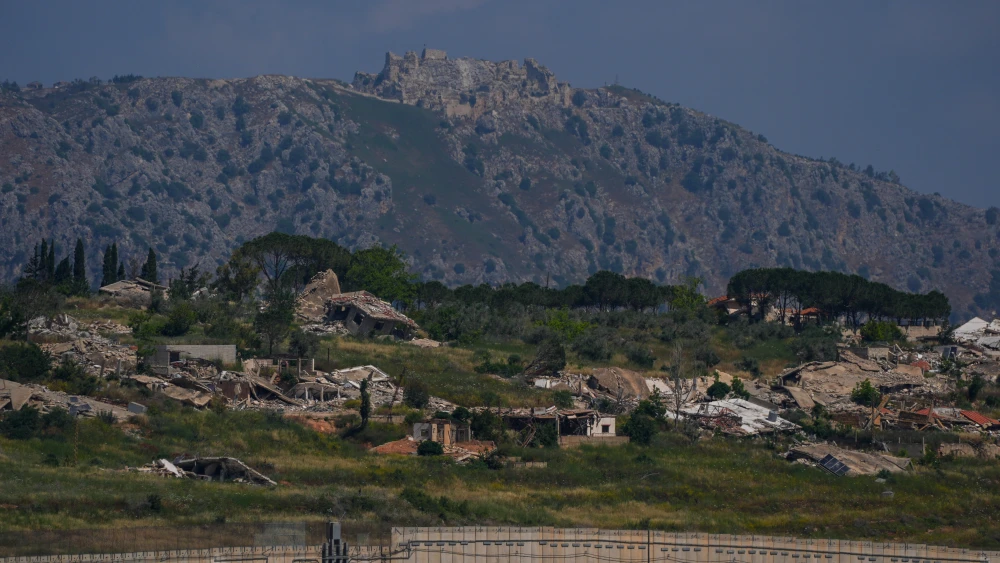
Israel slammed the “cynical politicization of cultural heritage” at UNESCO on Monday, calling its silence over Hezbollah’s systematic desecration of a historic Lebanese castle while referring to Israel’s defensive operation at the site as “a moral abdication.”
The harsh condemnation comes as the United Nations cultural body is expected to designate the strategic Beaufort Castle and several other Southern Lebanese sites as world heritage locations in danger, in order to protect them from further conflict.
The 900-year-old Crusader-built site, which was captured by Israeli forces in May, was used by Hezbollah as a strategic military stronghold and included an extensive underground tunnel network just a few miles from the Israeli border.
“For years, Hezbollah has systematically weaponized and desecrated this historic Crusader fortress, converting it into a military stronghold,” the Israeli Foreign Ministry wrote on X. “UNESCO’s silence on Hezbollah’s systematic desecration at Beaufort, while targeting Israel’s defensive operations, is a moral abdication.”
Israel formally withdrew from UNESCO in 2018, citing systemic anti-Israel bias capped by a resolution downplaying Jewish ties to the Temple Mount, but still maintains working relations on specific heritage conventions and remains a signatory to several protocols.
The U.S. administration has announced its latest withdrawal from UNESCO, which is set to take effect at the end of the year, labeling the organization as “woke” for promoting diversity, equity and inclusion (DEI) policies and harboring anti-Israel and pro-China biases.
The Trump administration previously pulled out of the U.N. cultural group in 2018, only to have the move reversed by the Biden administration.
The United States first quit the body in 1984 under the Reagan administration.
The Israeli capture of the castle during the latest war with Hezbollah, which began when the terrorist group fired rockets into northern Israel two days after the United States and Israel attacked its main backer, Iran, marked its deepest incursion into Lebanon in more than a quarter-century.