More than three decades after an extraordinary archaeological discovery near Qumran sparked worldwide attention and fierce debate, a new research project is seeking to determine whether a mysterious reddish-brown substance unearthed in a sealed cave could be remnants of Ketoret, the sacred incense burned twice daily in the First and Second Temples in Jerusalem.
In early July, Project Qumran—a nonprofit Israeli research initiative dedicated to documenting and scientifically investigating the discovery—released The Ketoret: A Source-Based Historical Account of the Qumran Incense Discovery, a free digital publication that reconstructs the history of the controversial 1992 excavation and outlines a new effort to subject surviving samples to modern scientific testing.
The book, written by Israeli journalist Adam Eliyahu Berkowitz under the research and editorial direction of M. Rhonda Attar, compiles eyewitness interviews, laboratory reports, excavation records, archival documents and photographs into what the organization describes as the first comprehensive documentary account of the discovery.
Rather than arguing that the material has been conclusively identified as Temple incense, the authors present the available evidence and invite readers to evaluate it for themselves.
A remarkable discovery
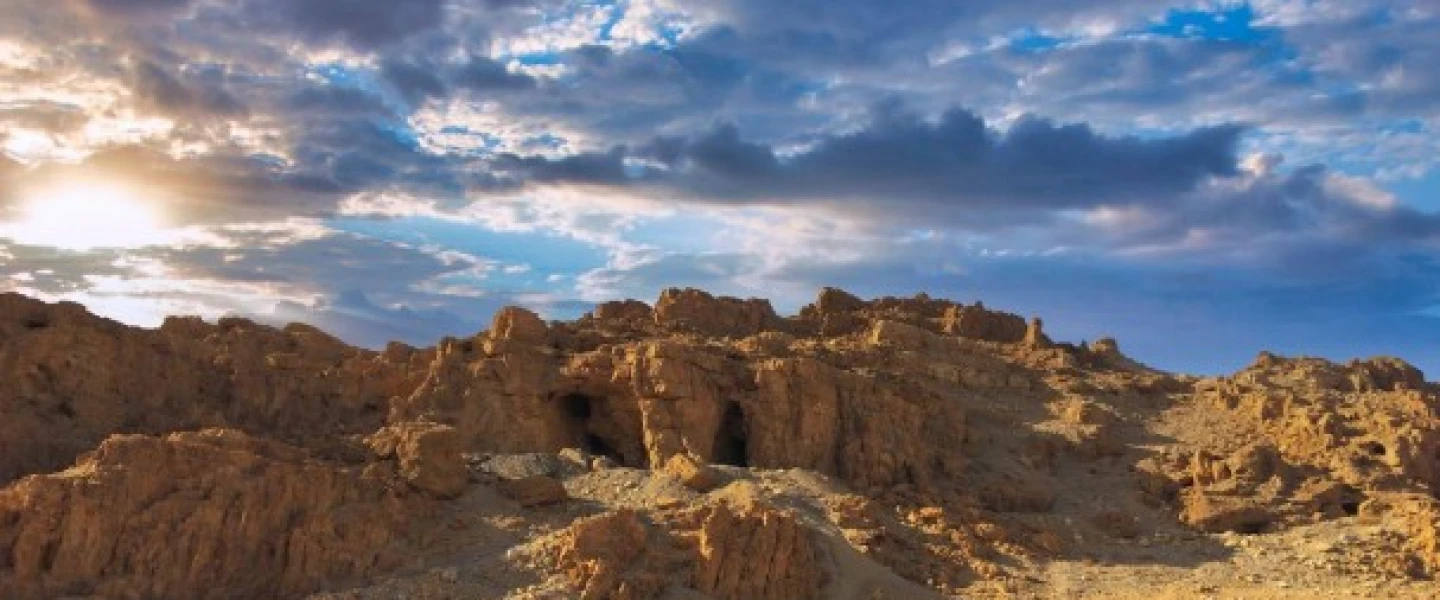
The story begins in May 1992, when archaeologist Vendyl Jones led excavations at a cave south of the ancient Qumran settlement near the Dead Sea.
Jones, a former Baptist minister from Texas who later embraced the Noahide faith, spent decades searching for treasures described in the Copper Scroll, one of the Dead Sea Scrolls.
During excavations at what he called the Cave of the Column, his team uncovered a sealed recess beneath a flat stone containing hundreds of kilograms of fragrant reddish-brown organic material.
Volunteers recalled that the aroma lingered on their clothing for days after handling the substance.
The discovery attracted immediate international media attention after Jones held a press conference before formally reporting the find to Israeli authorities.
Soon afterward, the excavation permit was revoked, work at the site ceased and the material passed into private custody.
According to Project Qumran, much of the original cache later disappeared, while one of its final known custodians was murdered. The whereabouts of the bulk of the material remain unknown.
Renewed investigation
Project Qumran says it has now assembled several surviving samples from the original discovery, including a mason jar of the reddish-brown powder donated by Anita Shay Jones, Vendyl Jones’s widow, who asked that it be returned to Israel.
“Please bring this back home to Israel where it rightfully belongs,” she told a visiting researcher as she handed over the jar, according to the project.
The organization also says it has recovered additional remnants from private collections, including dust believed to be from the original cache, which was found in a bomb shelter in Samaria.
Scientific clues
Two independent scientific analyses conducted in 1992 produced intriguing results.
Rabbi Dr. Marvin Antelman, a chemist affiliated with the Weizmann Institute of Science in Rehovot, analyzed a sample using mass spectrometry and atomic analysis. According to Project Qumran, he identified eight of the 11 principal ingredients listed in rabbinic sources describing the Temple incense, including myrrh, frankincense, cinnamon, saffron and costus.
A separate study by palynologist Dr. Terry Hutter identified plant fragments corresponding to at least nine of the 11 traditional ingredients. Hutter also described the fragrance released when the sample container was opened as “profuse and almost immediate.”
Both scientists cautioned at the time that definitive identification would require more advanced testing than was available in the early 1990s.
Perry Antelman, son of the late Marvin Antelman and a board member of Project Qumran, is overseeing plans for a new round of scientific analysis using technologies unavailable three decades ago.
“Scientific testing has changed dramatically since the 1990s,” Antelman said. “Those early tests gave us a solid chemical foundation; now we’re layering on independent lines of evidence. And we’re doing it blind: The analysts don’t know what this material is suspected to be.”
Researchers plan to conduct radiocarbon dating, elemental analysis, organic carbon testing and phytochemical studies before comparing the results with ancient descriptions of the Temple incense.
“We cannot recover the tremendous amount of material that was lost,” Antelman said. “But we can still honor the discovery by testing what remains with the greatest care possible. After all the claims, all the memories and all the controversy, we owe it to history, the Jewish people and ourselves to bring this question as close to resolution as the evidence will allow.”
Questions remain
The Ketoret: A Source-Based Historical Account also revisits two longstanding controversies.
One concerns the quantity of material originally discovered. Early reports estimated the cache at about 600 kilograms (1,320 pounds), while some eyewitnesses later suggested it may have been closer to 300 kilograms (660 pounds).
The other involves the identity of the Qumran community itself.
The prevailing scholarly view associates Qumran with the Essenes, a Jewish sect generally believed to have distanced itself from Temple worship. Other researchers have argued that the site served as a refuge for Temple priests who may have hidden sacred objects there before the Roman destruction of Jerusalem in 70 C.E.

Project Qumran does not attempt to resolve either debate. Instead, it argues that the surviving documentary record and the remaining physical samples justify a final round of scientific testing.
“The sourcebook [the Source-Based Historical Account] explicitly states that the material Jones discovered in 1992 has not been definitively identified as the Ketoret,” Berkowitz said. “Its claim is that the evidence gathered over 33 years is sufficient to demand proper scientific follow-up.”
The Ketoret: A Source-Based Historical Account of the Qumran Incense Discovery is available as a free download from Project Qumran, with a hardcover edition expected to be released later this year.