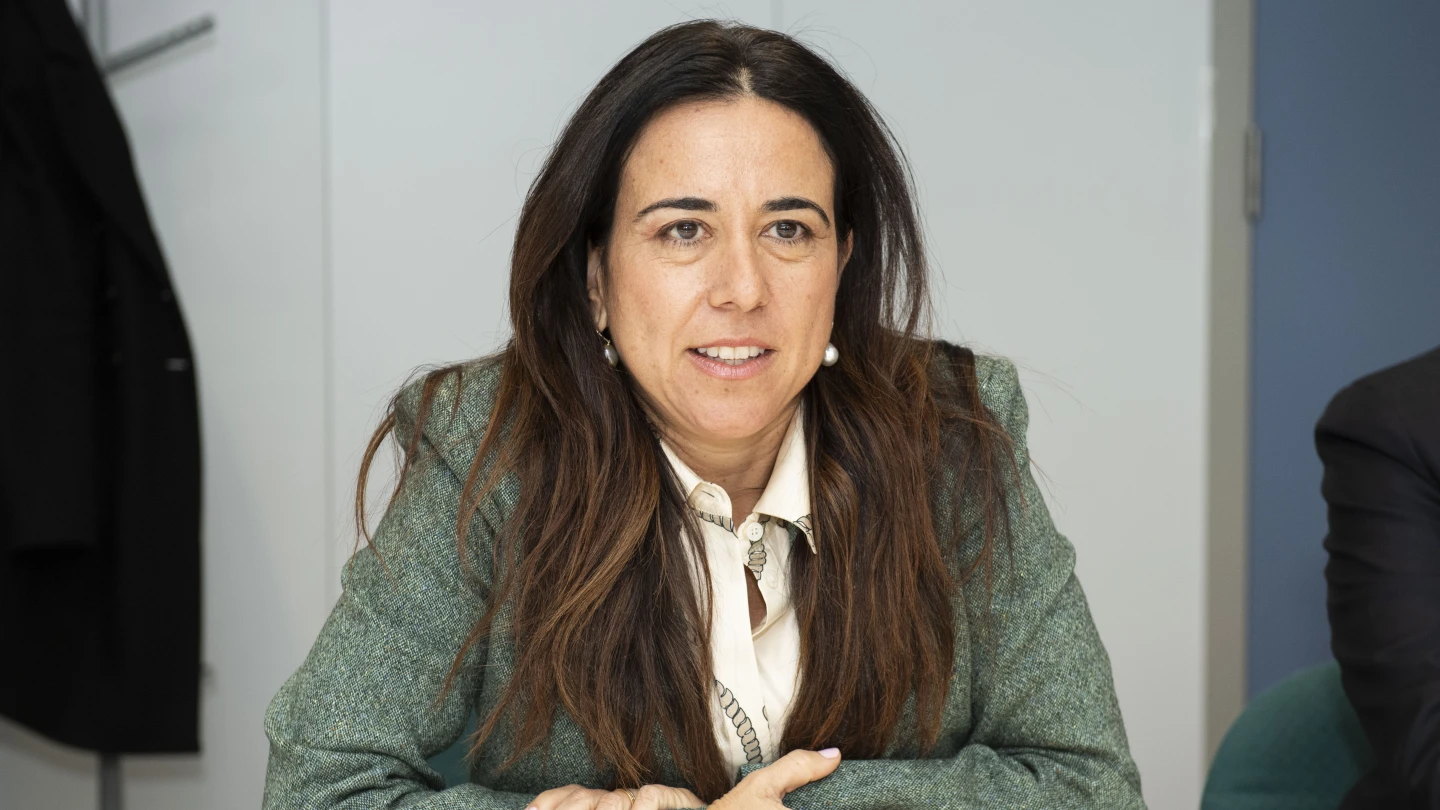
“As Jews, we have to think about how to become independent,” Michael Galibov, vice president of the Jewish Community of Vienna, told JNS on Wednesday at the Yael Foundation’s fourth annual summit on Jewish education held in the Austrian capital.
This year’s three-day summit, which opened on Monday night, focused on innovation, leadership, Jewish identity and the challenges of modern education. It also featured the Yael Awards Ceremony on Wednesday, a flagship event honoring leading schools—selected by parents—for excellence in education.
“We must secure ourselves with a strong Jewish identity. That is what the Yael Foundation is preaching and funding—education and strong Jewish identity. This is the only defense weapon we have,” Galibov said.
He emphasized that the strength of the Jewish people lies in their ability to look to the future, let go of the past and remain united.
“We don’t teach our children hate and we don’t live in the past. After the Second World War, we did not seek revenge. We turned to the future and built our own state, and that is why Israel is one of the strongest powers in the Middle East,” he said.
After Oct. 7, 2023, Galibov said Jewish communities around the world continued to look ahead and focus on doing good. The key, he added, is to keep building and never let go of Jewish identity.
“I have three sons, ages 8, 10 and 14. My 10-year-old told me to take off my kippah to avoid taking chances with people who don’t like us and could react negatively. He isn’t on social media and doesn’t watch the news, but still—if everybody takes it off or hides it, we will no longer have a Jewish identity. We must be strong and proud of who we are,” the vice president of the community said.
Something shifted on Oct. 7
Galibov’s parents, originally from Uzbekistan, moved to Vienna in the 1970s and decided to stay. Born and raised in Vienna, he describes himself as a proud Austrian Jew who wears his kippah every day. However, he said something shifted on Oct. 7.
“It is not antisemitism—it is Jew-hatred. We have to call it what it is, and that is what I ask the media to do,” he said.
Between 10,000 and 12,000 Jews live in Austria, he noted, united in a single community that includes Sephardi and Ashkenazi Jews.
“We have a president, two vice presidents, and we are all under one umbrella. In other parts of the world, governments may choose which Jews they speak to, but here they must address us as a whole. This is what keeps us strong,” Galibov said. “I am Sephardi and our president is Ashkenazi. We have differences when discussing internal matters, but we figure it out and get along. We are a very small community, but a very powerful one.”
Regarding antisemitic incidents, Galibov said they occur throughout Vienna, particularly affecting Jews who are visibly identifiable.
“People encounter issues all the time—even ordering a cab. Sometimes drivers simply don’t stop once they see that an identifiably Jewish man placed the order,” he said.
According to Galibov, antisemitism from Austria’s far-right parties is familiar and therefore more predictable.
“The biggest problem is the alliance between left-wing parties and Muslim groups. As they connect across the world, it signifies pure evil for the Jews, and this is what we have to fight,” he said.
When leaders such as Hungarian Prime Minister Viktor Orbán and Italian Prime Minister Giorgia Meloni oppose what Galibov described as a left-wing Muslim alliance, Jewish communities often find themselves conflicted.
“It’s hard for us. If we confront socialist governments over their ties with Islamist groups and make an issue of it, they could cut funding,” he said.