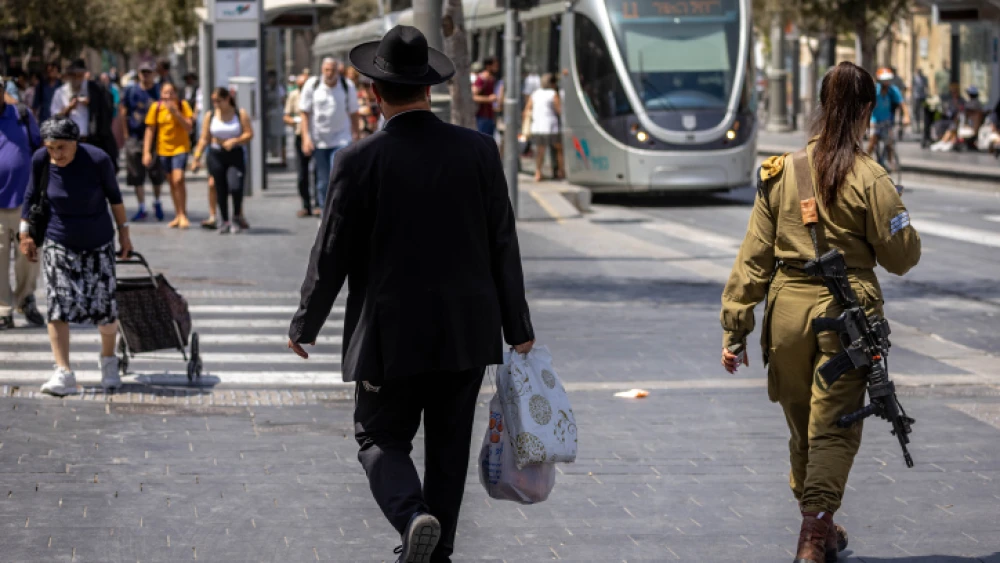
Jerusalem is on track to become Israel’s first city with more than one million residents, according to data published ahead of Thursday’s celebrations marking 56 years of a reunified capital.
The Central Bureau of Statistics report published on Wednesday shows that 984,500 people currently call Jerusalem home, with one in 10 Israelis residing in the Jewish state’s most populous city.
A total of 595,100, or 60.8%, of Jerusalem’s residents, are defined as Jewish and other non-Arab populations while 39.2% are Arabs. About 29% of the city’s residents are haredi Jews—around half of the city’s Jewish and other population. One out of every four haredi Jews in Israel lives in Jerusalem.
During 2022, the city’s population increased by 13,200 residents.
About 20,200 were added to the population naturally (births minus the deaths) and another 8,500 were added due to international migration. But a net 15,500 Jerusalemites left the city as 27,700 persons left for other localities while 12,200 new residents arrived from elsewhere in Israel.
Beit Shemesh, Tel Aviv and Bnei Brak were the main cities seeing migration to Jerusalem. Beit Shemesh, Tel Aviv and Givat Ze’ev were the main places people moved to from Jerusalem.
The fertility rate in Jerusalem was 3.86 children per woman, higher than the national average of 3. For Jewish and other women the rate was 4.39 compared to the national average for Jews and others of 3, and for Arab women it was 3.09 versus the national average for Arabs of 2.85.