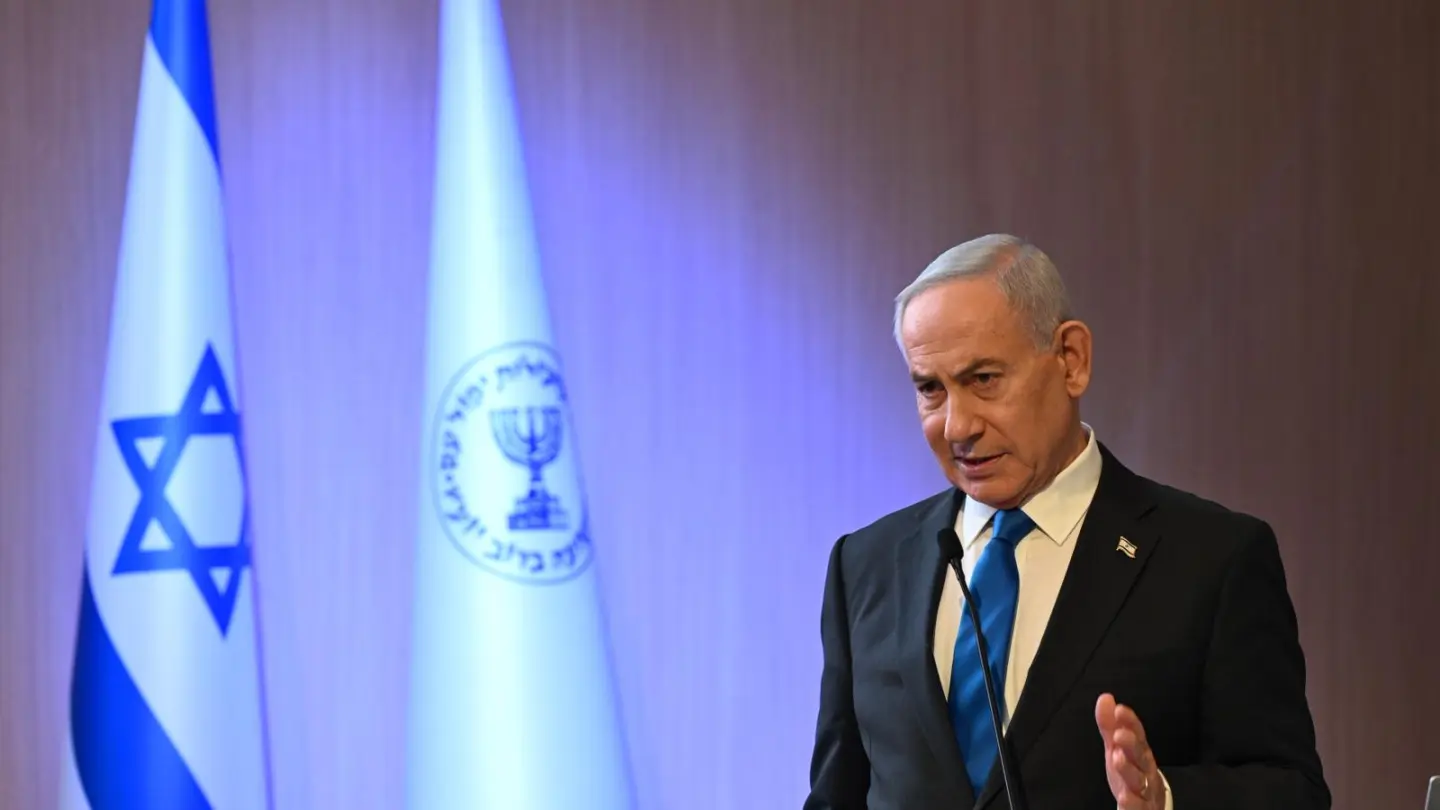
U.S. President Donald Trump signed an executive order imposing sanctions on the International Criminal Court on Thursday over its investigation of Israel for alleged “war crimes” in Gaza and its decision to issue arrest warrants for Israeli officials, including Israeli Prime Minister Benjamin Netanyahu.
The order includes a declaration of a national emergency to respond to what it describes as the court’s “unusual and extraordinary threat to the national security and foreign policy of the United States.”
“The ICC’s recent actions against Israel and the United States set a dangerous precedent, directly endangering current and former United States personnel, including active service members of the Armed Forces, by exposing them to harassment, abuse and possible arrest,” the order states.
Neither the United States nor Israel are members of the court, which is a stand-alone entity in The Hague and is not a part of the United Nations. Both Washington and Jerusalem have argued that they are outside the tribunal’s jurisdiction.
In November, the court issued arrest warrants for Netanyahu and Yoav Gallant, then the Israeli defense minister.
The sanctions order imposes “tangible and significant consequences” on court personnel, including a block on property and assets, and a ban on entry into the United States for sanctioned individuals and their families.
The centrality of the U.S. dollar in banking and the frequency with which foreign banks transact with their U.S. counterparts means that the imposition of American sanctions typically freezes the accounts even of foreign nationals with foreign currency deposits held in foreign banks if those banks are connected to the global financial system.
Trump’s order does not list any individuals to be sanctioned, though it mentions a “person listed in the annex to this order.” The White House has not yet published that annex.
The order also calls on the U.S. secretaries of treasury and state to provide a list of additional people to be sanctioned within 60 days.
“It’s unfortunate that Chuck Schumer decided to protect the ICC from sanctions as this kangaroo court targets U.S. soldiers and does Hamas’s bidding. But I’m grateful that President Trump is acting,” said Sen. Tom Cotton (R-Ark.). “Another promise made and kept by President Trump.”
Sen. Lindsey Graham (R-S.C.) stated that Trump’s “bold executive action” sanctions a court that “is a rogue organization with a corrupt prosecutor, who has violated the spirit of the law regarding prosecutions against Israel’s prime minister and former defense minister.”
“Israel is not a member of the court. The ICC has gone off the rails by exercising jurisdiction over a country that is not party to the Rome Statue. I fear they will not stop at Israel,” Graham added. “Under the legal theory being used against Israel, it is very conceivable the ICC will one day come after an American president and defense secretary for allegations of war crimes made by adversaries.”
Trump’s executive order is “a necessary deterrent to protect American military personnel and others,” Graham stated. “These sanctions will be a strong signal to the world regarding the legitimacy of the court’s actions against Israel.”
Yinam Cohen, the consul general of Israel to the Midwest, hosted a panel in Chicago about the Hague court on Thursday.
“This court has falsely equated Israel, a democratic state with its own robust legal system, with Hamas, a globally recognized terror organization,” Cohen stated. “We are pleased with the current administration’s support on these issues.”
Trump’s executive order is similar to the sanctions described in the Illegitimate Court Counteraction Act, which failed to pass the Senate in January after all but one Democrat voted against the measure.
Senate Minority Leader Chuck Schumer (D-N.Y.) argued that the sanctions package was overly broad and could negatively impact American companies that contract with the Hague court.
A slew of long-standing emergency-power laws grants the president broad authority to impose sanctions without the need for new legislation, however.
In 2020, Trump sanctioned two ICC officials over the court’s investigation of alleged U.S. war crimes in Afghanistan.
Former President Joe Biden removed those sanctions in 2021.