Newsletter
Newsletter Support JNS
Martin Sherman. Credit: Courtesy.

Martin Sherman

Martin Sherman spent seven years in operational capacities in the Israeli defense establishment. He is the founder of the Israel Institute for Strategic Studies (IISS), a member of the Habithonistim-Israel Defense & Security Forum (IDSF) research team, and a participant in the Israel Victory Project.


The election results underscore just how tenuous relying on elected politicians to promote and implement any initiative for the extension of Jewish sovereignty across the 1967 Green Line can be.
It was only obdurate Syrian rejectionism that prevented Israel from committing a strategic error of epic proportions.
As recent history has demonstrated, Israel can only determine who rules Gaza if it rules it itself. For even if Hamas is toppled, there is no guarantee that its successor will be any less irksome.
When judicial rulings are overwhelmingly at odds with public perception of common sense and justice, it cannot but lose the very credibility imperative for it to function.
In light of the grim precedents provided by previous land-for-peace experiments, together with the no less grim trends in much of Arab society in general and Palestinian society in particular, continued insistence on this fatally flawed formula is both gravely irrational and grossly irresponsible.
Indeed, it is perhaps the very success of Israeli Prime Minister Benjamin Netanyahu that has generated such raw rancor against him.
Of course, the purported electoral appeal of the Blue & White line up is that it included three former IDF chiefs of staff (Gantz, Ya’alon and Ashkenazi). However, there is great doubt as to both how much of a political asset former generals really are, and just how much political acumen they display once elected.
The penury in Gaza is not the cause of enmity towards the Jewish state. It’s enmity towards the Jewish state that’s the cause of penury in Gaza.
The rivalrous political alignments is still likely to be shaped by differing attitudes towards the Palestinian Arabs, the territories in Judea and Samaria and the fate of the Jewish settlements, rather than on issues such as education, transport or health services.
This salutary U.S. initiative has the potential to rescind the recognition of the bulk of the Palestinian diaspora as “refugees.”
There is a policy paradigm that addresses both geographic perils of the two-state and the demographic perils of the one-state.
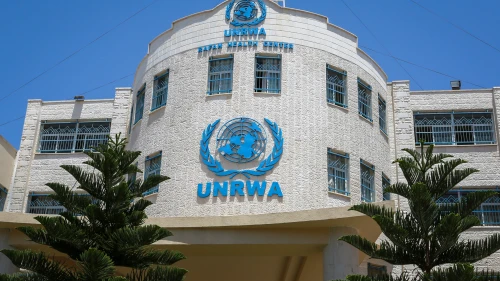
The dismantling of UNRWA, the naturalization of stateless Palestinian residents in Arab countries and the emigration of Palestinians from Judea-Samaria and Gaza are slowly emerging as realistic outcomes.