Newsletter
Newsletter Support JNS
Yaakov Lappin

Yaakov Lappin

Yaakov Lappin is an Israel-based military affairs correspondent and analyst. He is the in-house analyst at the Miryam Institute; a research associate at the Alma Research and Education Center; and a research associate at the Begin-Sadat Center for Strategic Studies at Bar-Ilan University. He is a frequent guest commentator on international television news networks, including Sky News and i24 News. Lappin is the author of Virtual Caliphate: Exposing the Islamist State on the Internet. Follow him at: www.patreon.com/yaakovlappin.


While Israeli defense officials have not specified the nature of the propulsion system tested on June 24, the launch serves as a clear message to both allies and adversaries of Israel’s advanced capabilities.
Air defense, ammunition and intel-sharing are vital, but offense is left to Israel.
Conflict with the Iranian-backed Hezbollah terror army would continue after a war, but Israel can take steps to improve its strategic situation, experts tell JNS.
Despite the relatively slow pace of the IDF operation in Rafah, the overall strategy is proving effective.
In Gaza, most of the group’s organized battalions have been dismantled by the IDF.
The IDF Spokesperson’s Arabic Branch is converting intelligence into operational outcomes without the need to fire a shot.
The Lebanese organization’s structure, Iranian funding and recruitment capabilities ensure a continuous flow of personnel to replace losses.
Such a scenario would relieve the Islamist group of responsibility for governance and allow it to rebuilt its military-terrorist power.
The military’s growing control of Gaza created conditions for the daring daylight hostage rescue in Nuseirat • Terrorists fired waves of RPGs at the extraction force from civilian areas.
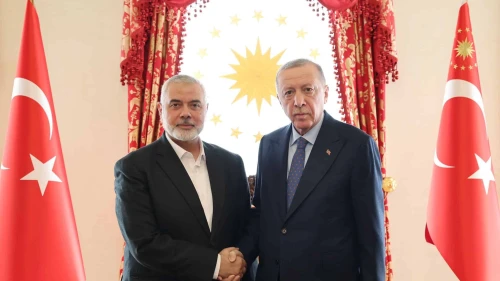
“For over a decade, under Erdoğan and the Muslim Brotherhood, Turkey has established itself as a comfortable and broad arena for Hamas’s activities,” expert tells JNS.
U.S. ambiguity is part of an effort to bridge the “large gap” between the sides and allow the implementation of at least the first stage of a ceasefire, experts tell JNS.
Since seizing power in the Strip in 2007, the Islamist group has installed massive quantities of arms in civilian households.