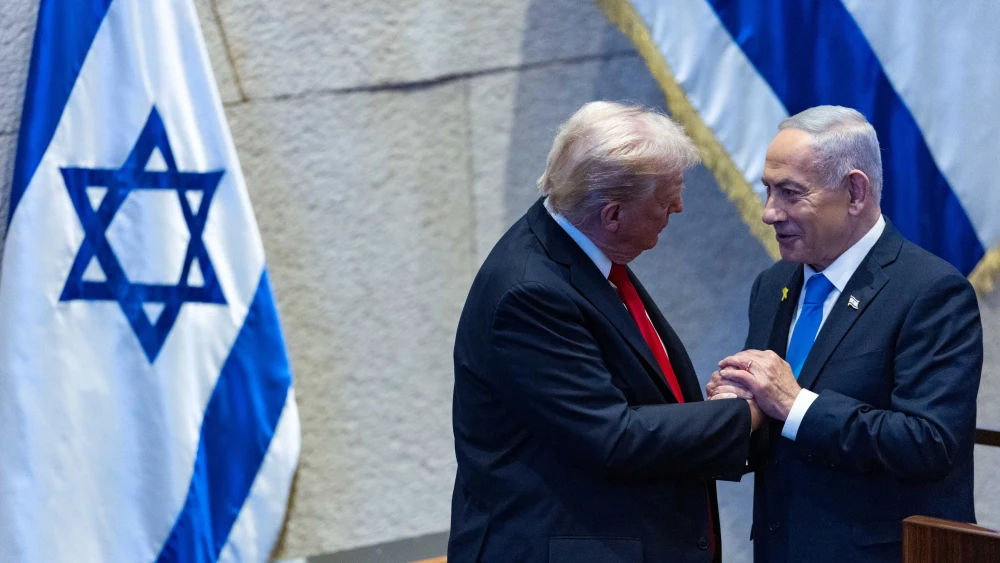

In his Knesset address on Monday, U.S. President Donald Trump spoke of his first partner in his great utopian vision—a time of peace for the entire world: Israeli Prime Minister Benjamin (Bibi) Netanyahu.
In an outpouring of shared enthusiasm at the Knesset on the return of the hostages, Trump placed Netanyahu in the circle of history’s great figures. “Thank you very much, Bibi. Great job!” he declared.
“Without him, none of this could have happened. Without his courage and patriotism,” Trump stated. “He’s not the easiest person to work with, but that’s what makes him great.”
This moment is one of many images of triumph that Netanyahu collected throughout the day on Monday: the American president arriving in Israel on his first visit, displaying fraternal admiration; the leader of the world’s greatest power saluting the leader of one of the smallest nations, uniting friendship and personal esteem with a clear strategic message: alliances are forged from shared, concrete interests that also reflect a common worldview.
Trump and Netanyahu have the same friends and the same enemies. Among the latter, both name Iran, the country that built the coalition of fanatic and terrorist forces which set Israel and the peace process ablaze.
Netanyahu, “with tooth and nail” at first and later with Trump’s full backing, waged the longest, most painful and most dangerous war in modern Jewish history.
The ordeal of the hostages—251 people torn from their families during the pogrom of Oct. 7, 2023, of all ages and backgrounds, held for unimaginably long months in conditions of torture—took on for Trump the same deep symbolic meaning it had already acquired in Israel: their release was fundamental to peace in the Middle East and the world.
Too bad Europe never understood that.
The two leaders’ decisions converged on a shared goal—to risk everything, to play with strength. Netanyahu’s determination to bring home all the hostages, no matter the price, combined with his controversial military decision to strike Gaza City and corner Hamas, met Trump’s “the gates of hell will open” attitude, pursuing his objective without accepting obstacles.
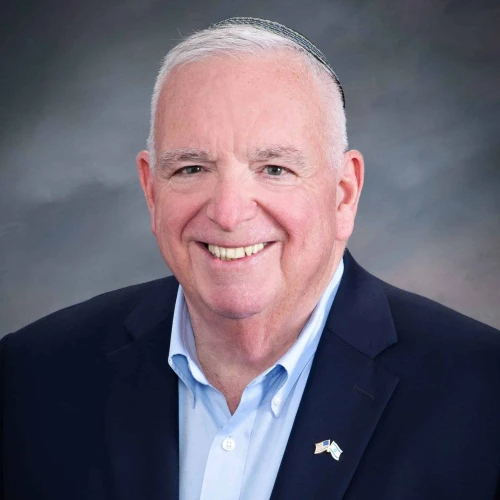
It’s hard not to see how Netanyahu, along with Strategic Affairs Minister Ron Dermer and Israeli Ambassador to the U.S. Yechiel Leiter (who lost a son in the war), built a strategic vision through a tireless, round-the-clock effort—a plan that sought not popularity but a definitive turning point, banking on the interests of the moderate Muslim world.
Meanwhile, Bibi pressed forward—first by refusing U.S. President Joe Biden’s demand to halt operations toward Rafah and the Philadelphi Corridor, then by making the excruciating choice to strike Hezbollah and eliminate its leader, Hassan Nasrallah; and to target Syria, the Houthis, and Shi’ite positions in Iraq.
Above all, the central point of Netanyahu’s success was Iran. When Trump saw how boldly Netanyahu confronted Tehran, he became convinced that the only path to true peace was to remove the greatest obstacle to it: Hamas.
Netanyahu was accused of everything. The families of the hostages joined forces with the “Kaplan” protest movement and even accused him of not wanting to bring the hostages home—of prolonging their suffering to maintain power and avoid a coalition crisis.
But the prime minister was working day and night, going to the root of the problem: demanding not just the hostages’ return, but Hamas’s removal and disarmament.
When Trump invited him to join the international summit at Sharm el-Sheikh, Netanyahu chose instead a friendly call with Egyptian President Abdel Fattah el-Sisi, opting for diplomacy over the hostility of Turkish President Recep Tayyip Erdoğan or the presence of Palestinian Authority head Mahmoud Abbas. He now aims for the next great Abraham Accord.
Maintaining peace will not be easy. Hamas, still armed, has reportedly returned only a fraction of the 28 bodies it was holding. For now, however, there is success.
It will be difficult for President Isaac Herzog to ignore the calls to pardon Netanyahu—“Champagne and cigars? Who cares!” Trump reportedly quipped.

Netanyahu holds the copyright on the breathtaking images of return: Noa Argamani, once rescued, now in the arms of her newly freed love, Avinatan Or. It is the photograph of victory for Netanyahu and for the Jewish people.
Zvika, the father of recently freed hostage Eitan Mor, dared to say it: “I thank Trump—but above all, I thank the prime minister.”
What greater victory could there be?