Newsletter
Newsletter Support JNS

Fearing coronavirus spread, chief rabbi upends key Rosh Hashanah ritual

Tashlich, a Jewish New Year ritual involving the casting off of sins, must not take place near water this year because of the COVID-19 pandemic, says Chief Ashkenazi Rabbi David Lau.

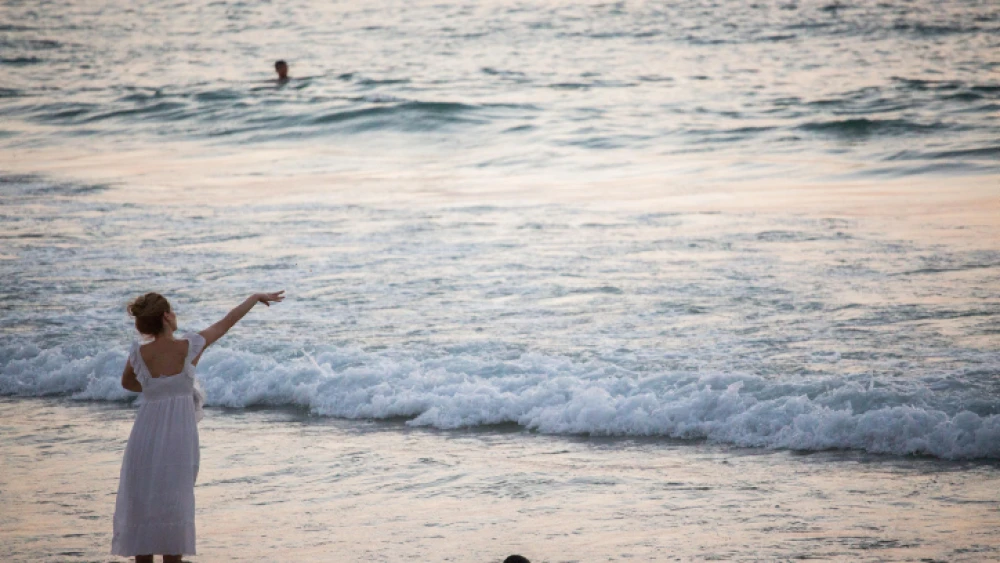
A woman performs "tashlich," a Jewish ritual performed before the eve of Rosh Hashanah, at the beach in Tel Aviv, on Sept. 10, 2018. Photo by Yonatan Sindel/Flash90.
A woman performs “tashlich,” a Jewish ritual performed before the eve of Rosh Hashanah, at the beach in Tel Aviv, on Sept. 10, 2018. Photo by Yonatan Sindel/Flash90.

A key ritual ahead of Rosh Hashanah has been effectively banned by Israel’s Chief Ashkenazi Rabbi David Lau this year, due to the ongoing coronavirus pandemic.

Tashlich, a prayer during which Jews symbolically throw their sins into the water to purify themselves ahead of the Jewish New Year, sometimes draws crowds and often involve large gatherings, potentially creating superspreader events that could exacerbate the coronavirus crisis.

Lau issued a special directive to observant Jews that reciting Tashlich “does not have to be near a source of water, and therefore no such gatherings shall take place this year.”

He added that “the prayer can be carried out from afar.”

Lau further urged synagogue organizers to take the necessary preparations for the High Holidays, including by writing down the congregants’ names to ensure proper separation into “mini-services.”

Likewise, the traditional blowing of the shofar must be performed far away from worshippers to ensure that virus-carrying droplets are not distributed across a large area.

This article first appeared in Israel Hayom.

Senior IDF officer: “The writing was on the wall. We should have prepared long ago.”
As NASA astronauts highlight global cooperation, some countries remain “fixated on outdated narratives,” the Israeli envoy said.
A convergence of security crackdowns, economic vulnerability and political uncertainty raises questions about the regime’s long-term stability
The move follows a dispute over efforts to exclude Israeli and Russian artists from top awards at the prestigious global exhibition.
“It’s time to understand that Israel should be sanctioned,” Jibril Rajoub said.