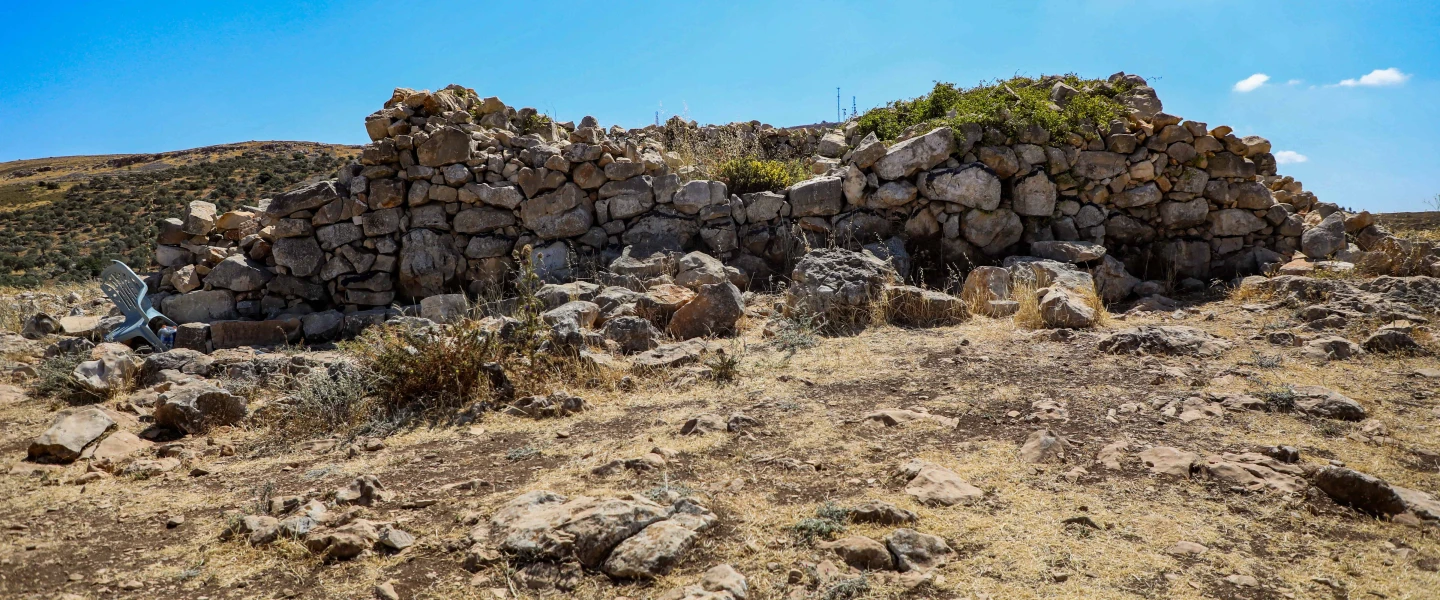
On Feb. 8, 2026, the Israeli Cabinet authorized a series of measures that will cement Israeli oversight regarding environmental hazards, water violations and the protection of archaeological heritage sites in areas A and B of Judea and Samaria. This policy transition coincides with the legislative advancement of the “Judea and Samaria Heritage Authority Bill,” which passed its first reading in early February. The bill establishes a civilian statutory corporation to replace the military-led Staff Officer for Archaeology. It is governed by a nine-member council appointed directly by the Minister of Heritage, a structural change that removes archaeological oversight from the Defense Ministry’s chain of command and places it under civilian ministerial control.
The Authority’s mandate includes sweeping powers of expropriation for both artifacts and the land they occupy, specifically for “protection, conservation, research, and development.” Unlike the Israel Antiquities Authority (IAA) within the Green Line, this body is empowered to enter Palestinian-governed municipalities to seize stolen items or halt construction deemed a threat to heritage sites. During the final committee debates, Knesset member Zvi Sukkot, chairman of the Education, Culture, and Sports Committee, defined the ideological imperative of the new body, stating, “it is our duty to protect [Jewish heritage]” across the entirety of Judea and Samaria.
By establishing this civilian framework, the government has created a permanent administrative apparatus designed to bypass Oslo-era restrictions and assert direct Israeli responsibility for the historical sites of Judea and Samaria.
“These new decisions are the beginning of Israel waking up to this horrible heritage destruction, which we have allowed to happen under our very noses,” Yishai Fleisher, the International Spokesperson for the Jewish Community of Hebron, told JNS. “The longer we ignore the problem, the deeper the damage will become,” he added.
The systematic destruction of archeological sites.
The new legislation seeks to address a long-standing issue of Palestinian cultural vandalism. Already in 1999, the Islamic Waqf utilized heavy bulldozers to excavate a massive opening for the “Solomon’s Stables” mosque on the Temple Mount, an operation conducted without archaeological oversight. This project resulted in the removal of approximately 9,000 tons of archaeologically rich soil, which was unceremoniously dumped as refuse in the Kidron Valley.
Subsequent recovery efforts by the Temple Mount Sifting Project have demonstrated the historical cost of this destruction. Despite the loss of stratigraphic context, the debris yielded artifacts such as the “Yed[a‛]yah (son of) Asayahu” bulla and the “Immer” bulla—7th-century BCE seals that provide physical evidence of the First Temple’s administrative and priestly functions. Highlighting the impact of the 1999 excavation, archaeologist Zachi Dvira stated that the use of heavy machinery caused “irreversible damage to the archaeological layers of the Temple Mount.” Today, researchers continue to report the use of power tools and cement in subterranean chambers, which further alters the site’s original Herodian and biblical-era masonry.
More recently, ongoing P.A. programs have cast further shadows over unique specimens of biblical archeology. The preservation of Joshua’s Altar on Mount Ebal, located in Area B near Nablus, serves as a primary driver for the current enforcement shift. Excavated by professor Adam Zertal in the 1980s, the site is identified as an Iron Age I cultic center (c. 1250–1150 BCE) that correlates with biblical accounts of the Israelite entry into Canaan. Physical destruction at the site has been documented repeatedly. In early 2021, P.A. contractors crushed portions of the site’s 3,200-year-old enclosure wall to produce gravel for a local road. This was followed by reports of rioters burning tires on the altar stones and the application of Arabic graffiti.
The site currently faces permanent erasure due to the P.A.-approved “Al-Bayada” neighborhood project, which authorizes 32 housing units directly atop the archaeological remains. By authorizing the Civil Administration to operate in Area B, the Cabinet aims to halt the Al-Bayada development and establish a permanent oversight presence to safeguard the altar’s physical footprint.
Fleisher argued that there is a deep ideological foundation to this trend of archeological defacement. “The reason that the P.A. targets the sites is that they want to erase the Jewish connection to the land,” he said. “These landmarks are the physical markers of the Jewish connection to the land, and the very presence of a site like Joshua’s altar is a challenge to the P.A.,” he added.
Sebastia, the ancient capital of the Northern Kingdom of Israel during the 9th and 8th centuries BCE, represents another primary focus of the government’s 2026 conservation efforts. Known in Hebrew as Shomron, the site contains the remains of the royal palace of the Omride dynasty alongside later Herodian and Roman structures. However, Israeli officials have documented a state of “intentional neglect” and physical vandalism at the site. This includes the use of ancient Herodian columns as support structures for Palestinian flags, the dumping of modern construction waste on biblical-era ruins, and the unauthorized paving of roads through archaeological layers.
To counter this deterioration, the Israeli government in late 2025 and early 2026 moved to implement a massive 190 million shekel (approximately $50 million) budget for the restoration and development of the “National Park of Samaria” at the site. This follows a November 2025 expropriation order for 1,800 dunams (445 acres) of land surrounding the ruins, the largest such order for an archaeological site in decades.
Explaining the necessity of the takeover, Binyamin Har-Even, the Staff Officer for Archaeology in the Civil Administration, told Channel 14 in a recent interview that “the expropriation will make it possible to protect the remains, rehabilitate the damage, and make the site accessible for future generations” as part of a broader mandate to safeguard national heritage assets against cultural erasure. The project includes plans for a visitor center and a designated access road to bypass the neighboring town, which has historically been a source of friction for preservationists.
The current legislation also aims to address the threat that the archaeological integrity of Judea and Samaria faces from industrial-scale looting. Historically, the administrative division of the West Bank into Areas A, B, and C created an enforcement vacuum that facilitated this illicit trade. While the Staff Officer for Archaeology (SOA) within the Civil Administration maintains oversight in Area C, the lack of Israeli jurisdiction in Areas A and B has effectively turned these zones into a haven for “antiquities marauders.” These looters frequently target archeological sites, extracting Judean coins, seals and pottery for the international black market.
“The theft of antiquities is a national scourge. The lack of enforcement and the loss of deterrence in this area leads to a catastrophe in which human cultural assets and the historical cultural treasures of the Jewish people in their land are stolen and destroyed,” Guy Derech, director of activities at the Shomrim al Hanetzach organization, said in a recent interview. “The State of Israel should prohibit the trade in antiquities by law,” he added.
The widespread phenomenon of heritage destruction has coalesced into a broad reality where most sites in Judea and Samaria have been damaged or destroyed. A report by Shomrim Al HaNetzach definitively showed that damage to archaeological and heritage sites in Judea & Samaria is no longer isolated, but widespread and, in key places, worsening. In a targeted survey of 365 high-importance sites (described as roughly 16% of the declared sites in the area), the paper reports that approximately 80% showed signs of damage. The report’s sharpest warning concerns its Area A list of the 24 most important sites, out of which 100% were damaged. According to the report, roughly 40% of these top-tier sites face “immediate danger of destruction,” and 48% show an accelerating trend of damage. The report attributed about 70% of the damaged area to land development and road cutting, 20% to construction and roughly 10% to looting.
“This is a national heritage disaster. This is reminiscent of what ISIS does. Three thousand years of history have been erased within a short time. There’s no possibility to restore a site which was damaged,” Adi Shargay, activities coordinator at the Shomrim al Hanetzach, said in a recent interview.
Beyond the physical threat to archeological sites due to illegal construction and looting, the ideological conflict over archaeological sites in Areas A and B is increasingly defined by “heritage laundering,” the systematic rebranding and physical alteration of sites to remove Jewish historical context. This process is most visible in the official renaming of sites in international petitions and local signage. For example, the 2017 UNESCO designation of the Cave of the Patriarchs as a “Palestinian World Heritage” site utilized the Arabic name “al-Haram al-Ibrahim” while omitting reference to the site’s Jewish origin. This narrative shift is mirrored at Tel Tibnah (Timnat Serach), where P.A. tourism materials highlight Roman and Byzantine layers while classifying the Iron Age Israelite footprint as “Canaanite-Palestinian.”
Beyond nomenclature, physical neglect and unauthorized construction are frequently utilized as tools for narrative displacement. At Tel Aroma, a strategic Hasmonean fortress located in Area B, the P.A. oversaw the construction of a “Mosque of the Martyrs” directly atop the ancient foundations, a move that physically obscures the site’s Jewish history. Similarly, in P.A. brochures for sites like Tel Dotan, the Israelite Iron Age layers are often bypassed in favor of a “Canaanite-to-Islamic” continuum.
“This is the approach that the Romans used, where they renamed Jerusalem to erase the Jewish connection to it. This is a project of national identity theft,” said Fleisher. “Renaming a site and destroying it serve the same purpose. It’s all about shaping the narrative and destroying the Jewish connection. From the UNESCO guy who shows up in a suit and tie to just the looter destroying an old tomb, it’s all working towards the same goal,” he added.
In light of this well-documented record of vandalism, neglect and destruction, proponents of the recent Cabinet decision and the parallel Knesset Legislation argue that the structural shift is necessary to halt what they describe as systematic neglect and the “erasure” of Jewish history by the Palestinian Authority. The bill’s sponsor, MK Amit Halevi, underscored the government’s stance during the Knesset deliberations, stating, “The time has come to take responsibility and prevent the ongoing theft of our cultural treasures and the destruction of the Jewish people’s heritage sites.” The decision to advance this legislation is happening in parallel with a litany of other bills and Cabinet decisions that have been introduced in recent weeks, all aimed at expanding Israeli sovereignty in Judea and Samaria.