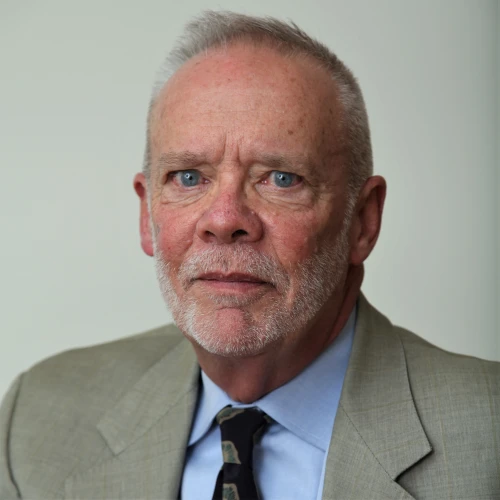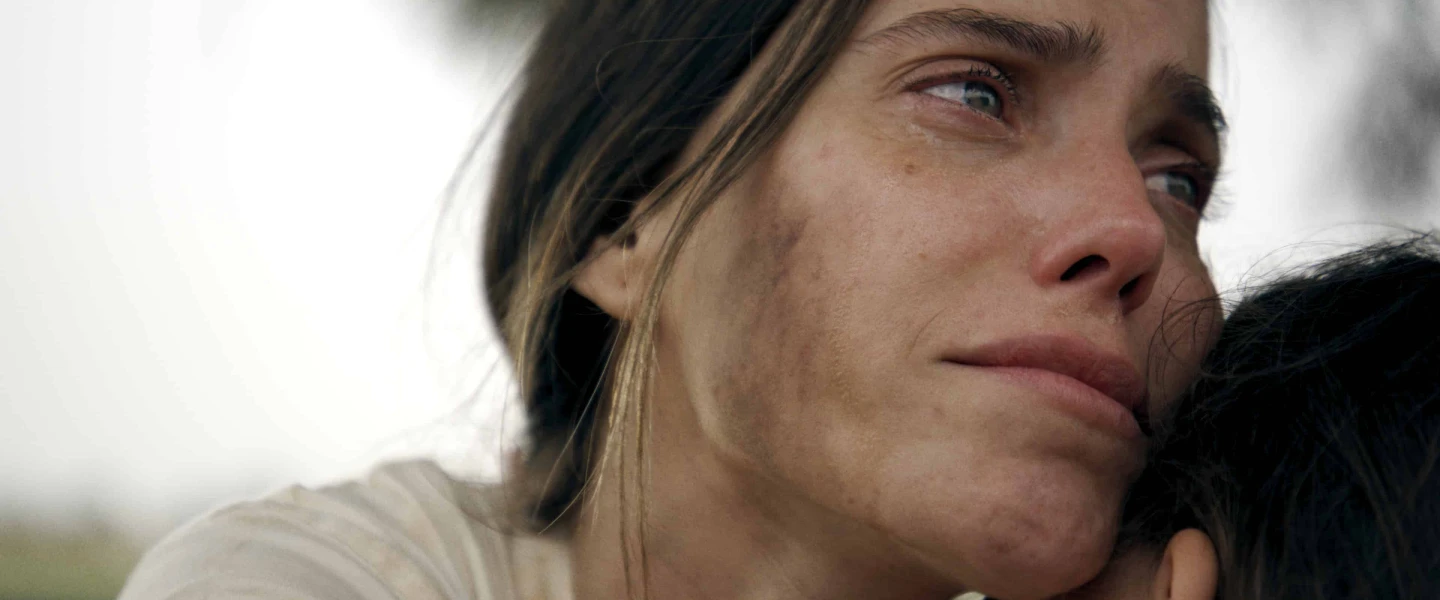
“Creating art so close to the event has a certain rawness, it comes from the gut—from emotion that hasn’t yet faded or been sanitized by distance,” said Lior Chefetz, creator, writer and director of “Red Alert,” a television series recounting the horrors of the Hamas-led invasion of southern Israel on Oct. 7, 2023. “That immediacy can be an essential part of truth-telling.”
“Red Alert,” which premiered on Keshet 12 on Oct. 5 and on Paramount+ on Oct. 7, tells the stories of ordinary Israelis who became heroes when Hamas and Palestinian terrorists invaded southern Israel, killing 1,200 people and kidnapping 251 hostages. More than two years later, the bodies of four of those hostages remain in Gaza.
Filming the series, Chefetz said, was a formidable challenge.
“The story is incredibly intense, and we had numerous large-scale scenes involving actors portraying Israeli security forces and Hamas terrorists,” he explained. “In the first episode alone, there are several gun battles set in the urban environment of the town of Ofakim.”
The production initially explored several filming locations, but logistical and safety concerns arose.
“Many municipalities were eager to cooperate at first,” Chefetz recalled. “But once they realized we were recreating actual firefights between terrorists and police, they grew concerned. There was a real fear that armed civilians might see the set, mistake it for an ongoing attack, and react—potentially leading to disaster.”
Ultimately, the production team turned to the city of Ofakim, where one of the fiercest battles of Oct. 7 took place.
“The city’s leadership embraced the project immediately,” said Chefetz. “As the mayor told us, ‘Who will tell our stories if not ourselves?’”
To ensure the safety of the cast, crew and residents, the production implemented extensive precautions: blocking streets, distributing flyers to nearby homes, posting warning signs at intersections and alleyways, stationing visible security personnel in reflective vests and using drones to monitor movement around the set.
“Every few minutes, a P.A. system announced that a film was being shot,” said Chefetz. “These measures allowed us to recreate the battle scenes close to the real locations—maintaining authenticity while respecting the community.”
The decision to release the series while hostages were still being held in Gaza and the war had not yet ended sparked controversy among some Israelis. Chefetz, however, said he believed the timing was justified.
“It’s been two years since Oct. 7,” he said. “Throughout history, many powerful works of art confronting national trauma or terror have been created close to the events themselves. “United 93" was made four years after the terror attacks in the United States on Sept. 11, 2001. “Patriots Day” came just three years after the Boston Marathon bombing, and Picasso painted “Guernica” the same year the city was bombed.”
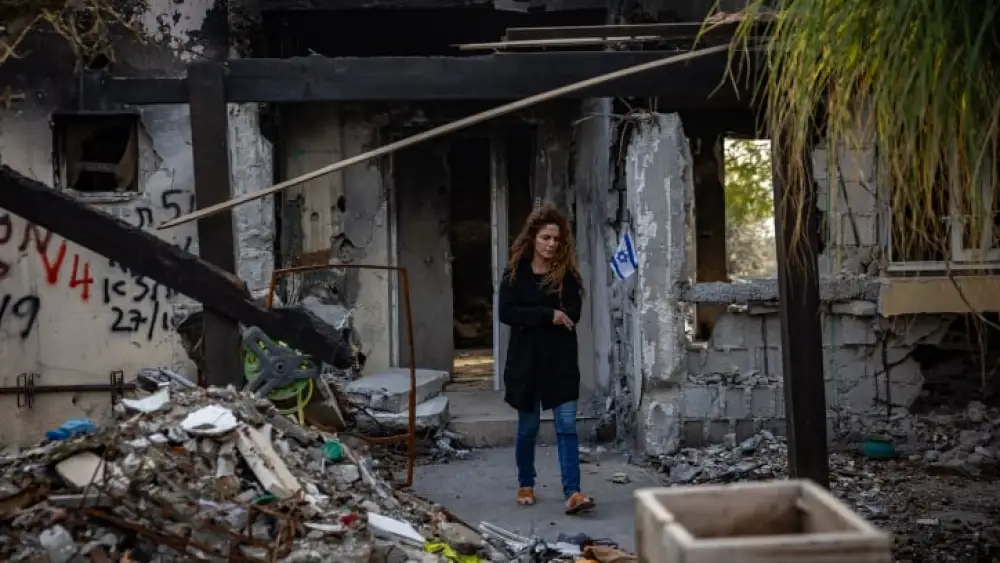
The entire shoot was an intensely emotional experience, said Lawrence Bender, executive producer of the series.
“There wasn’t a single person on set—crew or cast—who didn’t have a moment during filming,” Bender told JNS. “For example, we have a scene where a father and daughter look out their window to see a massive group of terrorists swarming into their kibbutz. Even though we were staging it, it was terrifying to watch.”
The production took extensive precautions to protect both participants and local residents.
“We lined up trucks along the perimeter of the filming area so that people passing by wouldn’t see the scene and be triggered,” Bender said. “We also arranged for the children from the kibbutz to spend the day at a play center while we shot that sequence.”
One of the stories depicted in the series is that of Bat Sheva Yahalomi, who escaped Hamas captivity with her two daughters as they were being taken toward Gaza. Her husband, Ohad Yahalomi, was hurt on Oct. 7 while defending his family, then kidnapped and murdered in captivity. Their son, Eitan Yahalomi, was abducted to Gaza and freed in November 2023.

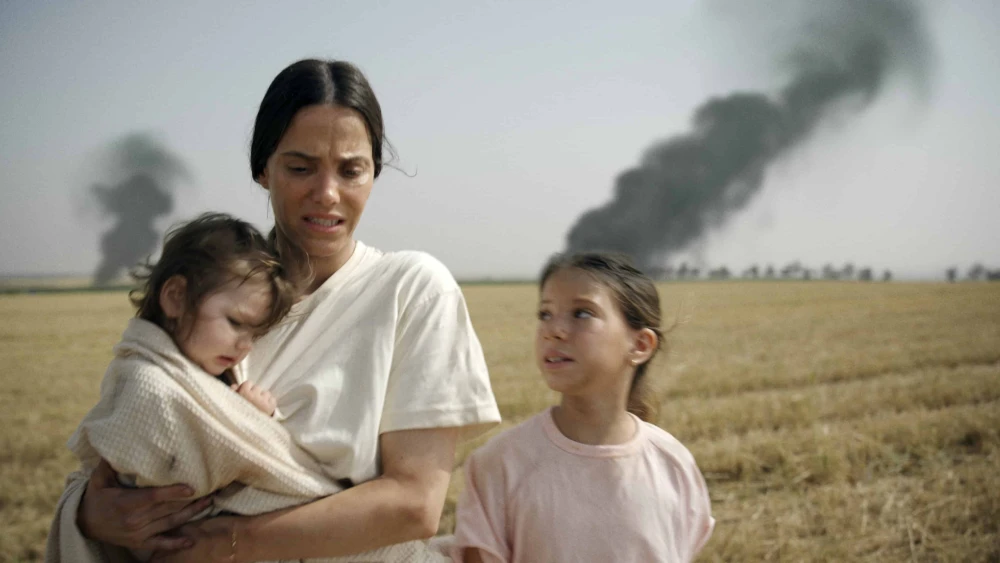
Recalling the filming of the scene in which Bat Sheva flees from terrorists with her daughter, Yael, and her baby in her arms, Bender said the moment was grueling to recreate.
“They were running barefoot in the heat for a long time before finding a tree to rest under,” he said. “As we filmed, we could actually hear the war in Gaza; we were only about a mile from the border. It’s hard to describe what that felt like—hearing the very conflict the film is about while shooting those scenes.”
The role of Bat Sheva Yahalomi is portrayed by Israeli actress Rotem Sela.
“For me as an actress, it’s truly a privilege to tell the story of the horrors my people endured on Oct. 7,” Sela told JNS. “I think that’s the essence of why I became an actress in the first place.”
Developing the character of Bat Sheva was a delicate and emotional process, said Sela. The two women spent long hours together as Yahalomi recounted, minute by minute, the tragedy that led to her husband’s murder and her son’s kidnapping.
“She described everything that happened on Oct. 7—what she felt, her fears, her emotions and what drove her actions that day,” Sela explained.
Playing the role of a mother, she said, often meant working closely with child actors and wanting to protect them from some of the heaviness of the scenes.
“Every time the director yelled ‘cut,’ I made sure to bring us all back to reality,” she said. “We’d talk about happy or funny things between takes, just to distance ourselves from the weight of what we were portraying. I think we all needed that.”
At times, the filming was overwhelming for everyone on set. “One day, I asked my father to come to the set,” Sela recalled. “He watched the scene where I met Israel Defense Forces soldiers after walking for hours without water. He was at the monitor with the director, and afterward, he came to me almost in tears. He said, ‘Rotem, I can’t watch it—it’s too much.’”
“I think everyone understood we weren’t just filming another series,” she added. “It wasn’t just another project. It was something bigger.”
Once the series was completed, Bat Sheva and Sela watched the first episode together at a screening also attended by Yahalomi’s family.
“I asked her how she felt seeing it on the big screen,” Sela said. “She told me it was hard to relive, but she was glad we did it, so people could see it and know the facts.”
“The most important thing for us is that people around the world understand what really happened in Israel on Oct. 7, and what led to this long war,” she continued. “People forget that on Oct. 6, there was a ceasefire, and it was Hamas terrorists who broke it and committed unthinkable acts against innocent people sleeping in their homes that Saturday morning.”
“I think it’s important for the world to know,” she said.
Sela herself was in Israel on Oct. 7 with her husband and children, and woke up to the sound of rocket sirens. She said she feels grateful to contribute to Israel’s story in her own way.
“Israel is like a little kibbutz; everyone knows someone who was kidnapped, injured, or murdered,” she said. “We all know each other. It’s like one big family. We all feel a bit like ambassadors when we speak to the world about Oct. 7.”