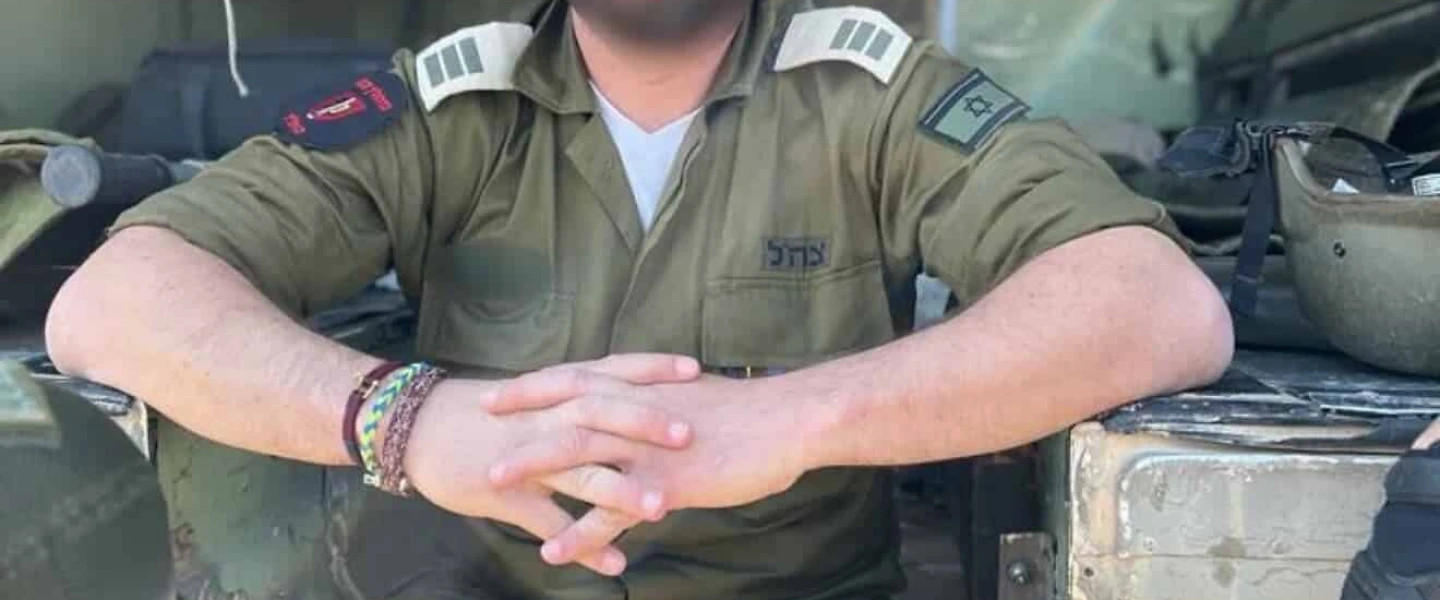
As tensions with Tehran escalate and Western nations urge their citizens to leave the country, Maj. (res.) Dr. L., commander of the medical company in the IDF’s 234th Battalion, recalled leading several complex operations during the previous war with the Islamic Republic—including the response to an Iranian ballistic missile strike on a residential building in Petach Tikvah during June’s 12-day war.
“Our primary mission is to carry out lifesaving procedures, provide medical treatment and evacuate casualties at missile-impact sites,” he told JNS. “I oversee several physicians and medical personnel. We sweep the entire area to locate anyone in need of care. If we can extract and transfer them to a hospital, that is preferable. If not, we perform medical procedures on site.”
Such missions depend on full coordination within the battalion, he emphasized. Within the IDF Home Front Command, several core areas of expertise are required for the operation to be conducted properly.
“I cannot operate without the soldier next to me ensuring the ceiling won’t collapse, or without the fire department confirming there are no hazardous materials that could injure us. Nothing can be done without everyone’s support—from the cook to the commanding officer,” Dr. L. said.
“We function as one synchronized unit. Everyone understands his role, and that allows us to save lives, although unfortunately, there were unavoidable casualties,” he added.
Twenty-eight Israelis died during the 12-day war.
On Wednesday, U.S. President Donald Trump convened senior advisers to discuss the Iran crisis and was briefed on Tuesday’s nuclear talks in Geneva, Israeli journalist Barak Ravid reported on Channel 12, citing two senior U.S. officials.
The Geneva meeting was the second round of Omani-mediated negotiations, following earlier talks in Muscat. Iranian Foreign Minister Abbas Araghchi said progress had been made, a view echoed by a U.S. official who told Reuters that Tehran agreed to submit detailed proposals within two weeks to help narrow remaining gaps.
Meanwhile, reports diverged over the likelihood and timing of a U.S. military strike on Iran.
CBS News reported that senior national security officials told Trump the U.S. military could be prepared to carry out strikes as early as Saturday, though sources familiar with the discussions said action would more likely come later. Officials, speaking on condition of anonymity due to the sensitivity of the matter, said Trump has not made a final decision.
Not a traditional battlefield
Other than during the U.S.'s “Operation Desert Storm” against Iraq in 1991, when Baghdad targeted Israel’s home front, Dr. L. said the last Iran war was the only instance in which the Home Front Command took center stage and Israeli civilians faced such direct danger.
“I am glad to say that our training proved itself on the ground,” he told JNS. “It’s not a traditional battlefield, but time is critical. If you are trained, fully prepared and properly equipped, the faster you reach the site, the greater the chances of saving lives.”
The IDF understood that the Home Front Command was at the center of events and directed its full attention to supporting those operations, Dr. L. said. On site, the IDF heads the rescue operation, and first responders—the Fire and Rescue Services, Magen David Adom and the police—follow.
The key, he added, is to evacuate those who can be transported to the nearest hospital as quickly as possible, as some injuries are not immediately detected at the impact site but manifest later.
A wide range of medical procedures may be performed on site, including splinting fractures, administering blood products and medications, and providing life-support interventions to stabilize the wounded and enable safe extraction.
Washington has deployed its largest concentration of air power in the Middle East since the 2003 Iraq invasion. The buildup includes two aircraft carriers, more than a dozen warships, hundreds of fighter jets—including F-35s, F-22s, F-18s and F-16s—multiple air-defense systems and additional forces en route. More than 150 U.S. military cargo flights have transported weapons and ammunition to the region.
As tensions intensify, Dr. L. said the unit remains in constant contact to ensure readiness. If one person is unavailable, another can immediately step in.
“The most important lesson is for the public to fully follow the Home Front Command’s instructions—these are lifesaving directives,” he said. “When you hear a siren, you must go to the nearest shelter and remain there for the full 10 minutes, until you receive notification that it is safe to leave.
“In the last conflict, there were a few casualties among those who followed the instructions, but they were the exception,” he added. “People were spared because they listened to and carried out the Home Front Command’s recommendations.”