


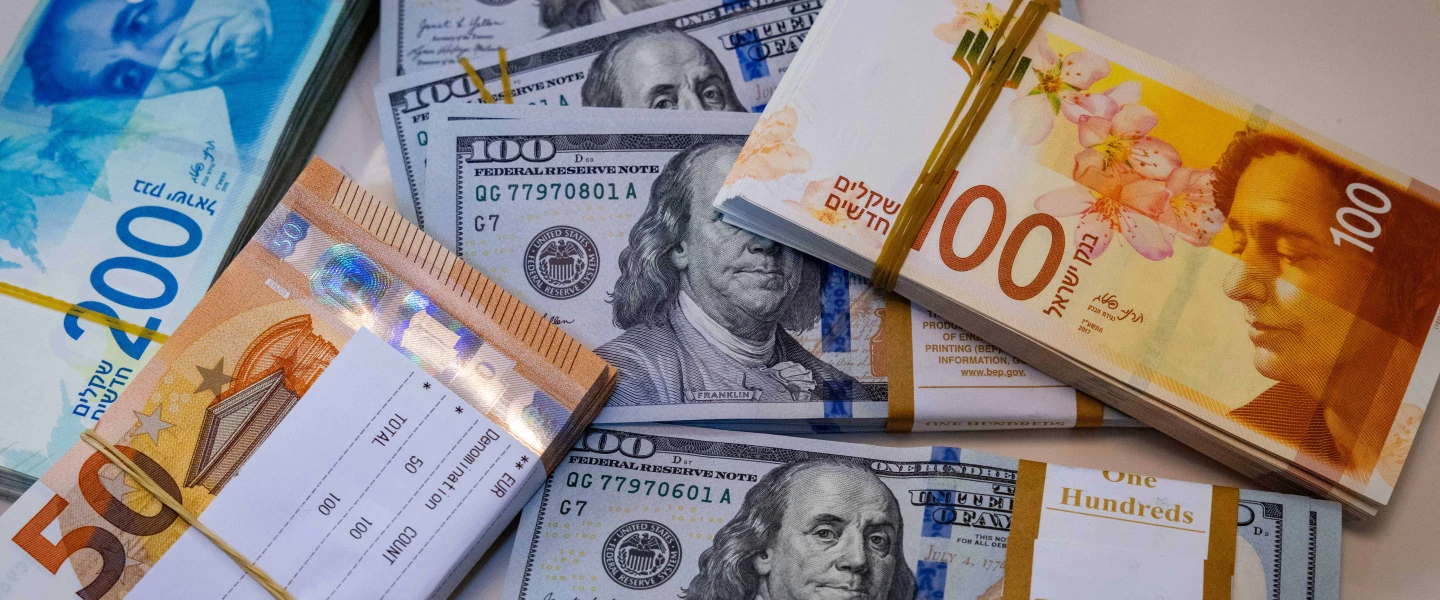
A lot has happened in the world of Jewish giving since Oct. 7, 2023. If you are guessing that donor fatigue has set in and that giving has dried up, you’re wrong. According to Jgive, Israel’s largest giving platform, holiday-time donations through it over the past four years have surged 53%, from 44.7 million shekels to about 68.5 million shekels (about $22.6 million), and the number of donations has risen 57%.
Rimone Hersch, vice president and managing director of Jgive Platinum, finds the pattern especially meaningful.
“The chagim [Jewish holidays] are a time of giving for everyone,” she says. “Before Rosh Hashanah, we tend to see larger, more strategic and targeted gifts, as people think about the year ahead. Then, as Yom Kippur gets closer, we see a different trend: an enormous number of smaller donations across the board. And that is the meaningful part, because it shows that the act of giving matters more than the amount. To be part of building that culture of giving in Israel, and to Israel, is really significant.”
The post-Oct. 7 pattern Jgive now tracks is not an expression of fatigue. It is a change in who gives and to what.
“A significant shift is the source of donations,” Hersch says. “Foreign-currency donations dropped from 54% of the total to around 16%. In contrast, giving within Israeli society has increased tremendously.”
Donor focus has moved from soldiers and reservists toward mental health and PTSD—nearly five times the 2023 level. Younger, digital donors want transparent platforms.
“Intergenerational giving is also a growing trend, with families opening accounts together to pass along the tradition of giving,” Hersch says.
Jay Marcus, who heads the Central Fund for Israel, has seen growth too, also weighted toward PTSD and soldier welfare. CFI is a different operation: a low-profile U.S. 501(c)(3) that does not solicit or advertise, and does not charge credit-card fees, allowing 100% of each gift to reach its intended recipient. Its donors are mostly wealthy Americans.
From helmets to healing
The first hours after Oct. 7 set a pattern that would later be reversed. Hersch recalls an emergency meeting the moment that Shabbat ended. Jgive helped establish a rapid-response fund that met daily to decide where the money should go.
First came medicine for Holocaust survivors, diapers and formula; then bulletproof vests and helmets for IDF units that had gone to war with whatever they had. Donors in New York, London and California, unsure where to start, used the platform as a trusted funnel.
Over time, the needs narrowed. Jgive introduced donors to smaller nonprofits they had never heard of, and in doing so raised the bar for digital giving.
This year’s holiday map on Jgive looks little like those first weeks. While welfare—food, cash assistance and support for the elderly—leads at about 12.7 million shekels (about $4.2 million); only 5.8 million shekels (some $1.9 million) goes to national emergency relief.
Memorial campaigns have grown 3.1-fold in four years. Mental-health and post-trauma campaigns hit a 2026 record, 4.7 times their 2023 level. Campaigns naming soldiers and reservists are 52% below their 2024 peak, while emergency relief is down 26% from last holiday season.
The gifts themselves have split. Recurring donations are at a record 17.5%. Gifts above 5,000 shekels ($1,650) represent only 1.27% of donations, yet account for 59% of the money.
Giving is more Israeli and more habitual: smaller sums, more often, written into the calendar rather than offered as a one-time answer to catastrophe.
Not everyone has left the kit-and-classroom business. Stephen Leavitt, CEO and co-founder of the Ari Fuld Project, and Naamit Leavitt, its director of projects, say the work that still draws support is the work Ari Fuld was already doing: equipping units, teaching Torah and Zionism, and fighting what Naamit calls “the eighth front”—the information war.
Popular projects include gear for specific units; a program that helps haredi and pre-army youth acclimate to IDF service, including mechinot preparatory programs and holiday tours that connect the world in which they grew up with army service; five editions of Ari Fuld’s Israel Shield magazine, published in Israel and distributed across the United States; and a new advocacy and education center, the Ari Fuld Beit Midrash in Efrat, built from the synagogue where Fuld prayed.
“It is not just a shul,” Naamit says. “It will be an advocacy and education center, with classes and programming.”
What has not gone out of style, Stephen adds, is the unglamorous resupply work the public no longer sees.
“Money has shifted, but soldiers still need it. People think the war’s over, and the war’s not over.”
Marcus has been running a different conduit for more than 25 years, since his parents founded the Central Fund for Israel. CFI supports more than 600 Israeli organizations—food kitchens, schools, museums, hospitals and local charities, including some beyond the Green Line.
It does not call donors. “People find us. We don’t find them,” he says.
The draw is a direct conduit for American philanthropists with a project in mind, and for olim who still have taxable money in the United States. CFI now moves more than $100 million a year from some 6,000 donors whose names it does not publish. Privacy, Marcus says, is part of the appeal.
What his channel shares with Jgive is the destination.
“There’s a tremendous focus on PTSD,” Marcus says. “Things are focused on the soldiers’ PTSD and their families, widows and wounded. From the perspective of the Central Fund, there’s no question about that.”
Schools in his portfolio shifted money when students came home from the war. IDF brigades have associated nonprofits for families. A therapy farm in Efrat that did emergency work during the fighting now treats trauma. His daughter, a neuropsychologist, has been going to Sderot to work with children and families—work she was not asked to do before Oct. 7.
PTSD is not new. What is new is that trauma is now a line-item donors, schools and army units all recognize.
The shekel stays home
Hersch’s sharpest change remains the currency split: Foreign-currency gifts fell from 54% of Jgive’s volume to about 16%, while the number of donors rose 45%.
Israelis are increasingly funding Israelis.
Marcus cannot see that trend in his books, as he generally does not handle shekels. Olim find him after they arrive.
“They become more tuned to Israeli charities, once they live among the needs, but the check is still American,” he says.
For the mass market, Jgive Platinum, a large Israeli donor-advised fund, lets a family set aside money, receive the tax credit available under Section 46 of Israel’s Income Tax Ordinance of up to 35%, and distribute grants later in Hebrew or English from one dashboard.
“Since Jgive brought it [the JGive platinum program] to us five and a half to six years ago, it’s just changed the culture of giving,” Hersch says. “If you’re able to get more back, you’re able to continue to give, and it creates momentum.”
Receipts, sanctions and the Green Line
Jgive and CFI say cross-border giving has become more complicated. After Canadian authorities took action against organizations including JNF Canada, Canadians began looking for a U.S. address, according to Marcus. He explained that CFI can accept the money but cannot issue a Canadian tax receipt.
Marcus also says restrictions in some European countries have complicated donations to Jewish organizations that operate in Judea and Samaria. Hersch says due diligence from Canada and the United Kingdom has stiffened, and that obtaining tax-deductible status abroad for Israeli charities has become more difficult.
Jgive closed access for Israeli and American donors to some organizations following Biden administration sanctions imposed by the U.S. Treasury Department’s Office of Foreign Assets Control. Its requirements include Section 46 status and a nihul takin, or certificate of proper management.
Marcus expressed concern about what might come next. A friendly administration sits in Washington now, he says, but a future Congress could write rules restricting giving to Israel.
“It’s not going to happen tomorrow. We have a [U.S.] Supreme Court that still believes in freedom. But you can see the trends, and they’re very scary.”
For now, Jgive’s data show the charity box is increasingly filled with shekels. Marcus’s ledger shows that the dollar is still doing heavy lifting.
Charity has always been a core Jewish value, and this year’s numbers bear that out. Holiday giving is up, recurring gifts are at a record level, and the causes have shifted from ceramic vests to therapy clinics, while a quieter American channel still moves nine-figure sums with nothing taken off the top.
Politics may yet affect who can receive that money. But that is something to worry about next year. In the meantime, what has not changed is older than either platform: Through thick and thin, Jews find a way to take care of one another.



