


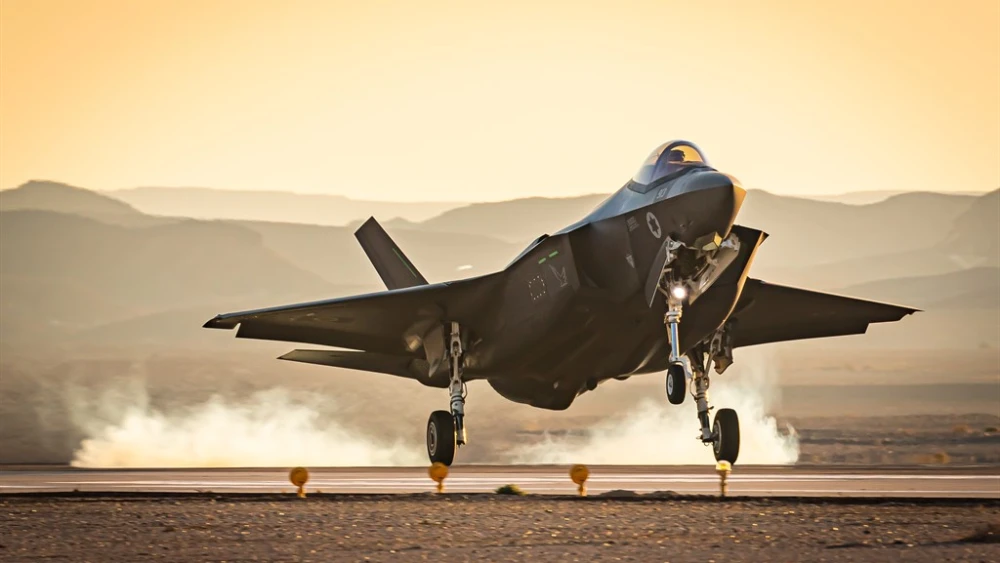
Israeli Air Force fighter jets struck rocket launchers belonging to the Iranian-backed Hezbollah terrorist organization in Southern Lebanon on Thursday night, the Israel Defense Forces said in a statement.
The aerial raids were launched after the Lebanese Armed Forces (LAF) failed to process a request from Jerusalem to confiscate the launch pads that “posed a threat to the Israeli home front and our forces,” noted the Israel Defense Forces.
IAF jets were said to have targeted at least two Hezbollah “military” sites that housed medium-range projectiles, including in the Nabatieh area.
“The IDF will continue to act to remove any threat to the State of Israel, in accordance with the understandings of the ceasefire agreement,” the statement concluded, referring to the Nov. 26 truce deal with Beirut.
מטוסי קרב של חיל האוויר תקפו והשמידו לפני זמן קצר, בהכוונה מודיעינית של אמ״ן, משגרי רקטות לטווח בינוני שהיו בשימוש ארגון הטרור חיזבאללה, באתר צבאי של הארגון. כמו כן, בסמוך לאתר צבאי נוסף הותקפו משגרי רקטות של הארגון במרחב נבטיה>> pic.twitter.com/0yPWZO27dB
— צבא ההגנה לישראל (@idfonline) January 2, 2025
Under the terms of the agreement with Lebanon, Israeli soldiers are to withdraw gradually from Lebanon’s south over a period of 60 days.
Hezbollah terrorists must retreat north of the Litani River while official LAF soldiers deploy along the 75-mile frontier, along with monitors from the U.N. Interim Force in Lebanon.
The deal recognizes Jerusalem’s and Beirut’s right to self-defense.
The slow deployment of the LAF south of the Litani River, the discovery of more Hezbollah infrastructure, and the terror group’s ongoing efforts to rebuild its capabilities with Iran’s support have reportedly prompted Israel to consider maintaining troops in strategic positions in Southern Lebanon beyond the 60-day deadline set in the ceasefire agreement.
In recent weeks, Jerusalem has repeatedly protested to international bodies about the slow pace of the Lebanese Army’s actions, warning that if Beirut does not fulfill its obligations, the IDF may need to stay in Lebanon to safeguard communities in the Galilee and Golan Heights.



