IDF
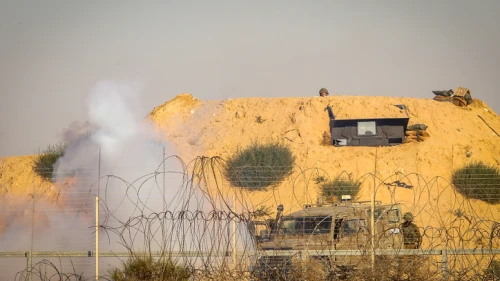
IDF confirms soldiers opened fire on two armed men approaching the security fence • Hamas: The death will not go “unpunished.”

At least 12 of the plots targeted Turkey, whose security agencies were able to stop potentially catastrophic attacks on its soil as a result.

The warning came as the Israeli prime minister visited the Nevatim Air Force Base in the northern Negev Desert.
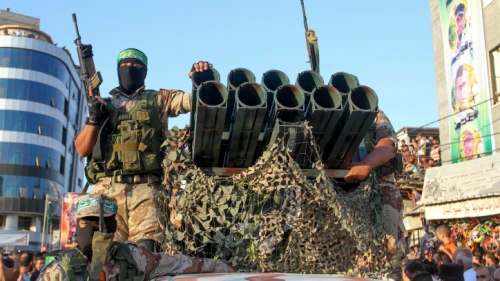
During the exercise, Hamas fighters deployed along the borders, closed streets and shut down fishing off the coast.
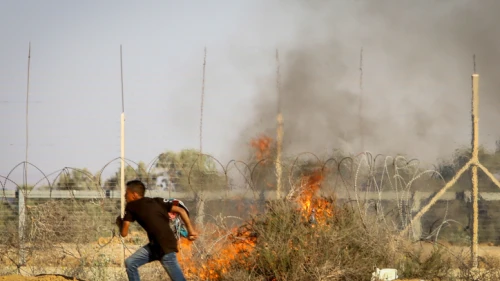
According to the IDF, the three Palestinians were in possession of a fragmentation grenade and “arson materials.”
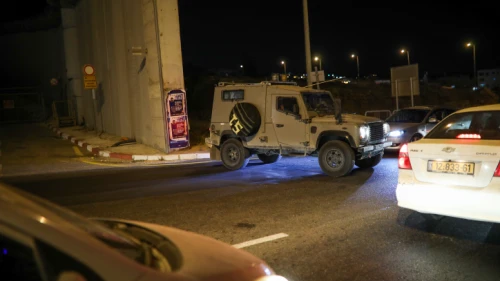
The suspect, who was apprehended together with his father after a brief manhunt, is believed to have intentionally targeted a group of soldiers at a security checkpoint near Jerusalem.

Instead of 255 alert areas, Israel has now been divided into 1,700 areas—meaning that the disruption caused by projectile alerts will be more localized, preventing fear, angst and an unnecessary run to a bomb shelter.

“The maximum pressure campaign is working,” said Mark Dubowitz, CEO of the Foundation for Defense of Democracies. “It’s always good to weaken your enemy—not strengthen them.” The question is whether Tehran will test that theory.
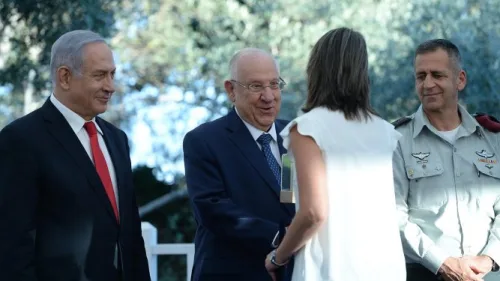
Recognized for their contributions to Israeli security were the Mossad nuclear archive operation; “Operation Northern Star” to expose and destroy Hezbollah tunnels; the Spice 1000 weapons system; and a special cyber-project for the Shin Bet security agency.

The strikes indicate that Iran and its Lebanese proxy, Hezbollah, were involved in a major new weapons’ development or smuggling project, possibly aimed at giving Hezbollah new precision missile capabilities with which it can target strategic Israeli sites.
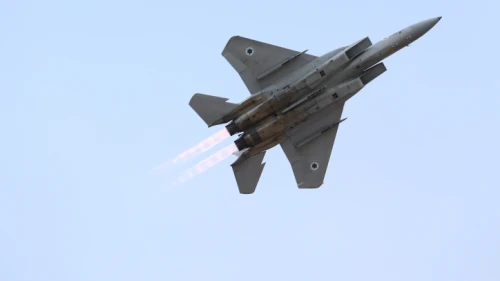
The attack came hours after it was confirmed that Russian S-300 air-defense batteries were operational near a town in northern Syria.

Investigators are examining debris from a flying object that smashed into northern Cyprus; initial estimates point to a Russian missile.