In a direct challenge to Palestinian Authority leader Mahmoud Abbas’s 19-year rule over Judea and Samaria, Gaza-based Hamas announced on Sunday that it would seek to include exiled Fatah rival Mohammed Dahlan in a unity government, Arab World Press reported.
Husam Badran, Hamas’s international spokesman and a member of its political bureau, told the London-based news outlet that the terror group seeks to maintain “a positive relationship with all Palestinian factions ... including the movement led by Mohammed Dahlan.”
Badran stressed, “It is important that he [Dahlan] be represented in the consensus government [between Abbas’s Fatah Party and Hamas].”
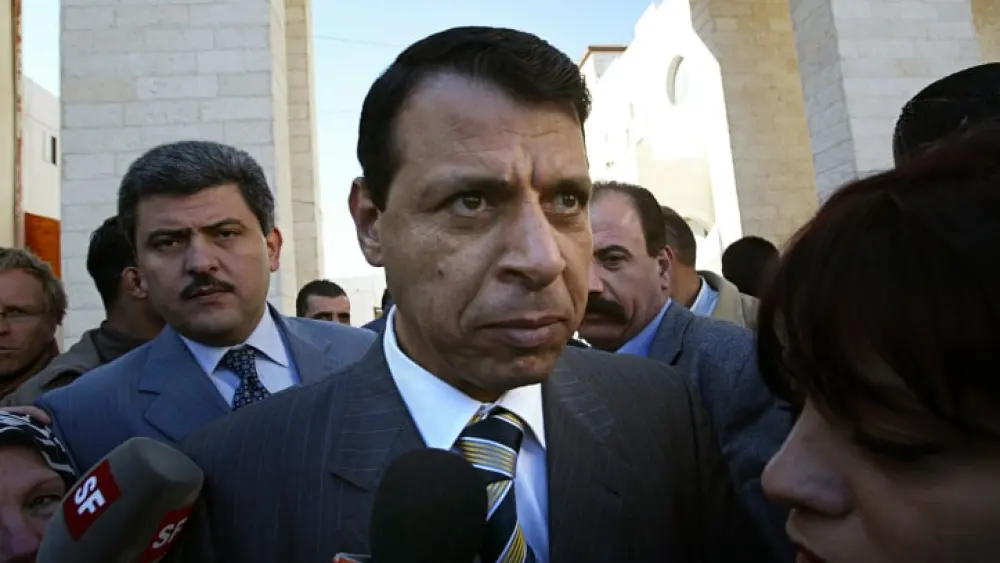
Dahlan, once a high-ranking official within Fatah, served as the P.A.'s security chief in Gaza when Hamas violently seized control of the Strip in 2007. As Dahlan regained influence in Judea and Samaria, he had a falling out with Abbas, leading to his exile to the United Arab Emirates in 2011.
Badran said that Hamas “has no desire to continue to rule Gaza alone” and called for the formation of an interim government to unify the coastal enclave with Judea and Samaria, rebuild the Strip in the wake of the war and organize the first Palestinian elections since 2006.
Amid ongoing unity talks with Hamas, P.A. Prime Minister Mohammad Shtayyeh submitted the collective resignation of his entire government last month. Abbas requested that Shtayyeh stay on as a caretaker premier until a permanent replacement is appointed.
Abbas is expected to nominate Mohammad Mustafa, a Fatah loyalist who currently heads the P.A.'s Palestine Investment Fund, but Hamas’s Sunday statement could throw a spanner in the works.
In response to Badran’s remarks, senior Abbas adviser Mahmoud al-Habash sharpened his tone towards the terror group, telling Al Arabiya television on Sunday that “what Hamas needs to do is to hand over all responsibility for the Gaza Strip to the Palestinian Authority.”
The United States wants the P.A. to assume control of Gaza after Israel’s war against Hamas ends, a move that Jerusalem vehemently rejects because of Ramallah’s overt support for terrorism.
On Jan. 27, Abbas’s spokesman told Al Arabiya that the P.A. is prepared to hand over the reins to Hamas if it won a general election. Ramallah is “prepared to hold general elections, and if Hamas wins, the president will hand over the Authority,” spokesman Nabil Abu Rudeineh said.
The U.S. State Department has refused to rule out Hamas retaining power in Gaza or even joining a P.A.-led governing body that would also have jurisdiction in Judea and Samaria.
According to recent polls, 89% of Palestinians support establishing a government that includes or is led by Hamas. Only around 8.5% said they favor an authority controlled exclusively by Fatah.