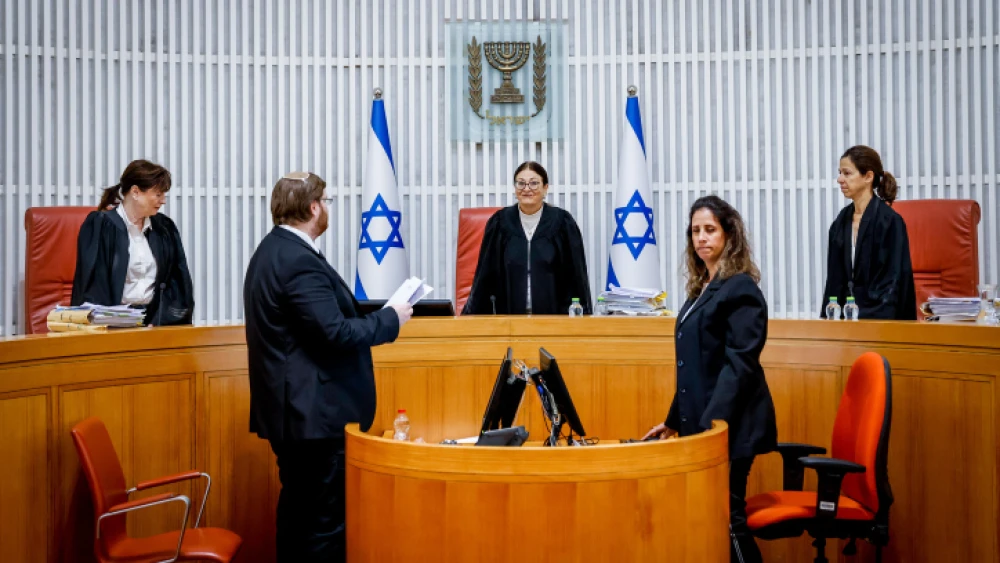
The talks being mediated by President Isaac Herzog in an effort to reach a compromise on judicial reform have produced a proposal on a major piece of the Israeli government’s program.
Under the proposal as reported by Kan News, Supreme Court justices and politicians would not sit on the Judicial Selection Committee but would instead select members according to certain criteria. The ruling coalition would still get to choose the majority of the committee’s members.
Under the proposed changes, the coalition, opposition and judges would have the opportunity to choose committee members in different areas of expertise such as academics, researchers, retired judges and senior attorneys.
However, agreement has not been reached on the number of committee members that the ruling coalition and the political opposition would choose.
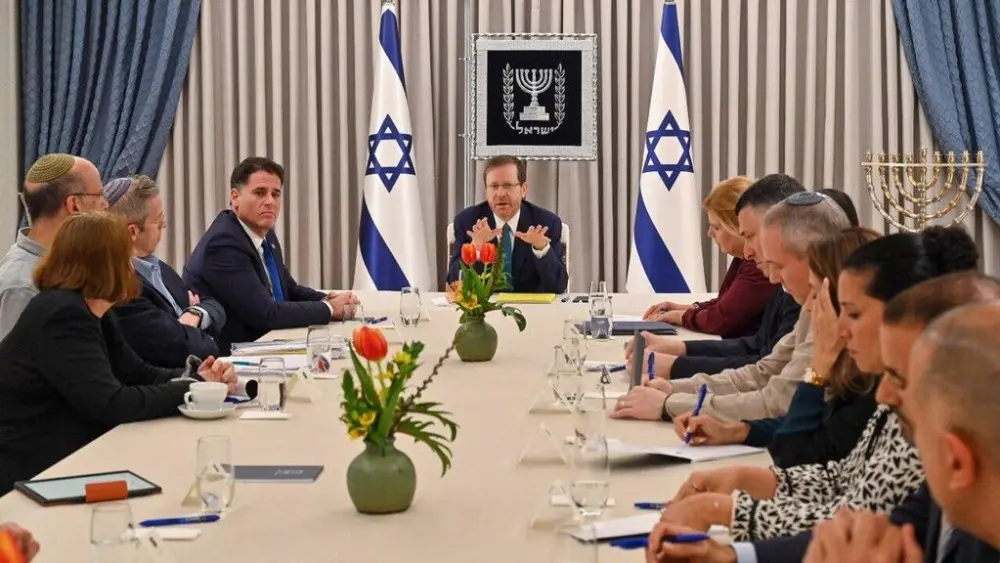
The reported proposal is a result of behind-the-scenes talks taking place between various Knesset factions mediated by Herzog, who initiated the negotiations at his Jerusalem residence shortly after Prime Minister Benjamin Netanyahu announced a pause in the legislative process.
Following a general strike on March 27, Netanyahu suspended the proposed legislation until the Knesset’s summer session in the hopes of reaching a compromise with the opposition during the parliamentary break.
Herzog has hosted three rounds of talks with representatives from the coalition and opposition since the first discussion took place on March 28.
“Stopping the legislation is the right thing. This is the time to begin a sincere, serious and responsible dialogue that will urgently calm the waters and lower the flames,” the president said after Netanyahu’s address to the nation.
“I call on everyone to act responsibly. Protests and demonstrations, on whichever side—yes. Violence—absolutely not! If one side wins, the country will lose. We must remain one people and one country—Jewish and democratic,” Herzog said.