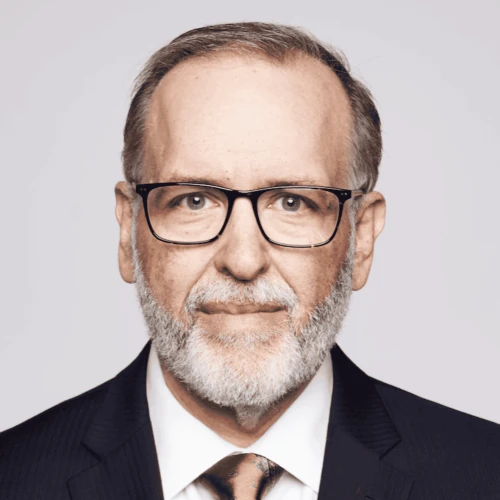
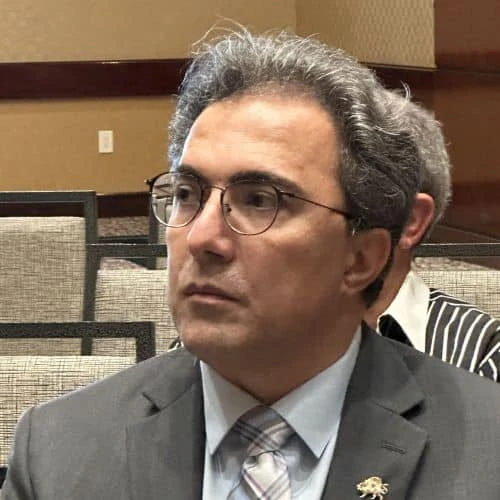
Danny Danon, the Israeli ambassador to the United Nations, was blunt about this week’s U.N. two-state solution conference.
“We are not participating in this circus,” the envoy told JNS on Monday, on the sidelines of the event at U.N. headquarters in New York City.
“As we speak, you have 50 hostages in Gaza. Nobody is speaking about that. Hamas is in charge. You see the suffering of the people of Gaza,” Danon said, as Israel refused to take part in the French and Saudi-led event to develop a pathway to a Palestinian state.
“Instead of dealing with the real problems, this conference—this circus—discusses a two-state solution detached from reality. We are not taking part in this game,” Danon said. “Not only us, the United States and many other countries.”
Tammy Bruce, the U.S. State Department spokeswoman, said on Monday that the two-day conference is “unproductive and ill-timed” and a “publicity stunt that comes in the middle of delicate diplomatic efforts to end the conflict.”
Danon called for participating member states to take urgent issues related to the ongoing war between Israel and Hamas in Gaza “more seriously.”
“It’s very easy to come to the General Assembly to deliver a very nice speech, but at the end of the day, you have to deal with Hamas,” he told JNS. “You have to deal with the radical elements in the Middle East, and you have to think about a brighter future for all of us.”

‘It’s about time we face reality’
Israel’s relations with France have cooled throughout the war; however, Jerusalem has been loath to criticize Saudi Arabia, a strong ally of U.S. President Donald Trump and a country with which it seeks warmer ties.
Danon told JNS that the Saudi vision to have the Palestinian Authority and Palestine Liberation Organization govern a potential Palestinian state, despite its popular weakness and endemic corruption, is problematic.
“Those are smart people,” said Danon of the Saudis. “When I sit with them, I say privately to them, ‘Who do you expect to govern?’”
“Look what’s happening today in Jenin, in Nablus,” he said. “The P.A. is not going to fight terrorism, so you want to let them govern Gaza? It’s not realistic?
Riyadh tends to ignore his concerns, Danon told JNS.
“But the reality is stronger than everything, and I think it’s about time we face reality,” he said. “We face the weakness of the P.A., and the radical elements that took over Gaza could also take over Judea and Samaria, God forbid.”

‘Let’s go back to the core issues’
Contrary to expectations set by conference organizers and proponents, Danon does not see a resolution being carried through the General Assembly. Instead, he expects more of the same: declarations and speeches.
“But let’s go back to the core issues,” he said. “We need to bring the hostages back. We have to replace Hamas in Gaza. That is the only way to move forward.”
The conference this week ostensibly is to set the stage for a top-level summit on Sept. 22, ahead of the annual U.N. General Assembly high-level debate week. Danon told JNS that any hope for that summit to be productive will depend on progress on the ground between now and then.
“Hopefully, we will bring back all the hostages by then, but we have to be realistic,” he said. “It will take more time to make sure that Hamas is not in a position not only to threaten Israel but to threaten the Palestinians themselves.”
“Look what they are doing in Gaza today,” he said. “They are making sure that the people of Gaza will continue to suffer.”
Once the hostages are home and Hamas is gone, “there will be room to speak about the future,” the ambassador said. “But you cannot jump to the conclusion without dealing with those two core issues.”