Newsletter
Newsletter Support JNS

DC think tank: Lebanese army fails to face Hezbollah, despite billions in US aid

“The time has come for a close examination of whether 15 years of substantial support has enabled Lebanon’s armed forces to serve as an institutional counterweight to Hezbollah,” writes David Kilcullen.

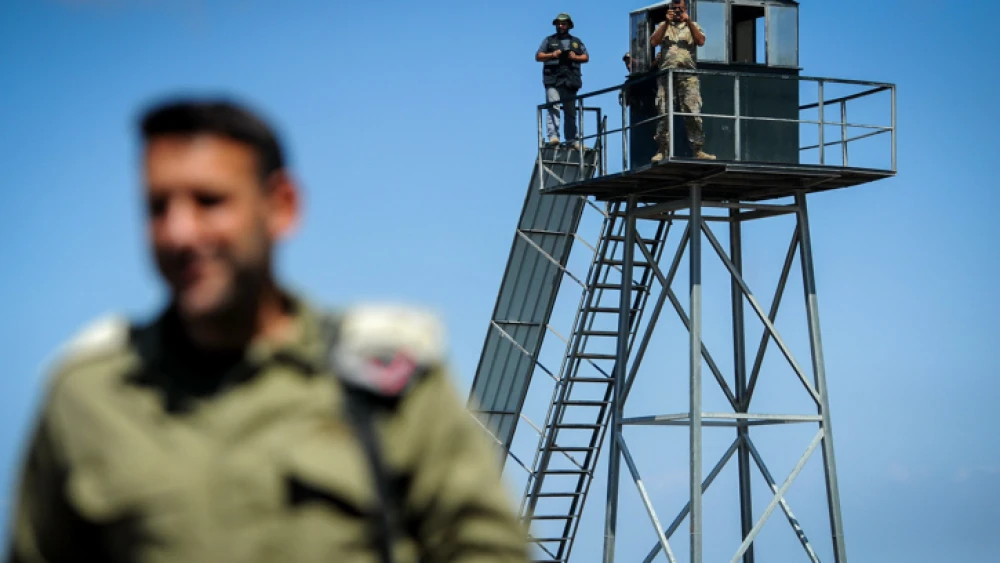
A Lebanese soldier and a Hezbollah gunman gaze into Israel from a watchtower on the border near Rosh Hanikra, Sept. 5, 2018. Photo by Basel Awidat/Flash90.

A new study finds that billions in U.S. military aid to the Lebanese Armed Forces (LAF) have been ineffective in countering Hezbollah’s dominance in the country north of Israel.

The Foundation for Defense of Democracies (FDD) report calls on U.S. Congress to reassess its annual foreign military aid for Lebanon ($120 million in 2021) and reconsider how the United States can better support the beleaguered nation.

“The time has come for a close examination of whether 15 years of substantial American support has enabled Lebanon’s armed forces to serve as an institutional counterweight to Hezbollah,” writes FDD’s David Kilcullen in “Missing the Mark: Reassessing U.S. Military Aid to the Lebanese Armed Forces.”

Kilcullen, a member of FDD’s Center on Military and Political Power Board of Advisors, examined the LAF’s operational performance since 2006, focusing on how the LAF has performed the functions for which America assists.

He says “the two are conjoined at the highest levels because Hezbollah’s influence over Lebanon’s civilian authorities is so extensive.”

“I’ll be surprised if that ends up being the smart political move down the road, because it’s really just the unions that are against it,” Colleen Hroncich, of the Cato Institute, told JNS.
“The far-left blames Zionists, the Islamists blame Israel, and the ‘blind right’ blames the Jews,” Ambassador George Deek told JNS. “It’s three different stories with the same hate.”
Samir Mahmoud Hassan Abu Younis had led the brigade for approximately two months following the slaying of his predecessor.
The former German chancellor cited the terror group’s use of civilian infrastructure, criticized some IDF actions in Gaza as disproportionate—and drew Hamas condemnation.