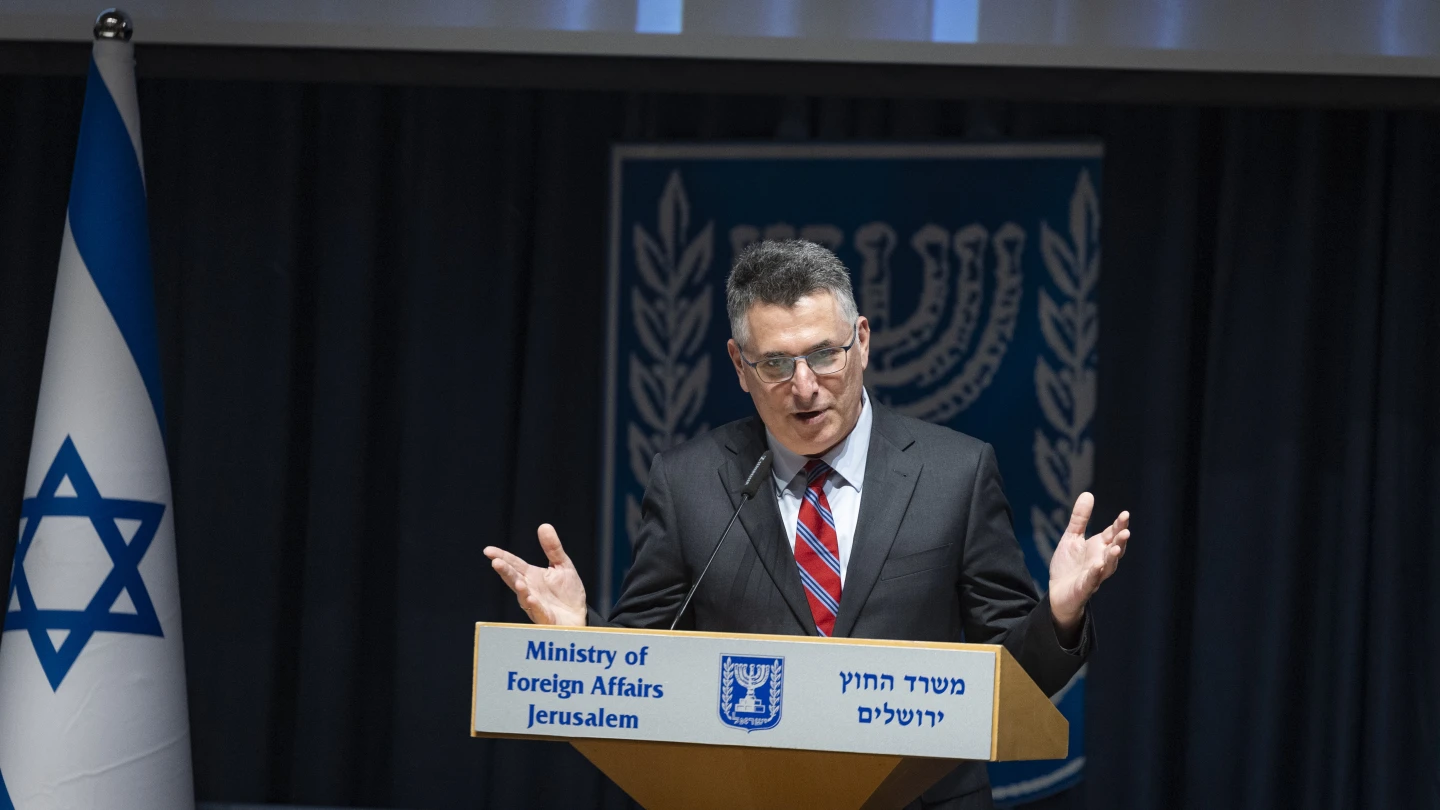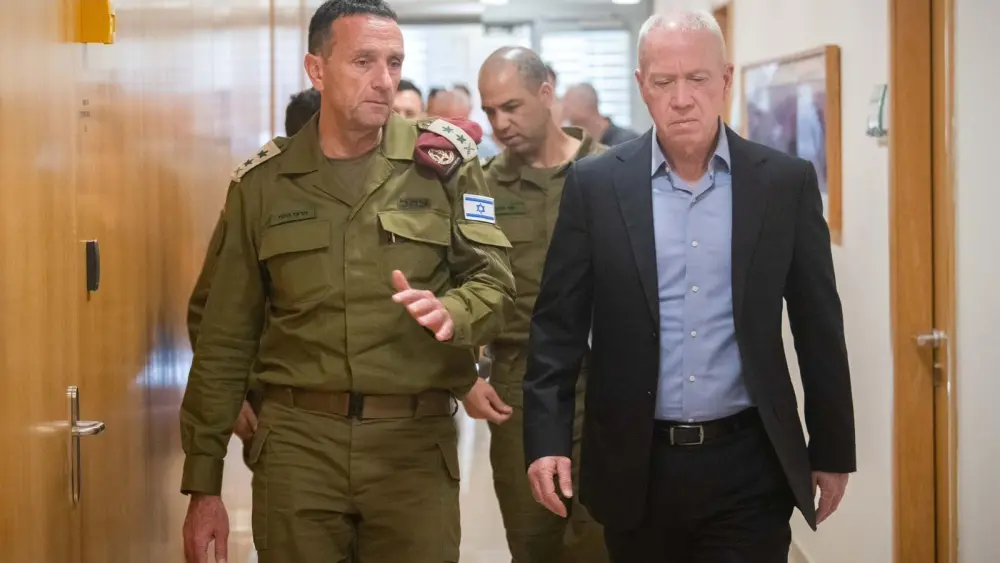
Israeli Defense Minister Yoav Gallant spoke on Wednesday with his Moroccan counterpart Abdellatif Loudiyi about strengthening military ties between their countries.
“We discussed the defense ties critical to regional security and stability, and emphasized the need to further deepen cooperation,” Gallant said, according to a statement from his office.
“On the occasion of the holiday of Eid al-Adha, I conveyed my blessings to the minister and his loved ones, the Moroccan nation, and His Majesty King Mohammed VI. May this holiday be a time of peace and joy,” Gallant added, the statement continued.
Earlier this month, Knesset Speaker Amir Ohana expressed support for Moroccan sovereignty over the Western Sahara.
The United States recognized Morocco’s ownership of the territory in 2020 in return for the country joining the Trump administration-brokered Abraham Accords, which also normalized Israel’s relations with the United Arab Emirates, Bahrain and Sudan.
Ohana was the first-ever leader of Israel’s parliament to pay an official visit to the legislature of a Muslim country. There, he presented the head of the parliament in Rabat with the smallest Koran in the world, printed with Israeli nanotechnology.
Also in June, Israeli National Security Adviser Tzachi Hanegbi held a series of meetings in Rabat, including with Moroccan Foreign Minister Nasser Bourita and the heads of the country’s security services.
For his part, Bourita said two weeks ago at the AJC Global Forum in Tel Aviv that the Abraham Accords have created a “unique” opportunity for peace in the region and helped to create unprecedented growth in his country’s trade with Israel.
“After decades of war and hatred, there is now a unique opportunity for peace. Bilateral relations with Israel have been improving on all levels,” said Bourita.
On Sunday, Israeli Foreign Minister Eli Cohen corrected media reports that Morocco had canceled the second gathering of the Negev Forum, a group formed to advance the Abraham Accords.
Cohen acknowledged that a postponement had arisen out of Israel’s announcement that it would build thousands of homes in Judea and Samaria, but said the Negev Forum meeting would eventually go ahead.
Cohen also revealed that two or three countries not currently signatories to the Abraham Accords were to participate, though he didn’t name them.