


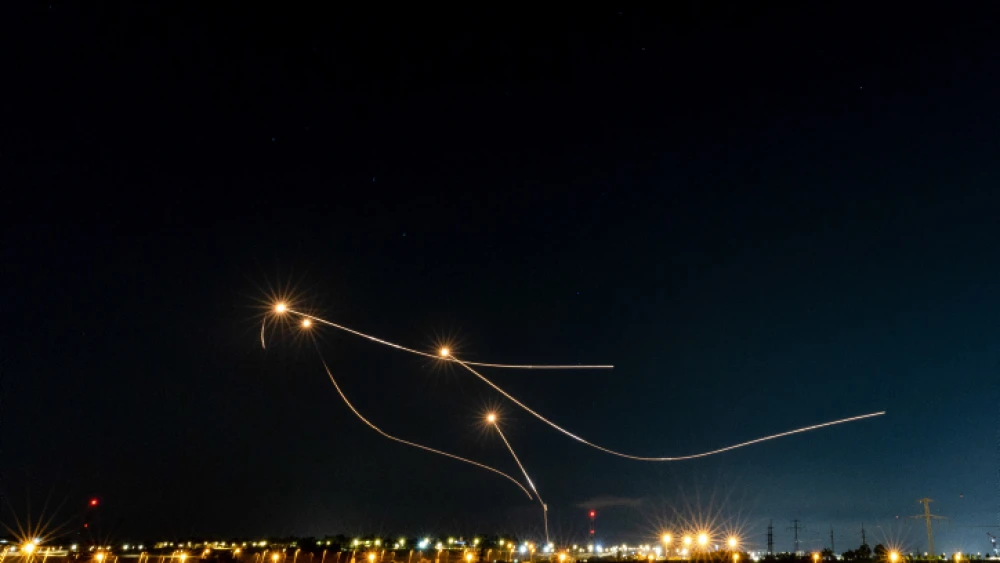
Sirens went off in Israel on Tuesday night—the night before Passover—as terrorists based in the Gaza Strip launched a total of 16 rockets towards Israel.
Ten rockets were launched overnight and six in two separate barrages in the early morning hours on Wednesday.
One of the rockets hit a ” target="_blank” rel="noopener">factory in the Sderot industrial area, causing damage. No casualties were reported.
Seven rockets fell in open areas while eight more were intercepted by Israel’s Iron Dome air-defense system.
Videos on social media showed Israel’s Iron Dome shooting them down.
Overnight, #Gaza-based terrorist organizations targeted Israeli civilians with 16 missiles.
— CIJA (@CIJAinfo) April 5, 2023
One of these landed in a factory in #Israel’s Southern town of Sderot, forcing workers to run for their lives.
Thankfully, no injuries have been reported at this time. pic.twitter.com/hXakmxb3XX
VIDEO Israel’s Iron Dome intercepts rockets launched tonight by terrorists from Gaza.
— Israel Nitzan🇮🇱🎗️ (@IsraelNitzan) April 5, 2023
📹 @kann_news - @Itsik_zuaretspic.twitter.com/pIjdkqSg4q https://t.co/vpapoox5Wp
Israel’s security establishment estimates that Palestinian Islamic Jihad (PIJ) is responsible for the attack. Since the beginning of the year, about 60 rockets have been launched from Gaza towards Israel.
In response to the attack, the IDF struck a weapon manufacturing site and an additional weapon manufacturing and storage site belonging to the terror group Hamas in the center of the Gaza Strip, the IDF reported.
“The IDF holds the Hamas terrorist organization responsible for all terror activity emanating from the Gaza Strip and it will face the consequences of the security violations against Israel,” the army said in a statement.
כמו כן, תיעוד תקיפת עמדות צבאיות של ארגון הטרור חמאס על ידי טנקים של צה״ל: pic.twitter.com/txH70WZeYa
— צבא ההגנה לישראל (@idfonline) April 5, 2023
The attacks came as many critics of Israel—notably, Rep. Rashida Tlaib (D-Mich.)—posted video of Israeli police clearing people out of Al-Aqsa Mosque in Jerusalem’s Old City and accusing police of targeting Muslim worshippers during Ramadan.
“This is the violent apartheid government of Israel. This is horrific,” tweeted Tlaib, who has a history of antisemitic and anti-Israel statements.
Aviva Klompas, former head speechwriter for the Israeli mission to the United Nations, responded to Tlaib’s charges.
“Once again the congresswoman vilifies Israel and offers no context. Armed Palestinians barricaded themselves in the mosque and threatened violence. The police spent hours trying to convince them to exit peacefully, but they refused,” tweeted Klompas.
“If armed rioters barricaded themselves in the Vatican or Great Mosque of Mecca, we’d expect the police to similarly restore peace,” she said.


