Hezbollah accused the United States on Friday of meddling in the formation of a new Lebanese government amid one of the country’s worst economic crises.
“The first obstruction in the formation of the government is America because it wants a government that resembles it, and we want a government that resembles the Lebanese people,” Hezbollah deputy leader Sheikh Naim Qassem told Reuters.
“Let them leave us alone so we can reach an understanding among ourselves. The more they intervene the more they delay the solution.”
Qassem also said, according to the report, that “the corrupt must stand trial in Lebanon regardless of who they are ... we support all measures that limit corruption and that recover looted wealth.”
The Hezbollah deputy leader also accused the United States of attempting to create “security problems” in Lebanon.
“I do not see signs of a civil war in Lebanon. Hezbollah is determined not to fall into strife that America wants. But we have information of American attempts to create some security problems,” he said.
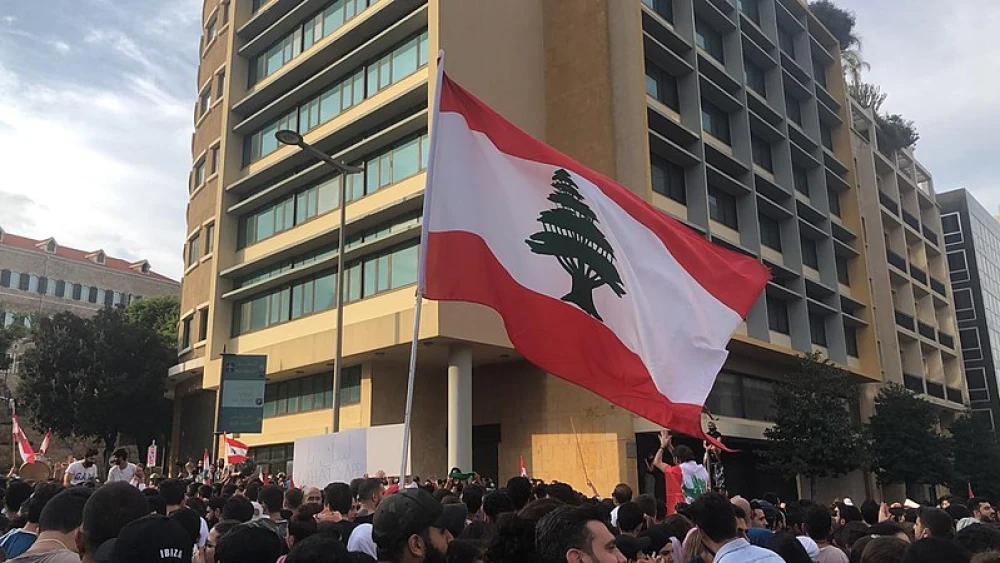
Last week, protesters gathered outside the office of Lebanese legislator Mohammed Raad, the head of Hezbollah’s parliamentary bloc, chanting “the people want to bring down the regime,” the AP reported. One used a metal rod to knock down a sign bearing Raad’s name, while the others cheered, according to the report.
Shi’ite Hezbollah, along with the Shi’ite Amal Party, has always counted on support for the country’s Shi’ite community.
However, the current popular protests engulfing Lebanon are directed against the ruling elite, including Hezbollah.