


The Houthi terrorist organization in northern Yemen has recently become the spearhead of Iran’s “axis of resistance.” Following the ceasefire agreement in Lebanon and the collapse of the Assad regime in Syria, Tehran is leveraging the Houthis to pressure Israel into ending the Gaza conflict on its terms.
Over recent weeks, Houthi rockets fired at Israel have been intercepted by the Israel Air Force. A Houthi drone struck a building in Yavne, a city in central Israel.
Senior Houthi officials warned this week that Israel would “pay the price” for continuing its strikes in Gaza and Syria, promising an escalation in attacks.
As President-elect Donald Trump prepares to assume office, the Middle Eastern spotlight shifts to the Houthis.
Officials of the rival Southern Yemeni government, which opposes the Houthis, expressed hope that the incoming U.S. administration would take decisive action against them.
A senior official of Yemen’s Southern Transitional Council told Israel Hayom: “The whole world is waiting for the long-awaited change in the White House.”
The official also voiced hope that Israel would begin conducting significant strikes in Yemen and even support the southern government.
A senior figure in southern Yemen noted that a loss of leadership within the Houthis could destabilize the group. However, he cautioned that without ground intervention and rebuilding state institutions, the terrorist organization would reorganize its ranks.
Now, with the collapse of Assad’s regime and Hezbollah’s setbacks, Israeli attention turns to the leadership of this terrorist army. From the head of the “Houthi State” to the spokesperson—meet the leadership of the Iranian proxy in Yemen.
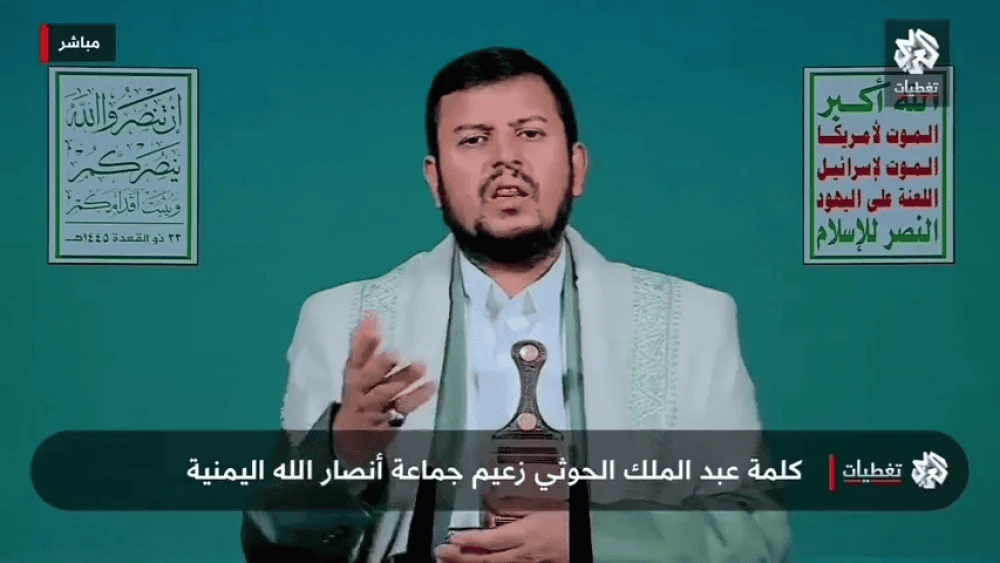
Leader of the ‘Houthi State’
At the top stands Abdul-Malik al-Houthi, 45. Officially a “spiritual authority,” he is, in practice, the ruler of the “Houthi State” in northern Yemen. He and his family have maintained ties with Iran for decades. The Southern Yemeni government accused him of establishing the Houthi militia.
In 2004, following the assassination of his brother Hussein by Yemeni authorities, Abdul-Malik assumed the leadership. Over the next two decades, he led the terrorist group’s expansion, which included youth training camps, arms smuggling and the persecution of Yemen’s Jewish community.
In 2014, the Houthis seized Yemen’s capital, Sanaa, sparking the country’s ongoing civil war. A year later, the Saudi-led coalition began its offensive in Yemen to aid the southern government.
Al-Houthi also orchestrated the rocket strikes against Israel and attacks on ships in the Red Sea and Gulf of Aden, in coordination with Iran.
“Sanaa is ready to fight the U.S. and Israel or anyone harming Yemen to serve their interests,” he said in a recent speech. “We have trained hundreds of thousands of our people in combat.”
Referring to the war in Gaza, he said: “Since the beginning of Israel’s aggression in Gaza, we declared a clear stance and responded with rockets, drones and naval operations.”
On Syria, al-Houthi remarked that "[Prime Minister Benjamin] Netanyahu said the fall of the Assad regime creates new and important opportunities for Israel, already realized in practice. The meaning of a new Middle East is that all our countries will be within reach of the Israelis and Americans.”
Head of the Supreme Council
Mahdi al-Mashat, 38, is the top Houthi political figure and de facto commander of its military arm. Formerly the head of al-Houthi’s office, he is considered one of the leader’s closest associates.
Defense minister
Mohammed al-Atifi, 55, is the Houthi defense minister. Previously responsible for the terrorist group’s missile forces, including Scud tactical ballistic and surface-to-surface missiles, he holds a top position in the Houthi Cabinet.
Chief of staff
Mohammed Abdul Karim al-Ghamari is the “military” chief of staff. According to U.N. reports, al-Ghamari has been responsible for attacks against Saudi Arabia and coordinating offensives in Yemen’s civil war.
Quds Force operative
As with other Iranian-backed groups, a senior Iranian Quds Force operative oversees Houthi operations in Yemen. Brig. Gen. Abdul Reza Shahlai, known as Hajj Yousef, represents Iran in Sanaa.
The United States has placed a $15 million bounty on him for information about his activities. He is wanted for global terror plots, including attacks in the United States and the deaths of American soldiers in Iraq. In January 2020, Washington attempted to kill him in a drone strike in Sanaa, coinciding with the assassination in Baghdad of Quds Force commander Maj. Gen. Qassem Soleimani.
Head of naval forces
An additional commander is Mohammed Fadel Abdul Nabi, 72, who leads the Houthi naval forces. Among other exploits, one year ago, the cargo ship Galaxy Leader, operated by a Japanese company and owned by a British firm, was hijacked by Houthi naval forces with support from Iran.
Another key figure is Mohammed Ali al-Qadri, 54, the commander of the Coastal Defense Forces. Al-Qadri directly oversees attacks on commercial vessels in the Red Sea and the Gulf of Aden. These operations have included rocket launches, drone strikes and the use of remotely controlled boats.
Director of procurement
Mohammed Ahmed al-Talbi, 41, is director of procurement. He oversees efforts to smuggle weapons, missiles, drones and the components necessary for the production of advanced weaponry in Yemen. He coordinates arms shipments from Iran to the Houthis.
In Israel, the Houthis’ military spokesperson, Yahya Saree, 54, is better known. In 2017, Saree was appointed head of the Psychological Warfare Division. A year later, he was promoted as the official spokesperson for the organization. He is not considered a senior figure.
Originally published by Israel Hayom.


