


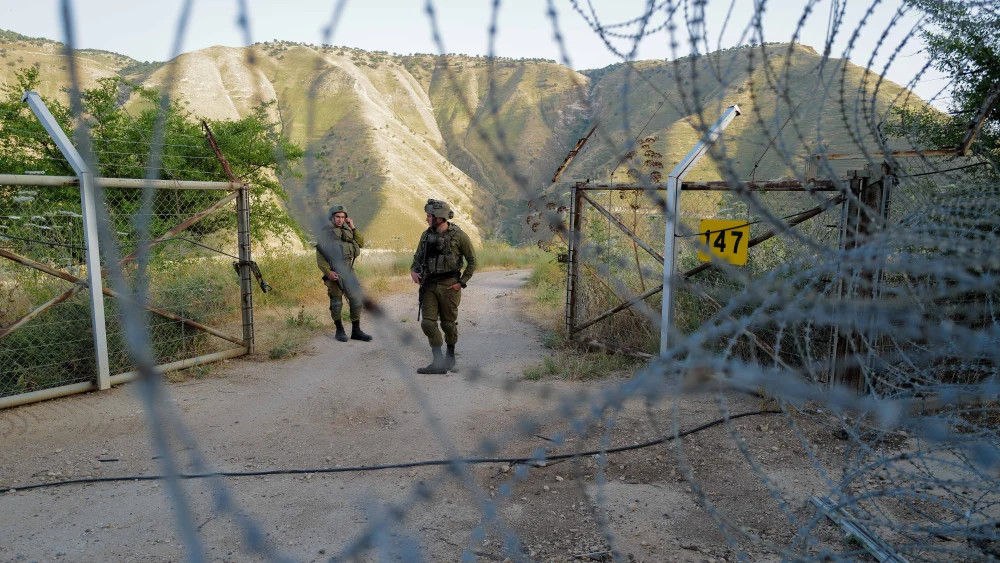
Some 4,000 people illegally infiltrated the Jewish state through its eastern border with Jordan in the first half of 2024 alone, Israeli security sources say.
According to security officials’ assessments, approximately 600 people crossed into Israel illegally from the Hashemite Kingdom every month, the Maariv newspaper reported over the weekend. By comparison, in all of 2023, Israeli security forces arrested fewer than 90 foreigners who tried to penetrate the eastern border.
The infiltrators hail from China, Georgia, Ghana, Jordan, Sri Lanka, Sudan, Turkey, Uganda, Ukraine, Uzbekistan and other countries.
There is mounting concern in Israel’s security establishment that pro-Iranian elements could attempt to penetrate the eastern border to commit a mass attack similar to the Hamas-led Oct. 7 massacre. The IDF is working to prevent such a scenario, including by reinforcing its troops.
The frontier with Jordan extends 192 miles, making it the Jewish state’s longest border. Israel signed a peace treaty with Amman in 1994, but the kingdom has a majority Palestinian population and its rulers have taken an increasingly hostile tone since the start of the current Hamas war.
There has also been a dramatic increase in arm-smuggling into Judea, Samaria and the Jordan Valley that Jerusalem has explicitly attributed to Iran. Over the past two years alone, IDF border units have seized more than a thousand weapons during patrols on the eastern frontier.
A year ago, the Israeli government announced its intention to build a security barrier along the eastern border to thwart Iranian efforts to smuggle weapons to terrorist organizations in Judea and Samaria.
During a closed meeting of the Knesset Foreign Affairs and Defense Committee, Defense Minister Yoav Gallant reportedly told lawmakers that the Israel Defense Forces had noticed an increase in Tehran’s involvement in transferring arms and know-how into the area.
“Iran and [Palestinian] terrorist organizations have identified Judea and Samaria as a weak spot and direct many resources there for the purpose of attacks,” Army Radio reported Gallant as saying at the time.


