In honor of the Tu B’Shevat holiday—the day on the Hebrew calendar marking the “New Year for Trees”—Israel’s Defense Ministry purchased 10 tons of nuts and dried fruits to distribute to Israeli soldiers across the country.
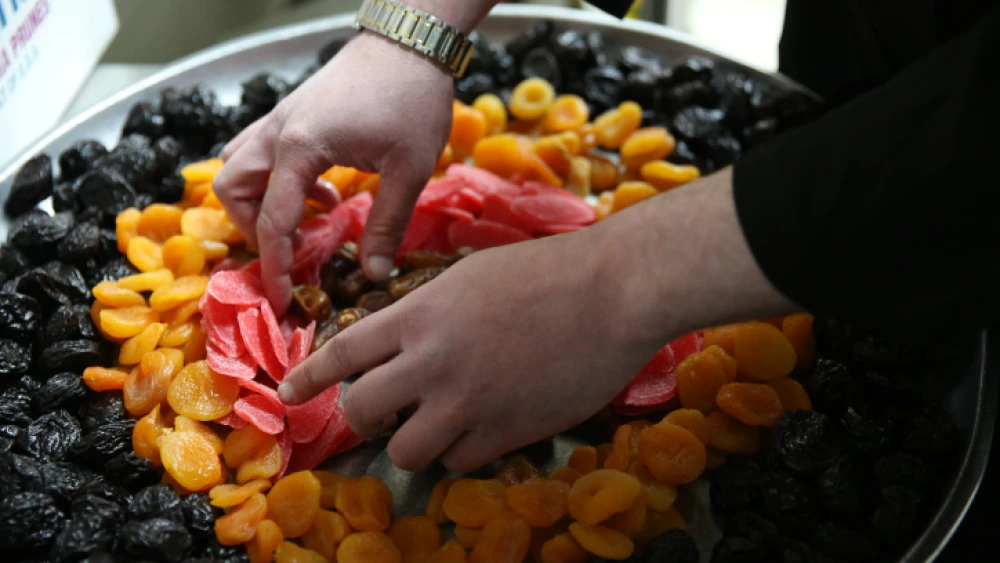
The Purchasing Manager of the Minister of Defense and the Food Center of the Technology and Logistics Division acquired 500 kilograms of almonds (1,100 pounds), 1 ton of peanuts, 2.2 tons of rains, 500 kilograms of walnuts, 1,500 kilograms of dried apricots (3,300 pounds), 500 kilograms of dried cranberries and 1,000 (2,200 pounds) kilograms of banana chips.
In the time of the Holy Temple in Jerusalem, farmers measured the age of trees according to the number of times Tu B’Shevat passed, and thereby determine when a tree was old enough to harvest and use for tithes to the Temple according to Jewish law. The practice of celebrating Tu B’Shevat and the Jewish connection to the Land of Israel began in the third century, when Kabbalists started conducting feasts centered on fruits grown in Israel, particularly the Seven Species that are noted in the Torah.
On Sunday, Agriculture Minister Uri Ariel urged Israeli consumers to begin buying fresh fruits grown in Israel for their Tu B’Shevat celebrations, noting that dried fruits became traditional only due to the difficulty in successfully transporting fresh produce from Israel to places around the world.
Most of the dried fruit available on the market in Israel today is actually imported from Turkey, according to the Ministry of Agriculture and Rural Development.
“Farmers are today’s pioneers, and Israel’s agricultural produce is among the best in the world,” Ariel said, adding that dried fruits are less healthy, and are often “full of sugar and artificial coloring.”