



The killing this month of senior Hamas commander Izz al-Din al-Haddad has been described in some quarters as evidence of a new Israeli policy: Hamas leaders are no longer shielded by ceasefires, diplomatic negotiations or the passage of time.
But that’s not new. It is the continuation of one of the oldest and most necessary principles of Israeli self-defense: Those who organize the murder of Jews cannot assume that time, distance, politics or a temporary pause in fighting will save them.
Israel learned that lesson the hard way.
After the 1972 massacre at the Munich Olympics, when Palestinian terrorists murdered 11 Israeli athletes and coaches, Israel did not accept the world’s usual formula of condolences, diplomatic handwringing and eventual forgetfulness. Israeli Prime Minister Golda Meir authorized a long campaign to track down those responsible. It became known as “Operation Wrath of God.”
The point was not theatrical revenge. The point was deterrence, justice and survival. If terrorists could murder Israelis on the world stage and then melt back into safe houses, embassies and foreign capitals, then every Israeli, every Jew and every representative of the Jewish state would remain permanently exposed.
The world may prefer that Israel absorb blows quietly. But the Jewish state cannot afford that luxury.
Nor was Munich the only precedent. In 1995, Fathi Shikaki, the founder and leader of Palestinian Islamic Jihad, was killed in Malta. Shikaki’s organization was responsible for the attack that murdered my daughter, Alisa, and seven others near Kfar Darom earlier that year.
PIJ was not a conventional army. It did not wear uniforms, defend territory in the ordinary sense or meet Israel on a battlefield. It used buses, roads, cafes and civilians as its battle space. It sent killers to murder teenagers and commuters, and then relied on the protections of distance, denial and foreign sponsorship.
That is the essence of asymmetric warfare. Terrorist leaders declare war while hiding behind civilians, borders, proxies, charities, mosques, diplomats, ceasefires and sympathetic international opinion. They expect Israel to fight by rules they themselves contemptuously reject. They choose the time and place of murder, then demand immunity when Israel chooses the time and place of response.
That cannot be the rule.
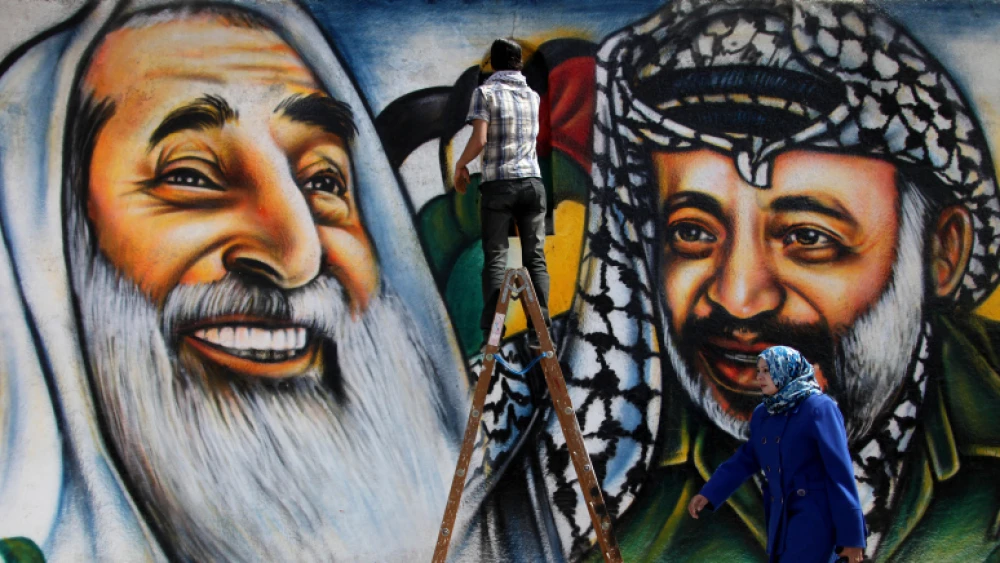
Israel has used targeted action against leaders of PIJ, Hamas, Black September and other terrorist organizations for decades. Hamas leaders Sheikh Ahmed Yassin and Abdel Aziz Rantisi were killed in Gaza in 2004 during the wave of suicide bombings and terror attacks of the Second Intifada. Years later, Israel would continue to pursue those who built, financed, directed or commanded the machinery of mass murder.
The moral distinction is obvious, even if Israel’s critics pretend not to see it. Terrorists target civilians to kill civilians. Israel targets terrorists to prevent the killing of civilians. That does not make every operation simple. It does not remove the burden of intelligence, proportionality or judgment. But it does mean that there is a profound difference between murdering families in their homes and targeting the commanders who planned the massacre.
Oct. 7, 2023, made this principle unavoidable once again. That attack wasn’t a border incident, a protest gone wild or a “cycle of violence.” It was a planned slaughter. Hamas and Palestinians in Gaza invaded Israel, murdered approximately 1,200 people and kidnapped 251 hostages.
Its leaders knew exactly what they were doing. They planned it, ordered it, celebrated it and then tried to survive it politically. Some hid in tunnels. Some hid among civilians. Some hid abroad. Some waited for the international community to pressure Israel into stopping before the job was done.
But a ceasefire cannot become an amnesty.
That is the real meaning of the strike against al-Haddad. If he was, as Israel says, part of the Oct. 7 command structure and later a senior Hamas military figure in Gaza, then his role did not become less serious because diplomats were meeting, aid trucks were entering Gaza or foreign governments were discussing the next political formula.
A ceasefire may pause large-scale combat, but it does not erase responsibility. It does not grant immunity to commanders who are rebuilding Hamas, rearming their forces and preparing the next attack.
This is especially important because terrorism is not defeated only by battlefield victories. It is defeated when its leaders understand that there is no safe retirement plan after mass murder. There is no comfortable exile. There is no immunity created by a press conference in Doha, a handshake in Cairo or a ceasefire clause interpreted by Hamas as a shield.
The message to Khalil al-Hayya, Khaled Mashaal and every other Hamas leader should be unmistakable: The war they launched did not end with their survival. If they want a political future, then they must accept the end of Hamas rule, the disarmament of Hamas, and the return of all hostages and remains. If they insist on preserving Hamas as an armed force, they are choosing the path of Sinwar, Deif and Haddad.
Israel’s enemies call this assassination. They called it that after Munich. They called it that after Shikaki. They called it that after Yassin and Rantisi. They will call it that now.
But Israel has a better word for it: self-defense.
A small country surrounded by enemies cannot permit mass murderers to operate with impunity. A Jewish state born after centuries of Jewish powerlessness cannot outsource its survival to the same international community that so often discovers restraint only when Jews are the ones defending themselves.
There is nothing new about Israel’s policy. What is new is only the name of the latest terrorist who thought he could murder Jews and live behind a ceasefire.
He was wrong.


