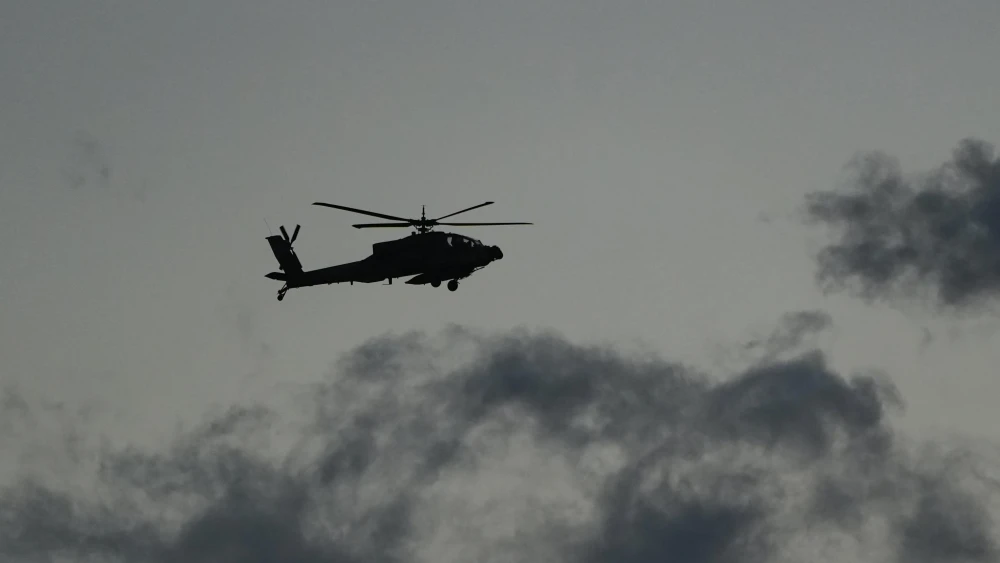
The Israeli Air Force intercepted an unmanned aerial vehicle that approached Israel’s airspace from the east on Friday night.
Air-raid sirens were triggered in accordance with protocols, the IDF Spokesperson’s Unit said.
Although the military did not state who launched the UAV, the Iranian-backed Houthis in Yemen took responsibility for the incident.
“We launched the UAV toward a target in Tel Aviv,” Channel 13 quoted a Houthi spokesman as saying.
Meanwhile, Ynet News reported that following the weakening of Iran’s proxies over the past year, the Houthis’ forces in Iraq, mainly there for training, are dwindling while their ring of influence in Africa is growing.
The Houthis apparently have met with the Al-Shabaab terrorist group in Somalia, which is ideologically affiliated to Al-Qaeda, Ynet continued, citing reports issued recently by the United Nations Security Council.
Al-Shabaab reportedly asked the Houthis for weapons and military training while agreeing to participate in pirate activity against vessels in the Gulf of Eden.
Since the war in Gaza resumed on March 18, the Houthis have fired several ballistic missiles at Israel.
Israeli military officials believe that the Iranian-backed rebels now possess only a limited number of operational ballistic missile launchers, representing a sharp decline in their stockpile.
The significant reduction in their missile-launch capabilities is due to a series of coordinated airstrikes by Israeli and American forces, according to reports.
Despite continued attempts to strike Israeli territory, the Houthis’ missile operations face major limitations. Launch areas within Yemen are restricted, interception systems often neutralize incoming threats, and a portion of the missiles fall short, hitting in neighboring countries such as Saudi Arabia and Jordan. Furthermore, their capacity to manufacture missiles remains low, with only a few reportedly produced each month.
The ballistic missiles used by the group are large, typically weighing several hundred kilograms (roughly 660 to 1,100 pounds) and ranging from 16 to 33 feet in length, making them difficult to conceal or rapidly deploy.