


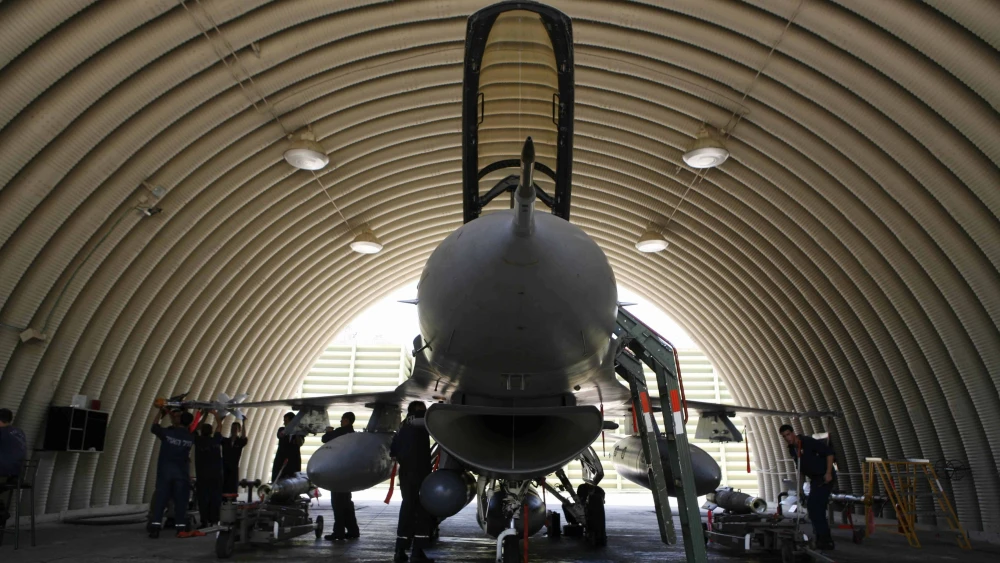
An Israeli Air Force aircraft targeted an Iranian operative who smuggled weapons in the Beirut area, the army confirmed on Thursday evening.
“The IDF struck and eliminated a terrorist in the area of Sîl, Lebanon,” it stated, noting that the terrorist was targeted after being implicated in “smuggling weapons and advancing terror attacks against Israeli civilians and IDF troops on behalf of the Iranian Quds Force.”
The Quds Force is the elite paramilitary branch of Tehran’s Islamic Revolutionary Guard Corps tasked with conducting covert operations outside the borders of the Islamic Republic.
In a separate statement on Thursday night, the IDF said it targeted Hezbollah military sites and weapons depots in Southern Lebanon.
The IAF struck “military sites containing weapons storage facilities, military structures, and terror infrastructure of the Hezbollah terrorist organization in southern Lebanon,” it said. “The presence of weapons and the activities of the Hezbollah terrorist group in the area constitute a blatant violation of the understandings between Israel and Lebanon.”
On Saturday, the IDF killed Hassan Muhammad Hammoudi, the Hezbollah commander responsible for the Iranian-backed terror organization’s anti-tank missile operations in the Bint Jbeil sector.
Hammoudi directed numerous anti-tank missile assaults against the Jewish state during the recent war. He was eliminated in an airstrike in the region of Kounin in southeastern Lebanon, the military stated.
The IDF also killed Abbas al-Hassan Wahbi, a key Hezbollah intelligence officer, in a strike near Mahrouna, in Southern Lebanon’s Tyre District. Wahbi was involved in rebuilding Hezbollah and in weapons transfers—actions the IDF says violate agreements between Israel and Lebanon.
On Nov. 26, 2024, Jerusalem and Beirut signed a ceasefire deal aimed at ending more than a year of cross-border clashes between the IDF and Hezbollah. The Iranian-backed terrorist organization began attacking the Jewish state in support of Hamas following the terror group’s attacks in southern Israel on Oct. 7, 2023.
Since the truce, Jerusalem has carried out frequent operations aimed at preventing Hezbollah from reestablishing its capabilities in Southern Lebanon in violation of the truce understandings.


