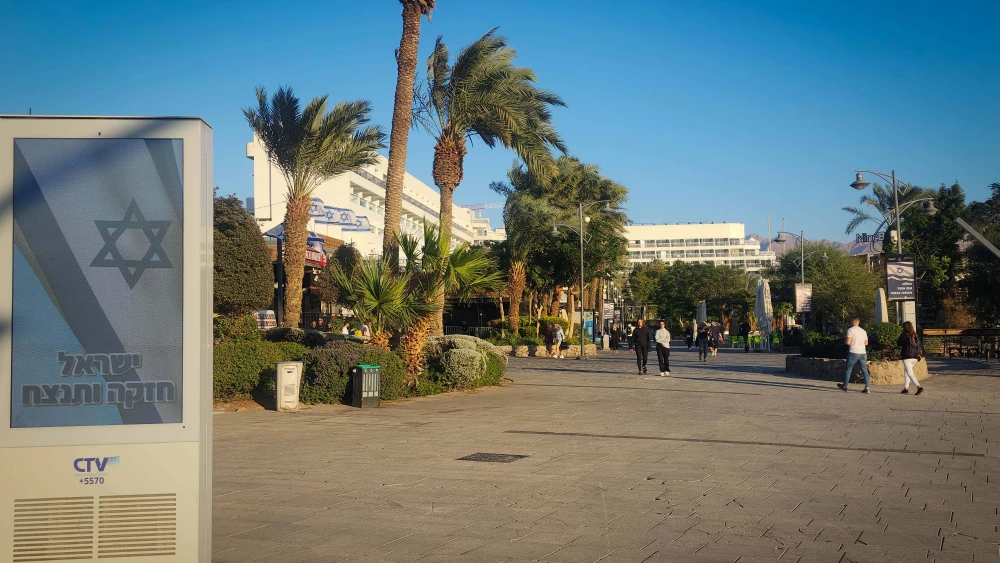
The Israel Defense Forces clarified on Thursday afternoon that no “suspicious aerial target” had been intercepted heading for the Red Sea resort city of Eilat.
“A warning of rocket and missile fire was activated in the area of the city of Eilat following the launch of the interceptor. The incident is over and there is no fear of a security incident,” the IDF said in a post on X.
About 30 minutes later, the military said in a follow-up post that “this was determined to be false identification,” and that air raid sirens had been activated by the launch of an Israeli interceptor missile.
Thursday was the first time sirens for incoming rocket fire sounded in Eilat since Dec. 6.
The Israeli Navy has bolstered its presence in the Red Sea in recent months following repeated missile and drone attacks from Iran-backed Houthi terrorists in Yemen.
Missile boats were deployed “in accordance with the assessment of the situation, and as part of the increased defense efforts in the region,” the IDF said.
On Oct. 31, Israel’s Arrow 2 air defense system for the first time intercepted a surface-to-surface missile fired from the Red Sea area.
On Nov. 9, Houthi rebels fired a ballistic missile at Eilat, which was intercepted by Israel’s Arrow 3 in the aerial-defense system’s first operational use.
That same day, a drone launched from Syria caused a large explosion at an elementary school in Eilat, injuring one civilian. The IDF struck assets in Syria in response but did not specify which organization was behind the UAV attack or what targets were hit in the counterstrike.
Since declaring its support for Hamas in its war against Israel sparked by the Oct. 7 massacre in the northwestern Negev, Iran’s Houthi terrorist proxy in Yemen has undertaken an offensive against maritime trade, engaging in numerous anti-ship drone and missile attacks and acts of piracy against commercial and military vessels in the Red Sea.
On Wednesday, the United States struck over a dozen Houthi missiles on their launch rails, in the fourth attack on targets in Yemen in recent days.
U.S. Central Command (CENTCOM) said that its forces carried out strikes on 14 missiles that were loaded to be fired in Houthi-controlled areas just before midnight local time.