The heads of the four Israeli Arab parties announced on Thursday that they will negotiate a joint run for parliament in this year’s national election.
A vote must be held by Oct. 27.
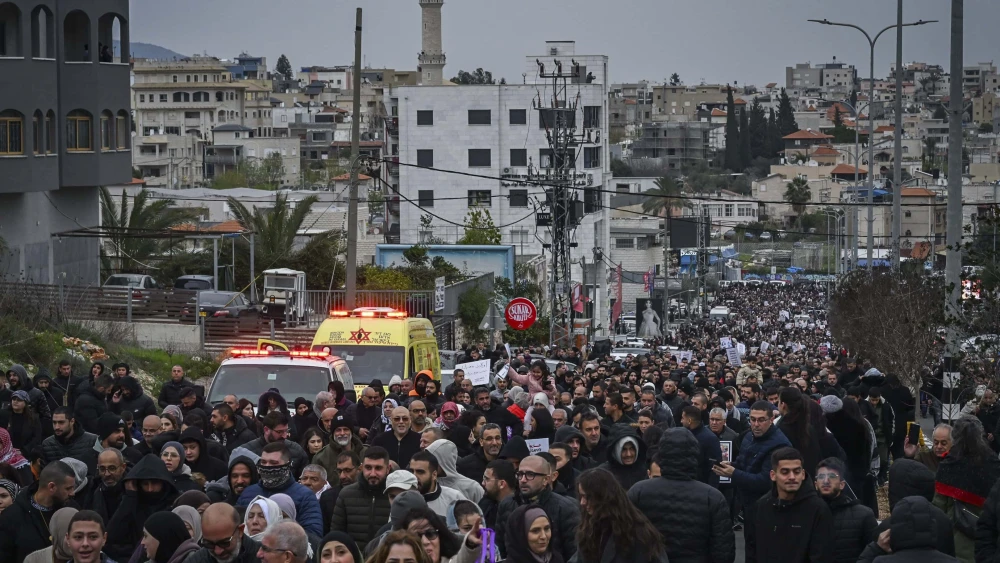
The move, if materializes, comes on the backdrop of pressure from the Israeli-Arab pubic in the last few months, pressure that led to a large demonstration in the Lower Galilee Arab city of Sakhnin on Jan. 22.
Some 50,000 people took to the streets to protest the escalating crime in the Israeli-Arab sector, in particular the extortion perpetrated by criminal gangs that affect businesses and families, Ynet reported.
On the same day, the Arab Higher Monitoring Committee, led by former Balad party leader Jamal Zahalka, declared a general strike that included schools, daycares and public services in Arab communities throughout Israel, in solidarity with Sakhnin residents.
The four parties that signed an agreement on Thursday night to form a united bloc are the United Arab List, known by its Hebrew acronym Ra’am; the communist and supposedly secular Hadash (with a minority Jewish presence); the Arab nationalist Balad; and the Arab Movement for Renewal, known by its Hebrew acronym Ta’al.
Following the protest, they convened for an emergency meeting after which they announced that they will begin to finalize the details of a joint list of candidates for the Knesset.
“The public pressure was enormous and impossible to refuse,” Ta’al Chairman Ahmad Tibi told Channel 12 News.
“This is an important statement and, above all, a commitment to the public with a signature on paper to establish the joint coalition,” the lawmaker added.
Former Minister-without-Portfolio Mansour Abbas, who heads the Ra’am Party, said in December that he would cut ties to the Shura Council, a body associated with the Muslim Brotherhood-inspired Southern Branch of the Islamic Movement, which guides the party and ultimately makes its decisions.
The four parties have run together for the Israeli parliament in the past. Known as the Joint List, they united in 2015 and split in 2019 into two separate two-party blocs. They initially garnered 13 Knesset seats, making them Israel’s third largest party at the time.
The Arab parties reunited for the 2019 and 2020 elections, but disbanded before the November 2022 vote.